Leave Your Message
The global agricultural sector is undergoing a massive paradigm shift. As climate change accelerates, bringing unpredictable weather patterns, prolonged droughts, and extreme temperatures, traditional open-field farming and conventional glass greenhouses are facing unprecedented challenges. Enter the Air Structure Building for Agricultural Greenhouse and Crop Protection. Once primarily utilized for sports arenas and industrial storage, air-supported membrane structures are now emerging as a disruptive technology in commercial agriculture.
From a commercial perspective, traditional glass or polycarbonate greenhouses require significant capital expenditure (CAPEX) and are limited by structural spans, requiring heavy support columns that reduce usable agricultural space. Air domes, conversely, utilize internal air pressure to support a lightweight, high-strength PVDF membrane. This eliminates the need for internal pillars, offering a 100% clear-span interior. For modern commercial farming, this means automated machinery, vertical farming racks, and large-scale hydroponic systems can operate without physical obstructions, drastically increasing spatial efficiency and yield per square meter.
Unlike traditional greenhouses, air domes offer rapid deployment, superior thermal insulation, and advanced resistance to natural disasters such as typhoons and heavy snowfalls. They present a highly scalable solution for large-scale crop protection, seed breeding, and controlled-environment agriculture (CEA).
Furthermore, the industrialization of agriculture demands strict biosecurity and environmental control. Air structures are inherently airtight. This allows for precise regulation of internal atmospheric conditions, including CO2 levels, temperature, humidity, and lighting. By creating a fully sealed microclimate, commercial growers can completely isolate crops from external pests, pollen contamination, and airborne pathogens, reducing the reliance on chemical pesticides and promoting organic, high-value crop cultivation.
Air-supported structures are highly versatile. Below, we analyze the core scenarios where this technology delivers maximum ROI and operational efficiency.
Protecting high-value staple crops, fruits, and vegetables from extreme weather. The translucent PVDF membrane allows optimal natural light transmission while blocking harmful UV rays, preventing sunscald and optimizing photosynthesis.
Providing a sterile, isolated environment for genetic research, seed hybridization, and tissue culture. The airtight nature of air domes prevents cross-pollination from wild species and blocks external pests entirely.
Maximizing vertical space. The massive column-free interior allows for the installation of multi-tier vertical farming racks, automated conveyor systems, and integrated LED grow lights, driving urban agricultural efficiency.
In addition to crop cultivation, air domes are uniquely suited for integrated aquaponics (combining aquaculture and hydroponics). The airtight structure helps maintain stable water temperatures in fish tanks while capturing carbon dioxide emitted by aquatic life to feed the adjacent plant crops. The high thermal mass efficiency of the air dome reduces heating costs in winter and cooling costs in summer, making closed-loop ecological farming commercially viable even in harsh regions like Siberia or the Middle East.
Beyond crop growth, protecting the harvest is critical. Large-span air domes serve as excellent post-harvest processing centers, cold storage facilities, and bulk grain warehouses. By controlling humidity and temperature, these structures prevent grain spoilage, mold growth, and pest infestations, preserving the quality of agricultural products from the field to the market.
The integration of technology into air dome structures is driving the future of smart agriculture. Modern air domes are no longer just passive envelopes; they are active, intelligent building systems. With the rise of IoT (Internet of Things) and AI, agricultural air domes are now equipped with sensor arrays that monitor differential pressure, wind speed, snow load, and internal air quality in real-time. Automated control systems adjust the inflation fans and HVAC equipment dynamically, ensuring structural safety while minimizing energy consumption.
One of the most promising trends is the integration of flexible thin-film photovoltaics directly onto the PVDF membrane surface. This allows the air dome to generate its own electricity, powering the inflation systems, LED lighting, and hydroponic pumps. This self-sustaining "Agri-PV" model makes air domes ideal for remote, off-grid locations, paving the way for sustainable farming in desert and polar regions.
Material science is also playing a key role. The latest PVDF and ETFE membranes feature self-cleaning coatings, advanced thermal barriers, and customizable light transmission rates. For instance, diffusion membranes can scatter direct sunlight to eliminate shadows inside the greenhouse, ensuring that even lower-tier plants in a vertical farm receive adequate light. Furthermore, these materials are highly durable, with lifespans exceeding 25-30 years, and are fully recyclable, aligning with global green building standards.
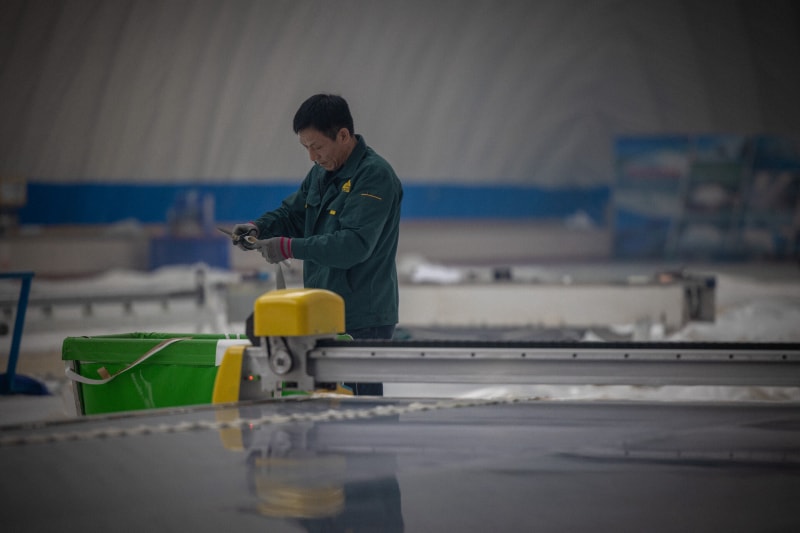
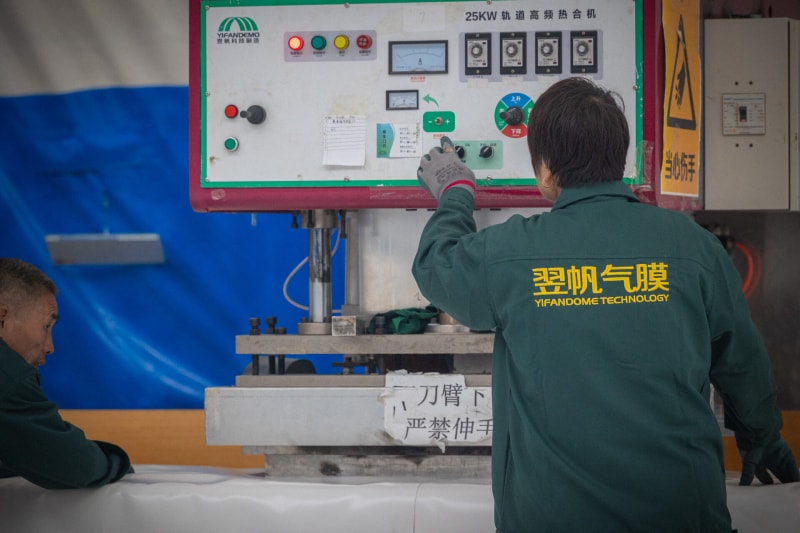
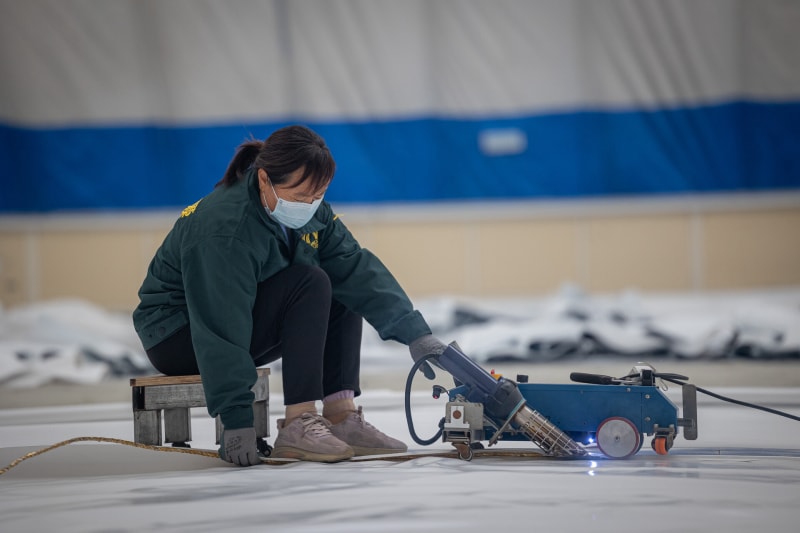
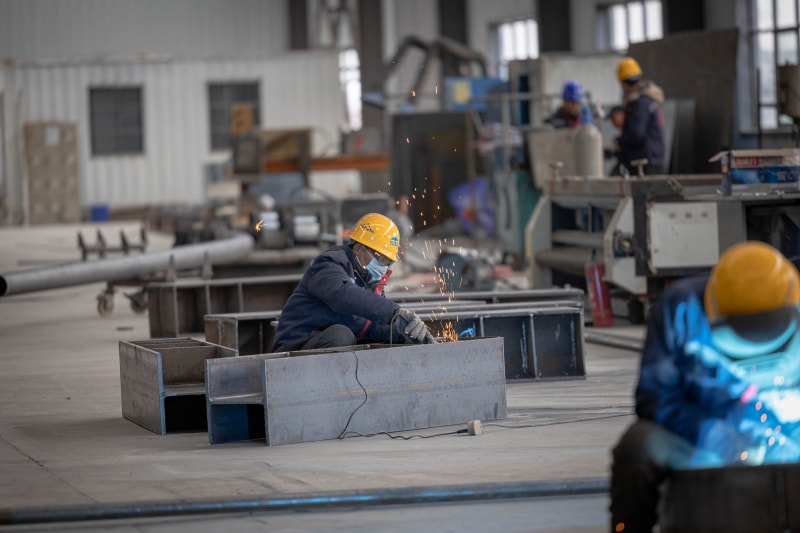
Yifan Air Dome is a high-tech enterprise dedicated to innovative, eco-friendly air-supported membrane structures and integrated air dome building solutions. As a leading integrated service provider in the application of membrane structure technology across China, we cover the full industrial chain of R&D, design, manufacturing, installation and full-cycle operation and maintenance, delivering high-efficiency, energy-saving and low-carbon sustainable building space solutions for global clients.
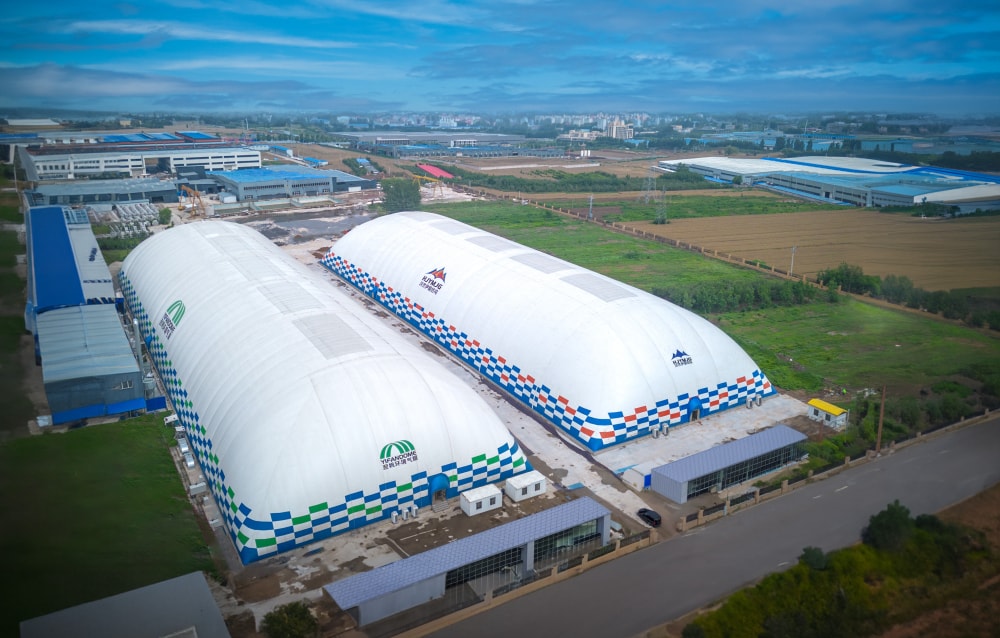
With years of deep cultivation in the air dome and membrane structure industry, we adhere to the development philosophy of green low-carbon, technological innovation and quality priority, and strictly comply with industrial construction and production standards. Supported by standardized production techniques and abundant experience in large-scale project implementation, we professionally customize various air domes, including sports stadiums, industrial warehouses, environmental enclosures, cultural tourism venues and exhibition membrane buildings, which are widely applied in sports fitness, industrial storage, environmental dust prevention, cultural tourism scenic spots and public supporting facilities.