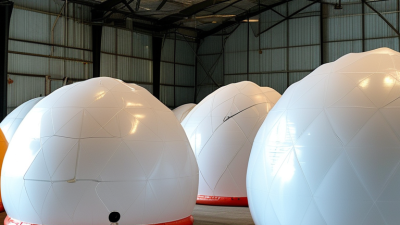
China’s inflatable construction industry is really stepping beyond just sports halls and emergency shelters. These days, inflatable dome buildings are being used for all sorts of things—warehouses, exhibition spaces, agricultural setups, and even climate-controlled work zones. The cool thing is, they’re pretty practical: they go up quickly, don’t need a ton of foundation work, feature spacious, pillar-free interiors, and are easier to transport. That said, performance can vary a lot depending on which supplier you choose.
Looking at the bigger picture, research from Grand View shows the global market for prefab buildings hit around $153.7 billion in 2022, and they expect it to keep growing through 2030. MarketsandMarkets even points out that modular construction is a hot trend worldwide, thanks to faster project timelines and production happening in factories. But here’s the thing—these reports generally lump inflatable domes in with other temporary or prefabricated structures, so they don’t really give us a clear picture of just inflatable domes. That’s important because the specifics matter.
Back in the day, architect R. Buckminster Fuller famously called the dome “the strongest structure in the world.” His idea helps explain why curved, membrane-based designs are so efficient. But, honestly, strength alone doesn’t make a building reliable. Things like the quality of the fabric, how well the air pressure is maintained, anchoring methods, insulation, fire safety features, upkeep, and detailed engineering plans are just as important.
This guide to China’s top 10 inflatable dome building manufacturers digs into those nuts and bolts. It looks at their experience in manufacturing, design skills, past projects, how customizable their solutions are, support during installation, and post-sale service. We’ve also included inflatable storage buildings because they often use similar membrane technology and air control systems. Just a heads-up—the rankings aren’t official industry standards, but more of a practical comparison. Plus, some companies might seem cheaper upfront but could have higher operating costs, so it’s worth doing your homework—checking specs, test reports, references, and local regulations—before you go signing anything.
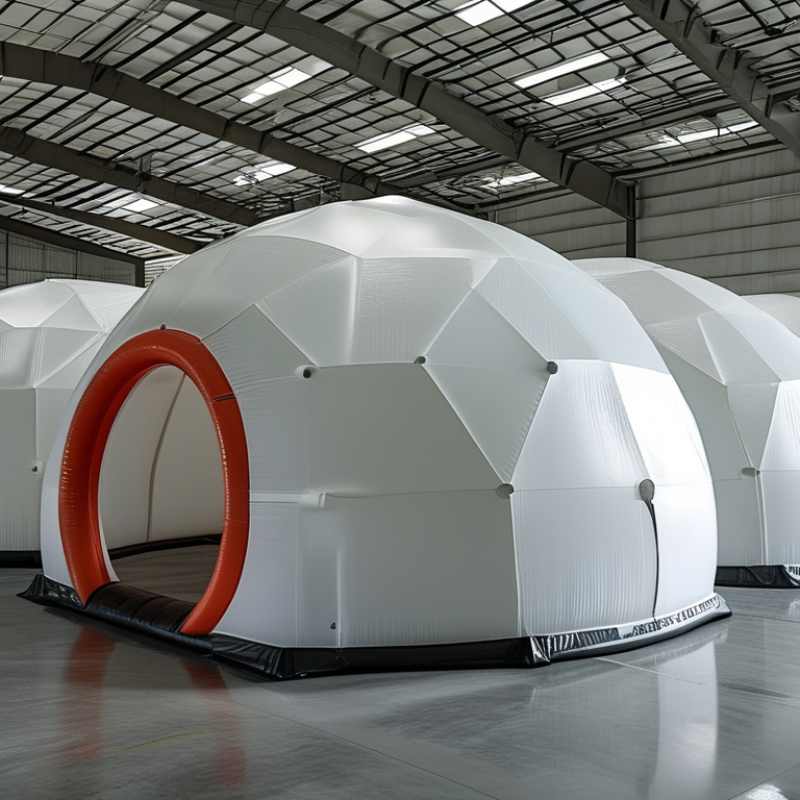
Inflatable Dome Buildings in China: Types, Structures, and Applications
China Top 10 Inflatable Dome Building Manufacturers?
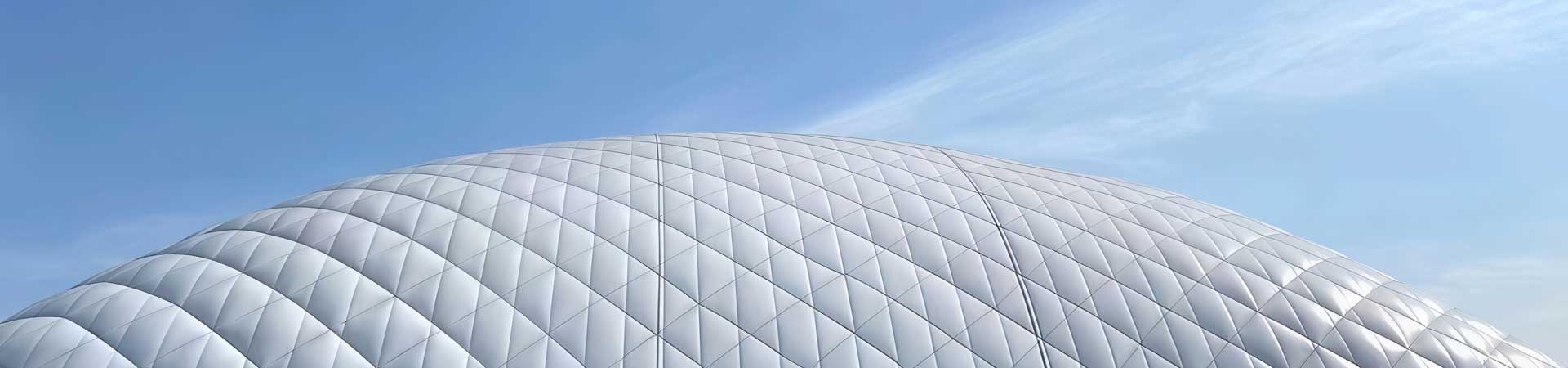
Inflatable dome buildings in China serve sports halls, warehouses, exhibition spaces, and temporary event venues. Their air-supported structure uses continuous internal pressure to hold a reinforced membrane. This creates wide, column-free interiors with fewer structural obstacles. Common types include sports domes, storage domes, agricultural domes, and insulated event shelters. PVC-coated polyester is widely used, while multi-layer membranes improve insulation and reduce condensation.
Applications depend on climate, span, and operating time. A sports dome may need bright lighting, acoustic treatment, ventilation, and emergency exits. A warehouse requires stronger loading plans, vehicle access, and stable temperature control. In coastal areas, corrosion-resistant fittings and reliable anchoring deserve extra attention. Snow, wind, drainage, and power failure should be tested before installation. A polished proposal can still miss local ground conditions. That mistake is expensive.
Tips:
Ask manufacturers for membrane specifications, fire-performance documents, pressure records, and completed project details. Check whether the air system has backup power and automatic pressure alerts. Request a foundation and anchoring plan based on local wind data. Inspect seams, doors, fans, and lighting before acceptance. Do not judge quality from appearance alone. A low price may hide weak insulation or limited after-sales support.
China’s Market Landscape: Global Membrane-Structure Data and Industry Trends
China Top 10 Inflatable Dome Building Manufacturers?
China’s inflatable dome market is expanding with sports halls, warehouses, agricultural spaces, and temporary venues. However, public rankings remain imperfect. Many suppliers publish project counts, but few disclose comparable data on membrane lifespan, blower redundancy, or energy use. Grand View Research estimated the global tensile structures market at about US$6.8 billion in 2023, with a projected 5.7% annual growth through 2030. This category is broader than inflatable domes, so the figure should not be treated as a direct dome-market total.
China’s advantage lies in integrated production, flexible customization, and export experience. Buyers should examine membrane weight, seam quality, air-pressure stability, and local wind and snow-load calculations. The International Energy Agency and UNEP reported that buildings and construction consumed about 32% of global energy in 2023. Therefore, insulation, air leakage, heating demand, and blower efficiency deserve careful comparison. A cheaper shell may create higher operating costs. That detail is often overlooked.
Tips: Request third-party material certificates, pressure-test records, fire-performance documents, and maintenance plans. Check whether the design follows applicable Chinese and project-location standards. Visit an operating installation if possible. Ten manufacturers can look similar online, yet their engineering depth may differ sharply. A glossy catalogue is not proof of reliability.
Ranking Criteria: Capacity, Project Records, Certifications, and R&D Data
China Top 10 Inflatable Dome Building Manufacturers
Ranking Criteria: Capacity, Project Records, Certifications, and R&D Data
A credible ranking of China’s inflatable dome building manufacturers should begin with measurable production capacity. Reviewers can inspect factory space, membrane cutting equipment, welding lines, and monthly output records. Capacity is not only a large workshop. It also includes trained installation teams, spare air-handling units, and quality control during peak orders. Air Buildings require stable pressure, accurate seams, and dependable backup systems.
Project records reveal practical experience more clearly than polished brochures. We examine completed sports halls, warehouses, exhibition spaces, and temporary facilities. Useful evidence includes project size, operating years, climate conditions, and maintenance reports. Photographs should show entrances, anchoring details, interior clearance, and emergency access. A few impressive images are not enough.
Certifications must be traceable to recognized testing bodies and relevant product standards. We check material fire performance, structural calculations, electrical safety, and pressure-control testing. R&D data adds another layer. Strong manufacturers may publish membrane tensile strength, insulation values, fan efficiency, and wind or snow-load simulations. Yet public data is often incomplete. Self-reported figures need careful verification. That part is easy to overlook. Site visits, client references, and independent testing can expose gaps between laboratory performance and daily use.
China’s Top 10 Manufacturers: Products, Factories, and Core Capabilities
China Top 10 Inflatable Dome Building Manufacturers?
China’s leading inflatable dome manufacturers differ in products, factories, and engineering depth. The strongest suppliers produce sports halls, warehouses, exhibition spaces, and emergency shelters. Their factories usually separate fabric cutting, high-frequency welding, steel-door assembly, and pressure-system testing. This layout reduces leakage risks. Sometimes, however, production photographs look better than factory records.
A credible top-ten assessment should examine Air Supported Buildings through measurable evidence. The UNEP Global Status Report for Buildings and Construction 2022 states that buildings consume about 34% of global energy and create nearly 37% of energy-related emissions. Therefore, manufacturers should show insulation values, blower efficiency, and ventilation performance. Dual blowers, backup power, pressure alarms, and tested fire-retardant membranes matter more than attractive renderings. Product documentation should also address wind, snow, anchoring, and emergency access.
Factory capability remains decisive. Auditors should inspect welding samples, material certificates, load calculations, and maintenance procedures. The International Energy Agency notes that building efficiency improvements are essential for reducing operational emissions. This supports selecting suppliers with insulated membranes and intelligent pressure controls. Independent testing adds authority, but testing alone is not enough. Installation experience matters. So does after-sales response. A small design error can create visible sagging above a basketball court. That detail is easy to miss. Reliable manufacturers provide drawings, installation training, replacement plans, and realistic service limits.
China’s Top 10 Inflatable Dome Manufacturers: Products, Factories, and Core Capabilities
This chart presents commonly specified technical capability ranges for inflatable dome structures, using representative clear-span bands in metres. The data focuses on product and engineering dimensions rather than individual company or brand performance.
Engineering Benchmarks: 200–500 Pa Pressure, Wind Loads, and Span Sizes
Engineering Benchmarks for Inflatable Dome Buildings
Inflatable domes usually operate around 200–500 Pa of internal pressure. This range supports membrane stability and limits fabric flutter. However, pressure is not the same as wind resistance. A dome may hold 300 Pa internally and still require much stronger anchoring.
ASCE 7-22 calculates wind actions through site speed, exposure, height, and importance category. EN 1991-1-4 applies similar principles across European projects. These standards show why one universal wind rating is unreliable. For exposed sites, design checks should include uplift, sliding, seam stress, and repeated gusts. Field monitoring also matters. Sensors can reveal pressure drops before occupants notice movement.
Span size changes everything. A 30-metre dome often needs simpler zoning than a 60-metre structure. Spans above 80 metres may require stronger cables, additional airlocks, or internal reinforcement. Large enclosures also lose pressure faster through doors and service openings. That detail is easy to underestimate. Technical evaluations should request tested membrane strength, anchor capacity, emergency deflation time, and snow-load assumptions. The International Building Code 2024 and ASCE 7-22 provide useful benchmarks, but local authorities still control final design acceptance. I would not approve a dome from pressure data alone. Its geometry, foundation, maintenance history, and actual wind exposure deserve equal attention.
Safety and Compliance: EN 13782, NFPA 701, ISO 9001, and GB Standards
When comparing China’s top inflatable dome building manufacturers, safety evidence matters more than glossy renderings. For Sports air-supported membrane Buildings, EN 13782 helps assess temporary structures, including stability, access, and operational safety. Manufacturers should provide structural calculations, anchoring plans, and clear wind limits. Pressure alarms and backup blowers also need practical testing, not only written promises.
NFPA 701 focuses on flame propagation for coated fabrics and membrane materials. Ask for current test reports covering the exact fabric specification. ISO 9001 indicates a controlled quality-management system, but it does not automatically prove structural safety. Reliable suppliers connect inspection records with production batches, welding checks, and repair procedures. China’s GB standards may add local requirements for materials, electrical systems, fire performance, and construction use. The applicable standard depends on the site and project purpose.
On a real installation, small details often expose weak compliance. I would inspect emergency exits, illuminated routes, cable protection, drainage, and blower redundancy before reviewing photographs. A certificate alone can mislead. Some documents may be valid but poorly matched to the proposed membrane. This is where evaluation becomes imperfect: standards overlap, and local interpretation can vary. Manufacturers should welcome independent review and explain missing evidence plainly. That honesty is often more valuable than a perfect sales claim.
Cost and Lifecycle Comparison: Materials, Energy Use, Warranty, and Service
When comparing the China top 10 inflatable dome building manufacturers, purchase price is only one part of the calculation. Materials, energy use, warranty coverage, and service response can change the real cost significantly.
Most domes use PVC-coated polyester or similar technical membranes. Ask for fabric weight, UV resistance, fire testing, repair methods, and an environmental product declaration. Material cost alone does not show durability. A small tear near an entrance can create repeated repair visits.
The UNEP Global Status Report for Buildings and Construction 2023 states that buildings consume about 30% of global final energy and produce 26% of energy-related emissions.
An Inflatable Soccer Dome may therefore need careful comparison of insulation, air leakage, and climate control.
Measure energy in kWh per square meter, not only blower power. Heating a dome in a cold northern winter differs sharply from cooling one in a humid region. Request operating logs from a comparable Inflatable Soccer Dome. Include standby blowers, replacement membranes, filters, lighting, and seasonal maintenance.
Warranty length also needs inspection. Does it cover fabric, seams, blowers, controls, labor, and transport? The terms are often less generous than the headline suggests. A five-year warranty may exclude wind damage or poor anchoring.
Service distance matters. A technically excellent structure becomes expensive when replacement parts wait weeks. Lifecycle worksheets are useful, but their assumptions deserve challenge. Real site data should outrank polished estimates.
High-Transparency ETFE Air Dome Greenhouses: Eco-Friendly Agricultural Solutions from China’s Leading Factory
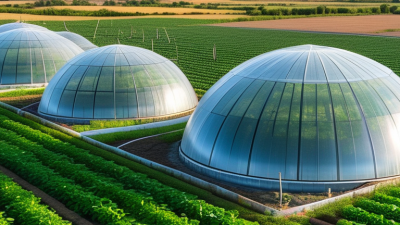
High-transparency ETFE air dome greenhouses are emerging as efficient agricultural solutions for regions seeking greater productivity, climate resilience, and resource control. In Anhui, China, a 6,000-square-meter ETFE air-supported membrane greenhouse uses a large-span structure to maximize natural daylight, helping crops receive consistent illumination while reducing dependence on artificial lighting. Technical studies commonly report visible-light transmission of ETFE films at approximately 90–95%, making the material well suited to protected cultivation. The lightweight membrane also enables broad, column-free growing areas and flexible internal layouts.
An advanced automatic temperature and humidity control system continuously adjusts the growing environment according to crop requirements, supporting stable production through changing outdoor conditions. This approach is increasingly important as the FAO projects that global agriculture will need to produce about 50% more food by 2050 to meet rising demand. At the same time, the UN World Water Development Report notes that agriculture accounts for roughly 70% of global freshwater withdrawals, highlighting the value of controlled systems that can improve irrigation precision and reduce unnecessary resource use. Completed more than eight years ago, the Anhui facility has demonstrated stable operation, reflecting the engineering capability, manufacturing quality, and practical innovation of China’s agricultural greenhouse suppliers.
FAQS
They commonly produce sports halls, warehouses, exhibition spaces, and emergency shelters. Some designs serve several uses.
Look for separate fabric cutting, high-frequency welding, steel-door assembly, and pressure-system testing areas. Factory photos can mislead.
Request material certificates, welding samples, load calculations, insulation values, and maintenance procedures. Missing documents deserve attention.
Important systems include dual blowers, backup power, pressure alarms, fire-retardant membranes, and emergency access. Small omissions matter.
Ask about fabric weight, ultraviolet resistance, fire testing, repair methods, and environmental documentation. A thicker fabric is not automatically better.
Compare energy in kilowatt-hours per square meter, not blower power alone. Heating and cooling demands vary by climate.
Include blowers, backup equipment, filters, lighting, replacement membranes, repairs, and seasonal maintenance. Polished estimates may still be wrong.
Check coverage for fabric, seams, blowers, controls, labor, transport, wind damage, and anchoring. A five-year headline may hide exclusions.
Poor anchoring can cause damage or sagging above a court. Replacement parts may take weeks. Distance changes the real cost.
Compare independent testing, site experience, drawings, training, replacement plans, and service limits. Real operating data should outweigh attractive renderings.
Conclusion
Inflatable Dome Buildings in China are increasingly used for sports facilities, warehouses, exhibition venues, agricultural spaces, logistics centers, and temporary or semi-permanent public structures. This overview explains the main dome types, membrane and air-supported structures, construction methods, and application scenarios. It also examines China’s expanding membrane-structure market, industry trends, and the criteria used to evaluate the top 10 manufacturers, including production capacity, project experience, factory resources, certifications, engineering teams, and research and development capabilities.
The comparison focuses on practical engineering benchmarks such as internal pressure of approximately 200–500 Pa, wind resistance, structural spans, material performance, energy consumption, warranty terms, and after-sales service. Safety and quality considerations include EN 13782, NFPA 701, ISO 9001, and applicable GB standards, while lifecycle analysis helps buyers assess long-term operating value rather than initial price alone. Together, these factors provide a structured, objective framework for selecting reliable manufacturers and suitable dome solutions for different climates, budgets, and project requirements.