Leave Your Message
Advanced structural phases and customized membrane material preparations for temporary aviation hangars
The global aviation industry is experiencing an unprecedented surge in demand for flexible, cost-effective, and rapidly deployable infrastructure. Traditional hangar construction, characterized by heavy steel frameworks and concrete foundations, often requires years of planning, environmental clearance, and massive capital expenditure. In contrast, modern building and construction engineering for temporary aircraft hangars leverages state-of-the-art air-supported membrane structures to bypass these limitations.
Commercial airlines, military defense forces, and cargo operators face highly dynamic operational landscapes. Fleet expansions, seasonal maintenance backlogs, and sudden tactical relocations demand space solutions that can be erected in weeks rather than years. Air-supported structures have emerged as a primary alternative, providing column-free, clear-span interiors that easily accommodate commercial airliners, military transport planes, and maintenance equipment. By utilizing advanced membrane materials, these structures offer an optimal environment for sensitive avionics and mechanical work, keeping assets protected from extreme weather conditions.
How modern material science and structural engineering guarantee safety and durability in aviation applications
Building and construction engineering for temporary aircraft hangars requires a deep understanding of aerodynamic forces. Unlike traditional buildings, air domes rely on internal air pressure to maintain structural integrity. The dome's curved profile is engineered to minimize wind resistance, effectively deflecting high-velocity gales that would otherwise compromise a flat-walled structure. High-strength PVDF or PTFE coated fabrics are selected for their incredible tensile strength, flame retardancy, and UV resistance, ensuring a long operational lifespan even in harsh desert or polar environments.
Aviation maintenance requires precise climate control to protect sensitive electronic components and ensure comfortable working conditions for technicians. Modern engineering integrates double-layer or multi-layer membrane systems with thermal insulation barriers. This configuration significantly reduces heat transfer, lowering energy consumption for heating and cooling systems. Additionally, the translucent properties of the membrane allow natural daylight to filter through, reducing the reliance on artificial lighting during daytime operations and contributing to lower carbon footprints.
A major advantage of temporary aviation hangars is their minimal foundation requirements. Engineering teams utilize innovative anchoring systems, such as earth anchors, ballast blocks, or ring beams, depending on the soil conditions and duration of use. This flexibility allows the structures to be installed on existing airport aprons, runways, or compacted soil without causing permanent damage to the ground. Should the operational needs change, the entire structure can be deflated, packed, and relocated, leaving the site in its original state.
From commercial maintenance to rapid tactical deployment, temporary hangars redefine operational capabilities
Airlines and third-party MRO providers often experience seasonal peaks in maintenance cycles. Building a permanent hangar to handle temporary overflows is financially unviable. Temporary air-supported hangars provide the perfect buffer space, allowing operators to set up temporary lines for C and D checks, engine replacements, or cabin retrofits, and then dismantle or repurpose the space when demand stabilizes.
In defense scenarios, rapid mobility is critical. Air-supported hangars can be transported in standard shipping containers and deployed on remote forward operating bases within days. They provide essential protection for fighter jets, helicopters, and unmanned aerial vehicles (UAVs) from sandstorms, extreme heat, and moisture, ensuring mission readiness in critical zones.
With the rapid growth of global e-commerce, air cargo terminals frequently face bottleneck challenges. Temporary air-supported structures can serve as sorting facilities, cargo storage, or ground support equipment (GSE) storage, seamlessly integrating with existing airport infrastructure to optimize logistics flow during peak shipping seasons.
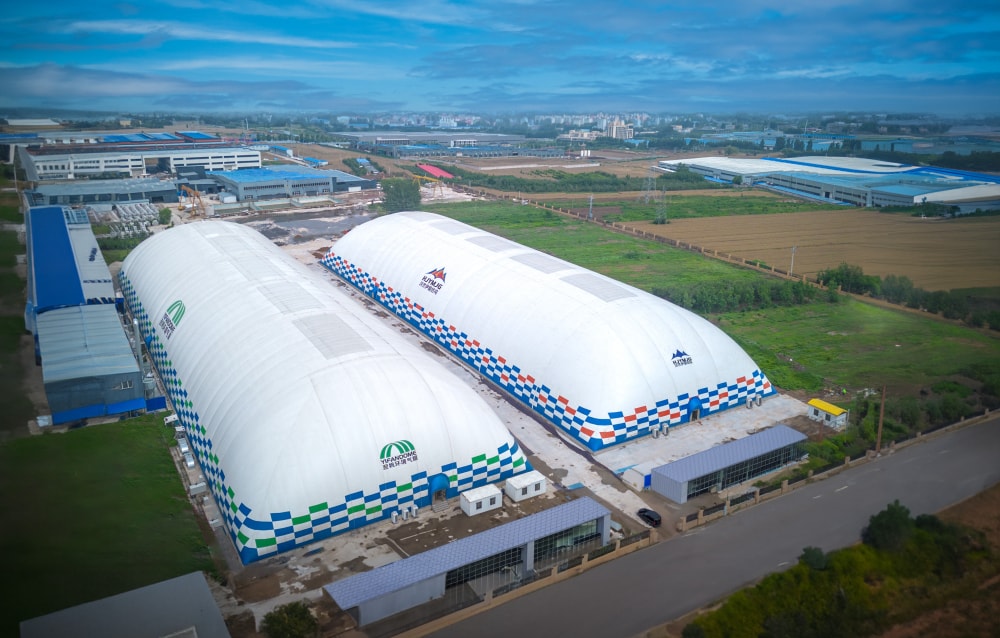
Yifan Air Dome is a high-tech enterprise dedicated to innovative, eco-friendly air-supported membrane structures and integrated air dome building solutions. As a leading integrated service provider in the application of membrane structure technology across China, we cover the full industrial chain of R&D, design, manufacturing, installation and full-cycle operation and maintenance, delivering high-efficiency, energy-saving and low-carbon sustainable building space solutions for global clients.
With years of deep cultivation in the air dome and membrane structure industry, we adhere to the development philosophy of green low-carbon, technological innovation and quality priority, and strictly comply with industrial construction and production standards. Supported by standardized production techniques and abundant experience in large-scale project implementation, we professionally customize various air domes, including sports stadiums, industrial warehouses, environmental enclosures, cultural tourism venues and exhibition membrane buildings, which are widely applied in sports fitness, industrial storage, environmental dust prevention, cultural tourism scenic spots and public supporting facilities.
Taking modular innovation and environmental adaptation technology as our core philosophy, we focus on the R&D and scenario application of air dome buildings. Leveraging an advanced modular structure and robust environmental adaptability, we deliver core strengths including shorter construction cycles, cost-effectiveness, easy disassembly and relocation, and recyclable reuse. Our structures perfectly withstand complex weather and natural conditions such as snow, gale winds, heavy rain, high temperature and severe cold. We adhere to tailored solutions adapted to local conditions. Fully suited for diverse application scenarios, we comprehensively meet clients’ customized needs for personalized space utilization and engineering construction.
Moving forward, Yifan will further advance core technologies in air-supported structure innovation and environmental adaptability. By deeply cultivating the global market for membrane structures, the company aspires to become a leading international provider of comprehensive solutions for air-supported buildings. Leveraging green, low-carbon technologies to empower the transformation of architectural spaces, Yifan aims to create a new global ecosystem of modular air-supported structures—one that is safer, more energy-efficient, better adapted to diverse needs, and more sustainable.
Smart monitoring and sustainable materials shaping the next generation of aviation infrastructure
The integration of Internet of Things (IoT) sensors is transforming how temporary hangars are managed. Modern air domes are equipped with real-time pressure sensors, wind speed meters, and snow load monitors. These sensors feed data to an automated control unit that adjusts internal air pressure dynamically to counter external wind forces or heavy snow accumulations. This intelligent system ensures structural stability while optimizing energy usage for the inflation blowers.
As the aviation sector strives for net-zero carbon goals, construction engineering must align with green principles. The development of fully recyclable membrane fabrics and the integration of thin-film solar photovoltaics onto the dome surface represent the future. These solar-integrated membranes generate clean electricity directly from the hangar roof, powering the internal HVAC and lighting systems, making the structure self-sustaining in remote operational zones.
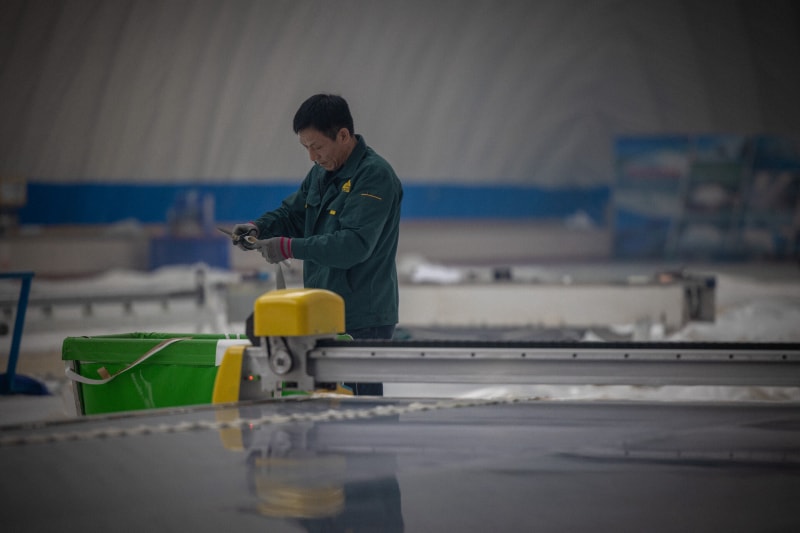
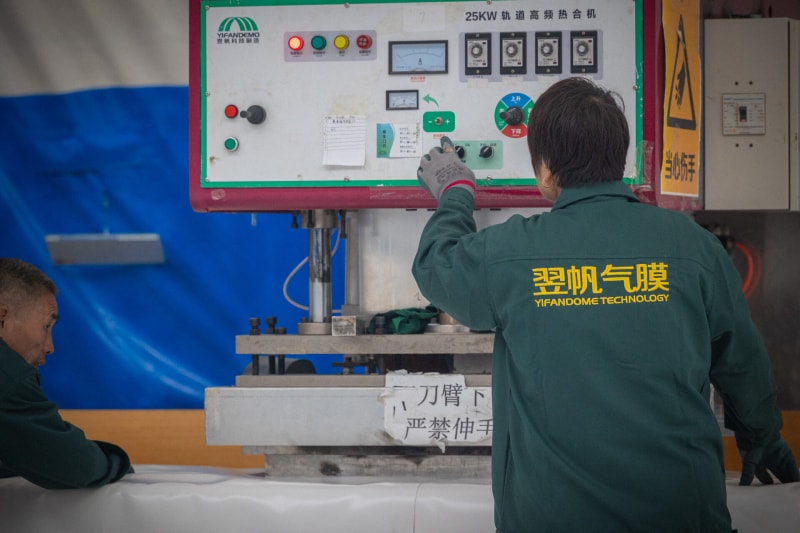
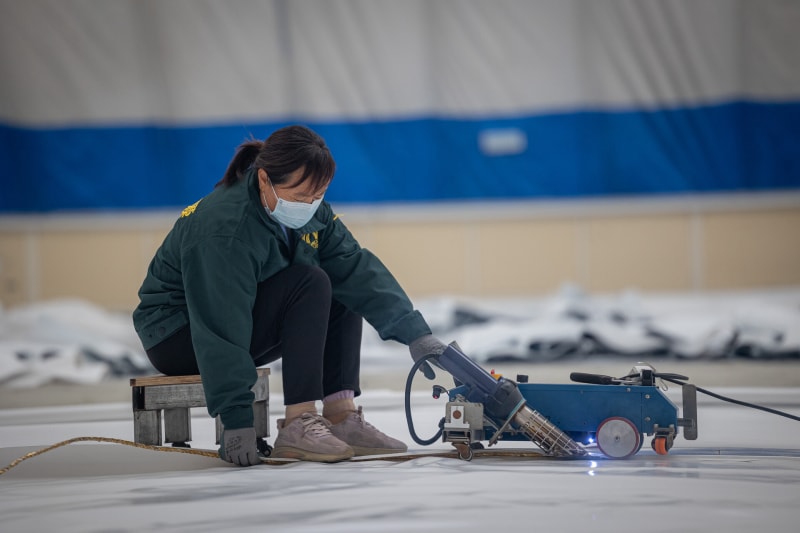
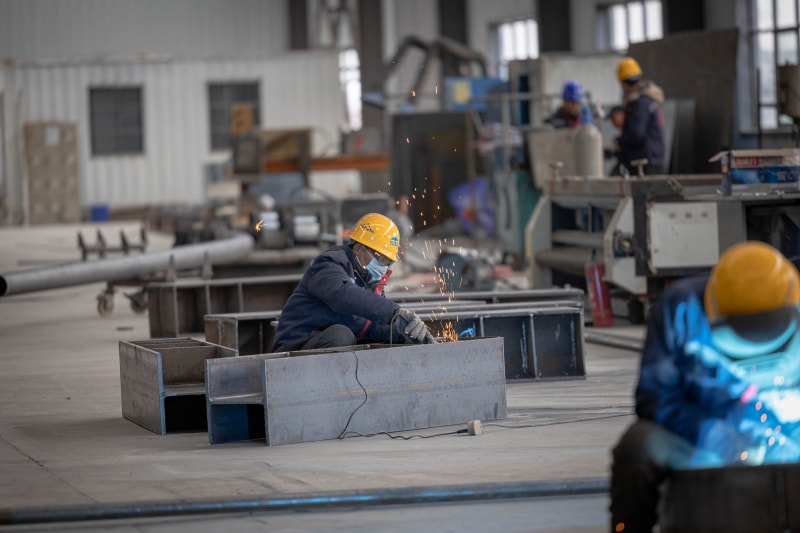
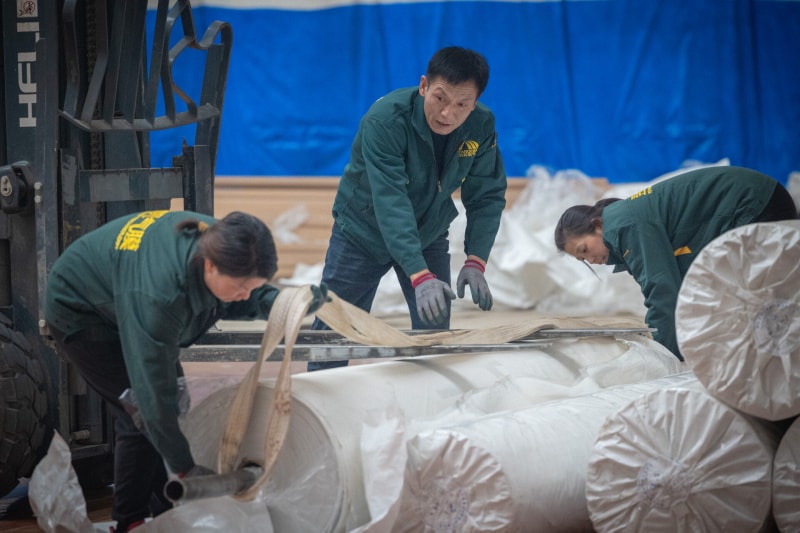
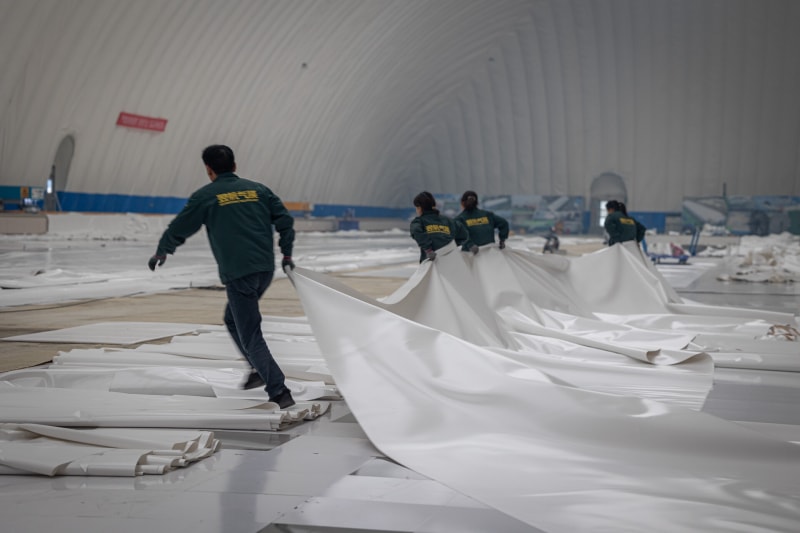
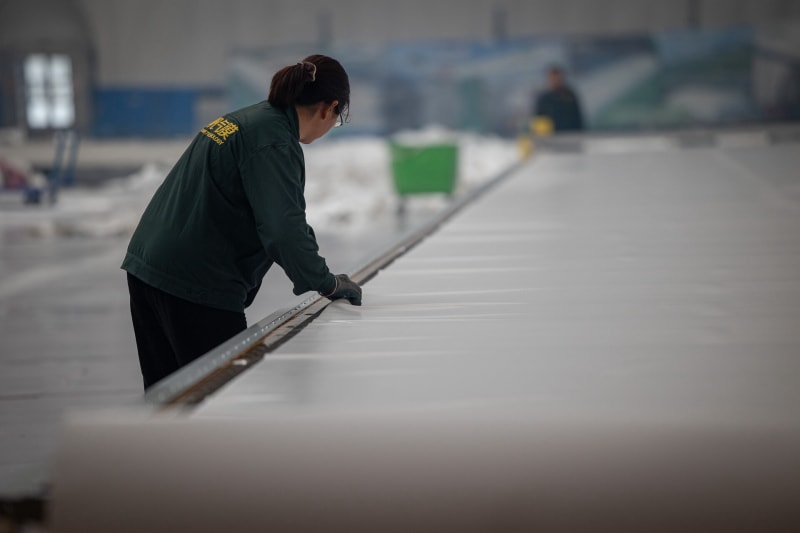
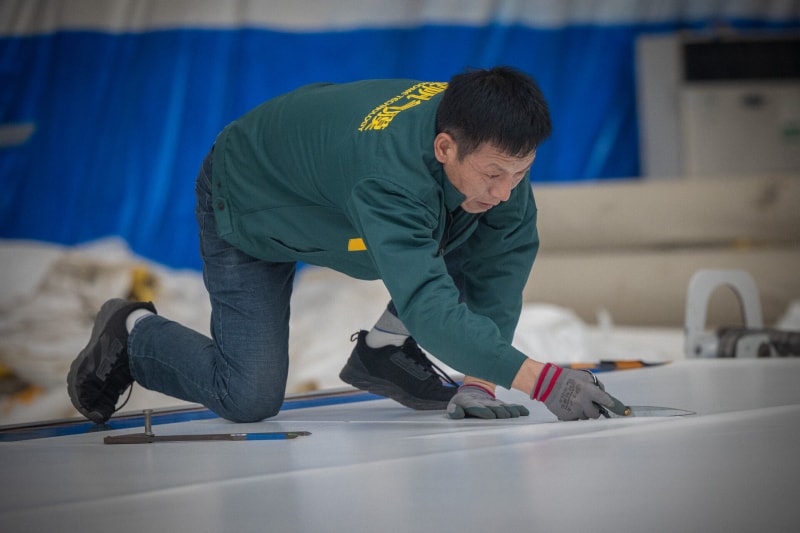
Our standardized manufacturing process ensures the highest quality and safety for aviation applications