




Air-Inflated Hangars
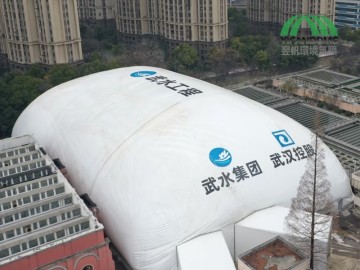
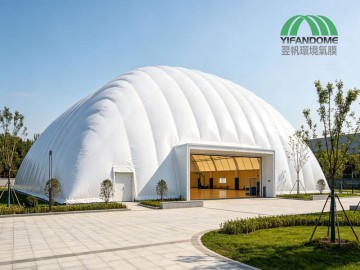
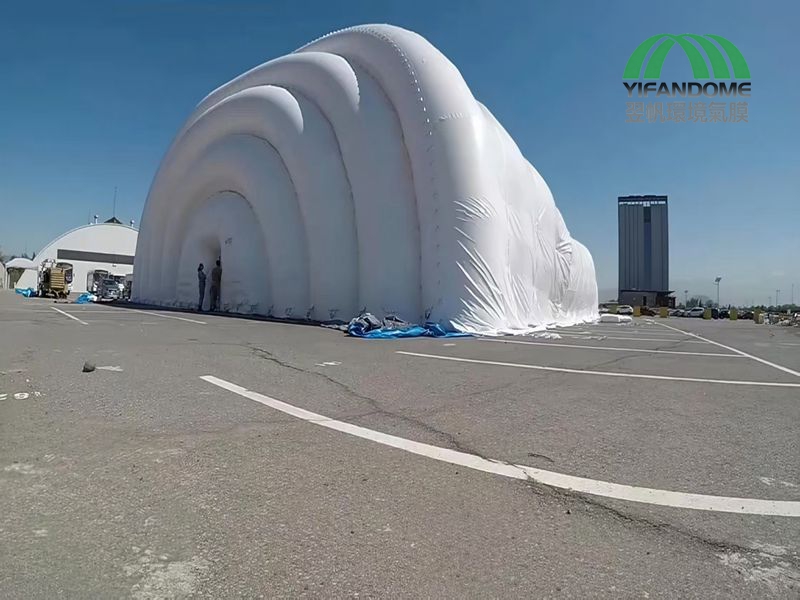
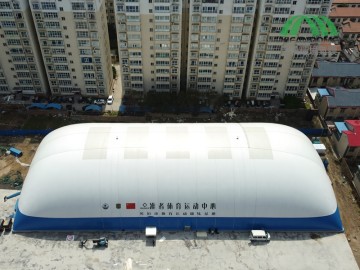
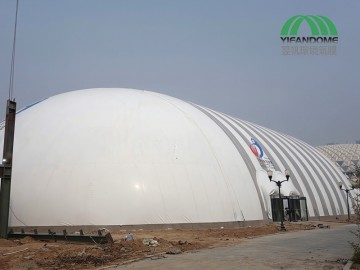
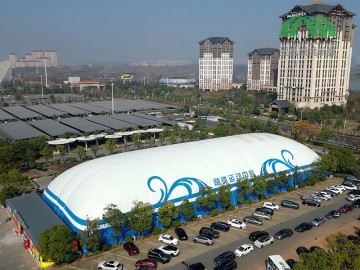
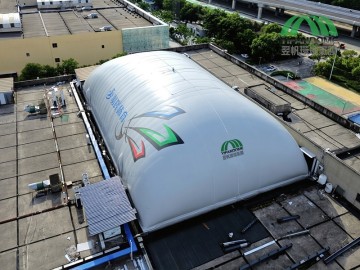
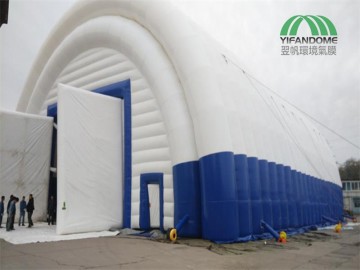
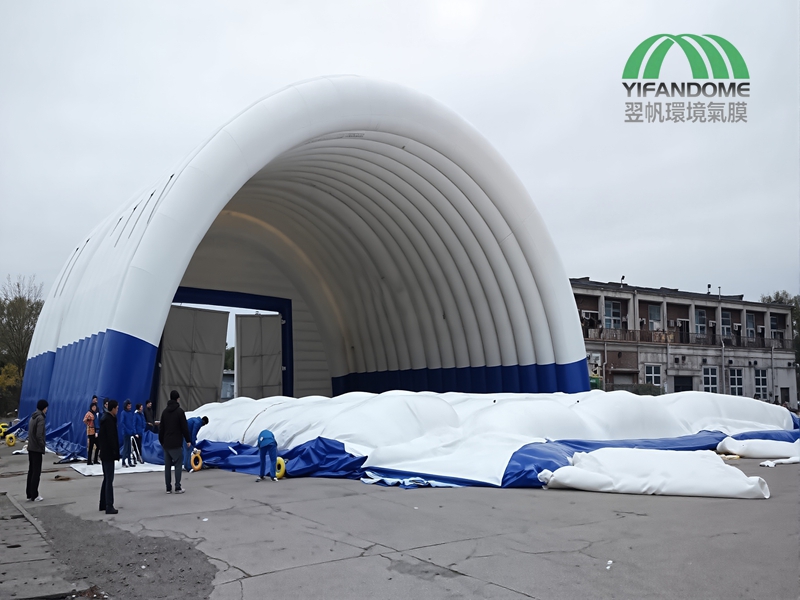
Custom Air-Rib Membrane Structure Aircraft Hangar
Parameters
Name |
Custom Air-Rib Membrane Structure Aircraft Hangar |
Span |
40m - 60m |
Area |
2000㎡-3000㎡ |
Material |
PVDF Coated Polyester Fabric(Fire Rating: Class B1) |
Build Time |
Ready to use in 3-5 days |
Wind Resistance |
Up to Level 12 |
Temperature |
-40℃~60℃ |
Lifespan |
>25 Years (Regular maintenance) |
Details
-
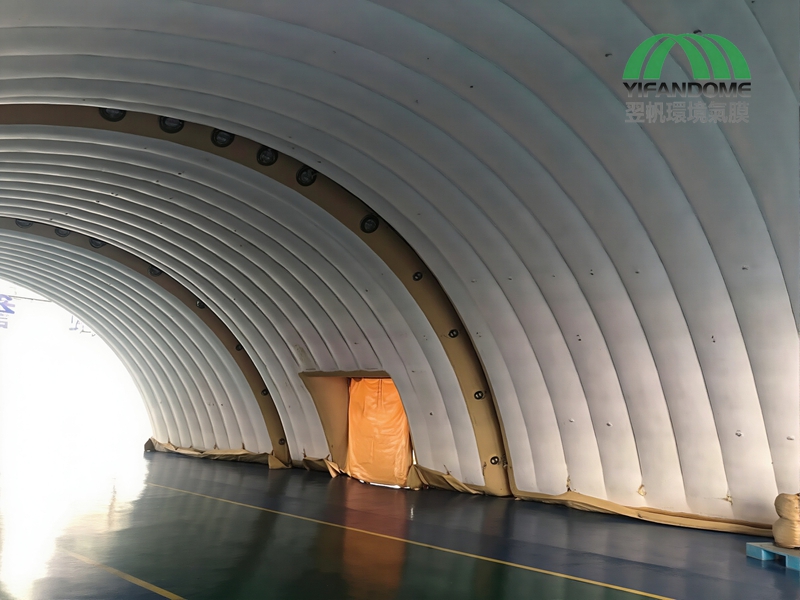
Air-Rib Hangar Interior
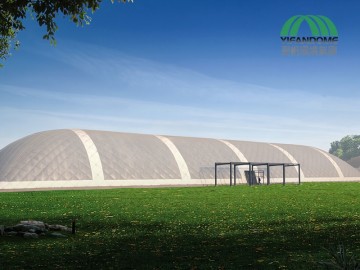
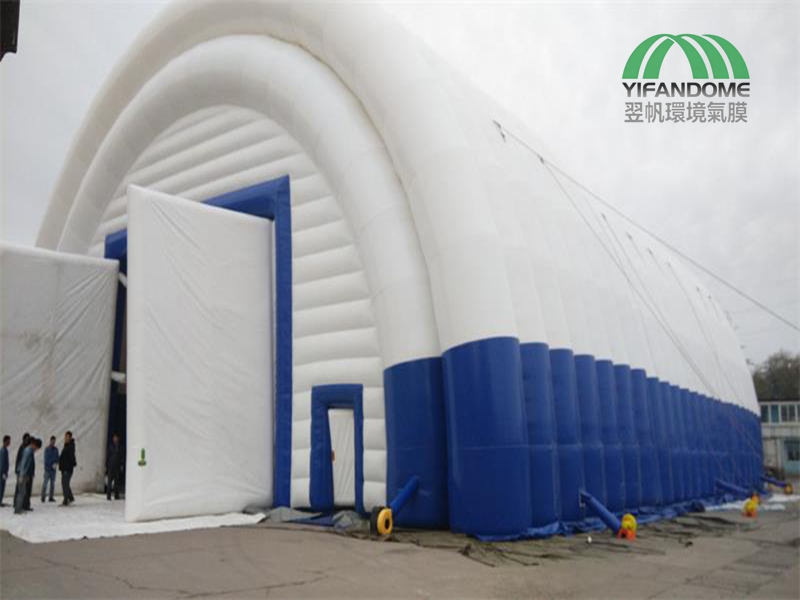
This inflatable air-rib membrane structure mobile aircraft hangar has a length of 40 meters, a net span of 40 meters, and a peak height of 12 meters. Its interior is completely free of column obstructions, providing spacious and transparent space for the parking, maintenance, and daily servicing of standard aircraft. It can be regarded as a professional mobile aviation infrastructure solution.The membrane hangar adopts a front-to-back double-door design, ensuring that aircraft and various equipment can smoothly enter and exit in a straight line. This double-end access design effectively avoids the operational limitations of single-door hangars and significantly improves on-site scheduling flexibility and aviation operation efficiency. -
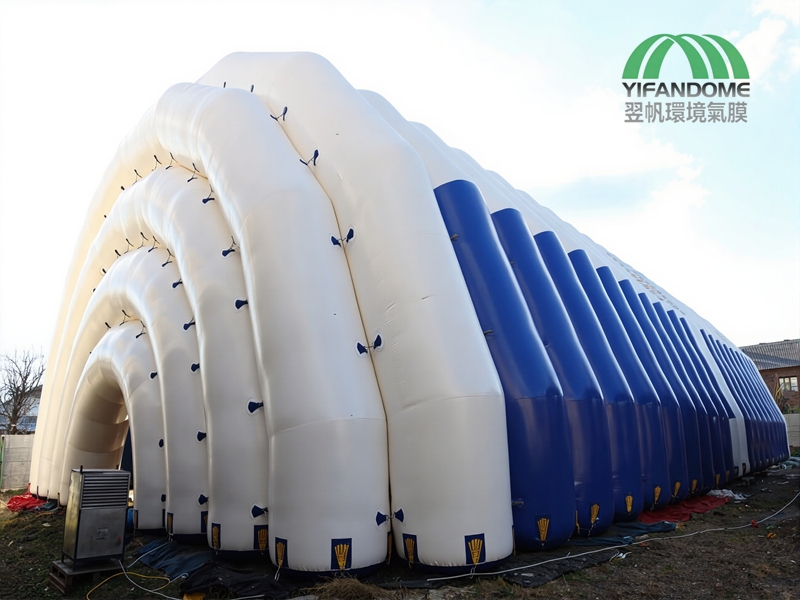
Air-Rib Hangar Details
The main body of the air-supported hangar structure is made of high-strength industrial-grade PVC membrane materials, which are durable and sturdy. The exterior color can be customized and is available in various tones such as white, light gray, and sky blue, which can perfectly blend into various on-site environments and meet different aesthetic requirements. -
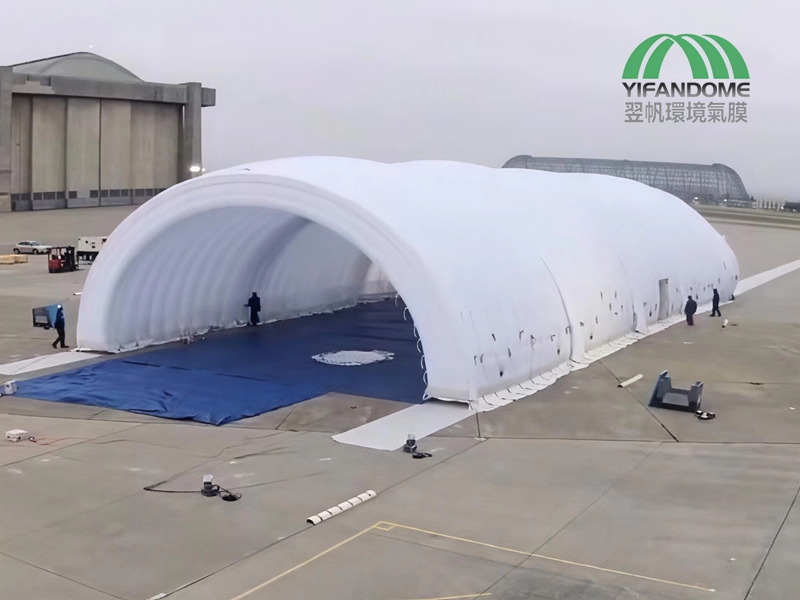
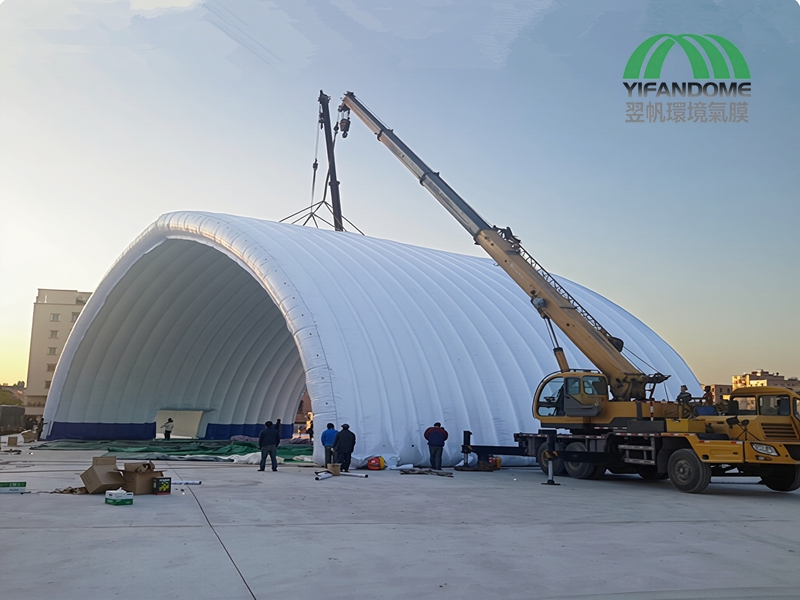
Air rib machine installation in progress
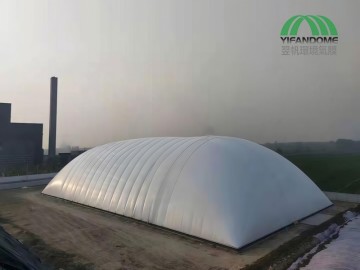
This hangar uses an independent inflatable rib structure as the load-bearing framework, eliminating the need for complex foundation anchoring works and continuous high-pressure air supply. Its deployment, disassembly, and transportation processes are extremely rapid and convenient, and there are no strict requirements for site conditions. It is an ideal choice for field operations, temporary camps, and emergency aviation maintenance scenarios. -
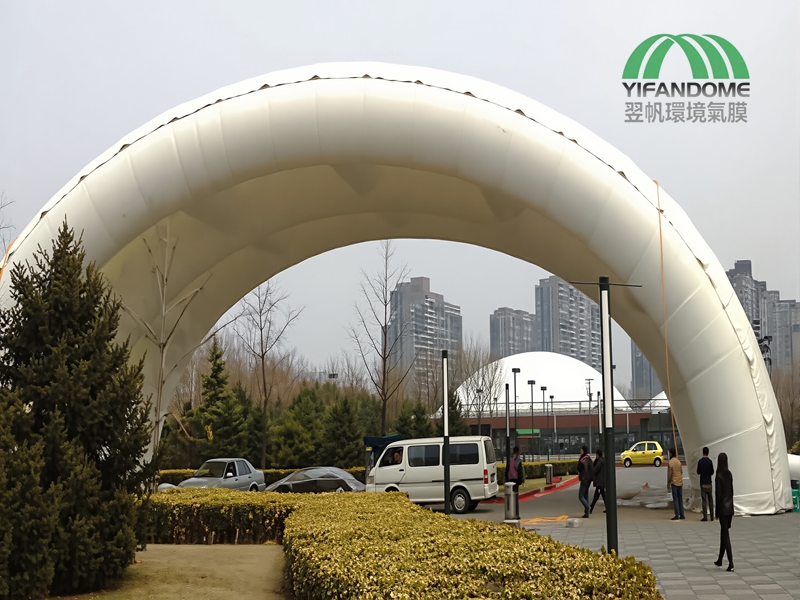
Other Applications of Air-Rib Hangars
Thanks to its excellent tear resistance, UV resistance, and excellent wind and snow load-bearing performance, its high-quality membrane material ensures that the hangar can operate stably, safely, and long-term in harsh outdoor environments, with extremely low maintenance costs.Combining the advantages of large span, unobstructed space, rapid installation, and high cost-effectiveness, this inflatable membrane structure hangar is widely used in outdoor aircraft parking, aviation equipment storage, and emergency maintenance fields. It is a reliable mobile aviation protection facility.
Other Advantages
The membrane surface features a special treatment with excellent hydrophobic properties, allowing rainwater to automatically wash away most dirt and keep the appearance clean with minimal maintenance costs.
Designed for multiple reuses with 95% recyclable materials to minimize waste and meet green engineering standards.
Application Scenarios
• Private Individuals: Provides parking and maintenance for small private aircraft and helicopters, and can also serve as a garage or warehouse.
• Military: Offers a facility for flight preparation, component replacement, and weapon loading of fighter jets, effectively extending their combat radius.
• Emergency Rescue Centers: Serves as a rapidly deployable temporary airfield and shelter.
• Airlines: Acts as a cost-effective and versatile hub for the daily storage, scheduled inspection, and maintenance of passenger aircraft.
FAQ
Q1: How long can the air rib membrane structure last if the inflation system fails?
A1: Approximately 30 minutes. In the event of a sudden power outage, the backup power supply will take over within half a minute, so there is no impact at all. If all power sources fail, the structure will slowly depressurize and will take at least 30 minutes to fully collapse near the ground.
Q2: Can the air rib membrane structure be easily blown away by the wind?
A2: It is highly unlikely. The ground post anchors use sturdy steel structures that are tightly connected to the ground through concrete pouring. Multiple anchor points share the load, and during high winds, the internal high pressure combined with the streamlined design also helps reduce wind resistance.
Q3: What should be done if the membrane material gets damaged?
A3: The membrane material is very tough, but don't worry if accidental damage occurs. Small tears can be repaired using a patch of the same material with a heat welder. For medium to large damages, you can either use aluminum clamping plates to firmly secure a patch above and below the damaged area, or simply replace the affected air rib unit.