




Hot Products
0102030405
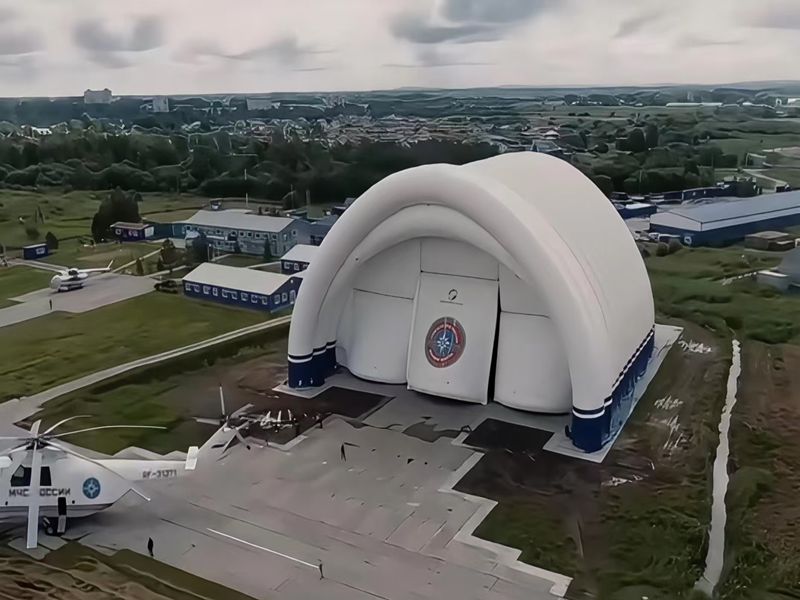
Custom All-Weather Prefabricated Air Membrane Aviation Hangars - China Suppliers and Factory Solutions
Parameters
| Name | All-Weather Prefabricated Air Membrane Aviation Hangar |
| Area | 4200㎡ |
| Material | PVDF-coated Polyester Membrane (Class B1 Fire Retardant) |
| Build Time | 7 Days (Installation & Commissioning) |
| Wind Resistance | Level 12 |
| Temperature | -40℃~60℃ |
| Lifespan | >25 Years (Routine maintenance) |
Details
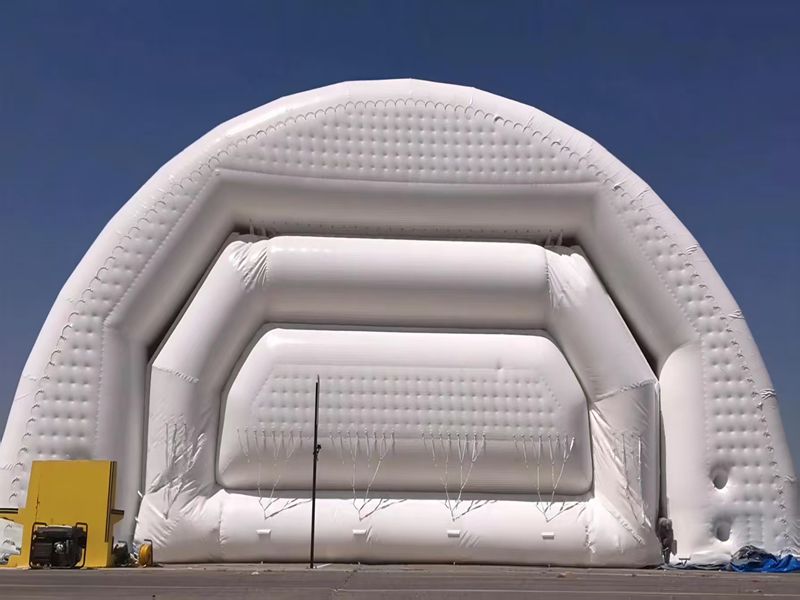
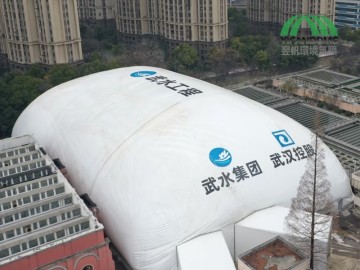
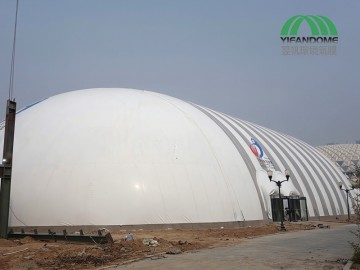
Air hangar customized logo appearance
All-weather prefabricated air membrane aviation hangars support customized aviation gray tone, logos, warning strips and graphic printing. Minimalist industrial appearance blends seamlessly with airport terminals and taxiways. Shape, color, patterns and internal dimensions can be customized to match aircraft models and airport planning.
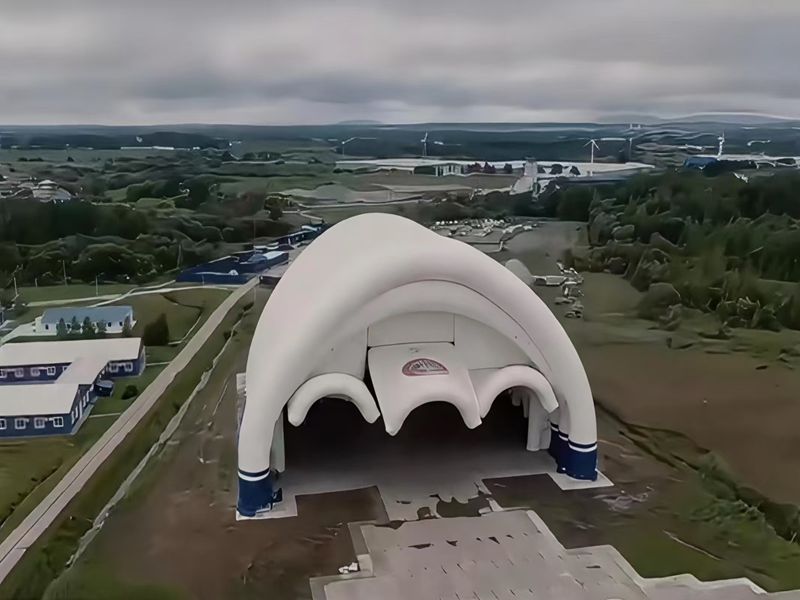
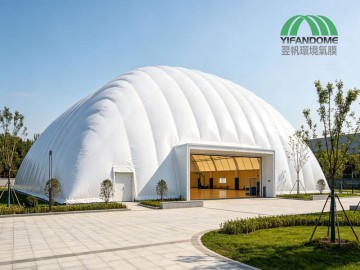
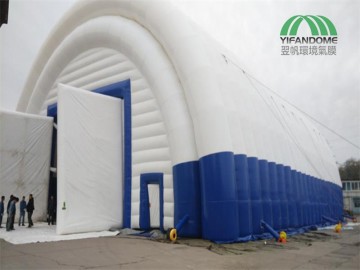
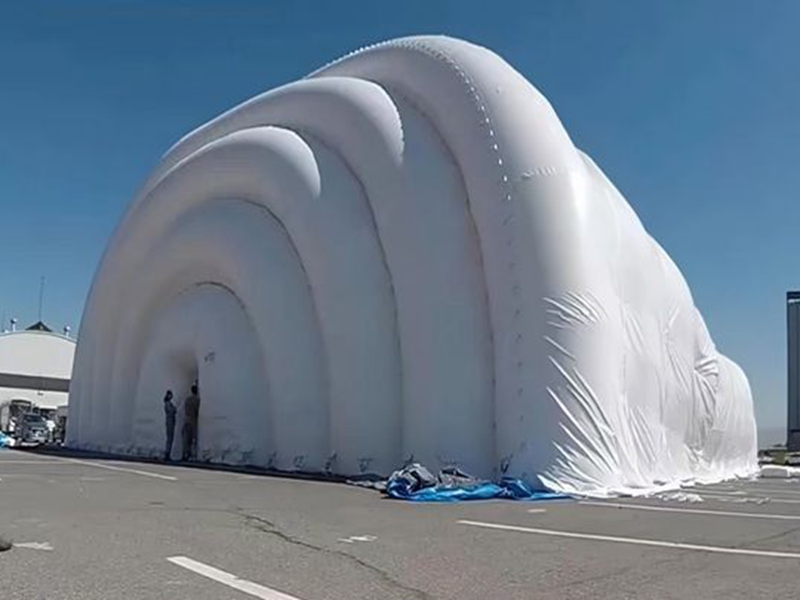
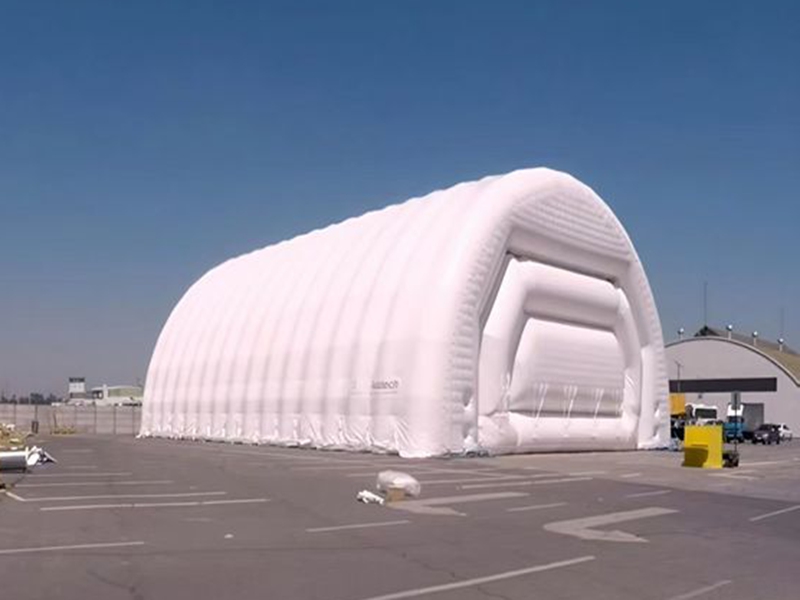
Air Hangar Inflatable Door Facade
The enclosure adopts premium PVDF-coated polyester fabric. Anchors, air supply units and accessories are prefabricated in factory. On-site anchoring, inflation and commissioning finish within 7 days. Low-noise and low-dust construction meets airport environmental rules. The hangar can be fully disassembled, transported and relocated, with flexible space expansion or reduction.
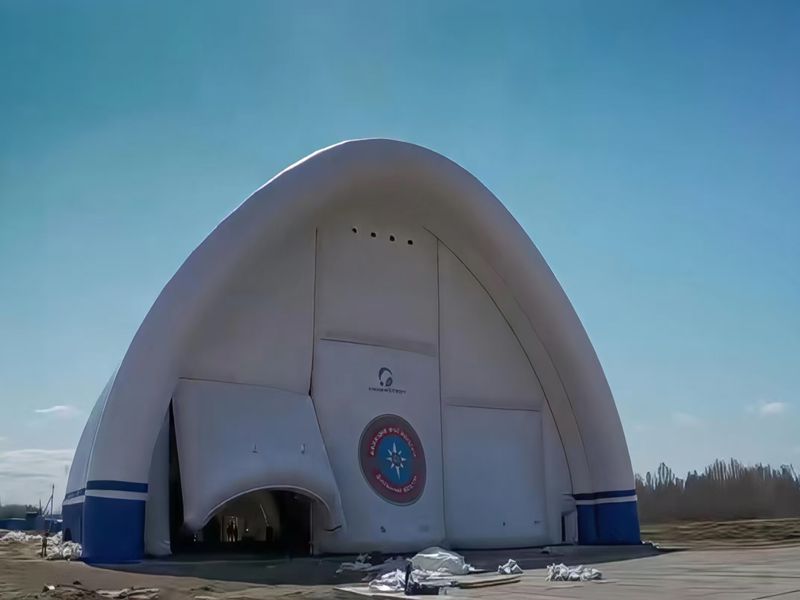
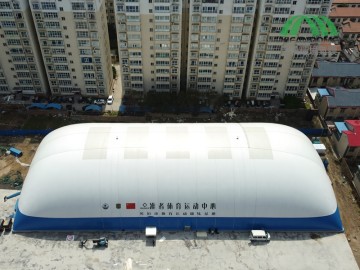
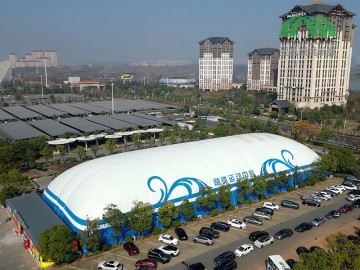
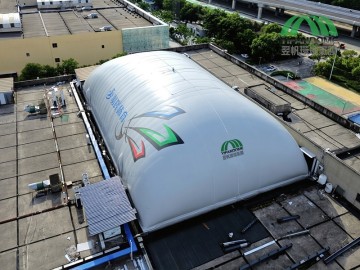
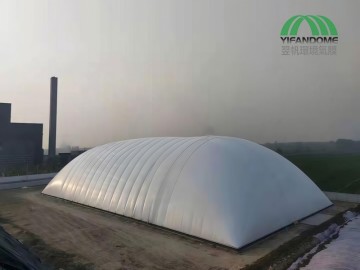
Air Hangar Aerial Site Panoramic
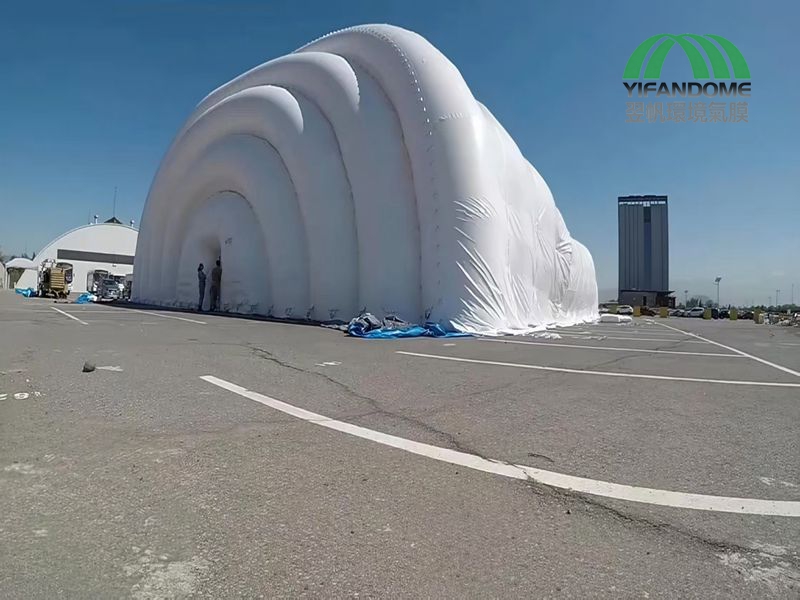
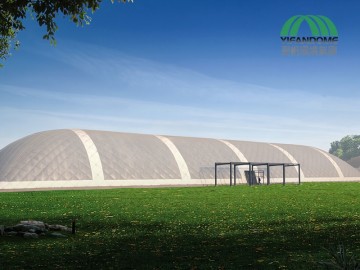
Large arc arch and column-free design delivers wide unobstructed interior space. Suitable for helicopters, fixed-wing planes, business jets and large UAVs, supporting aircraft parking, daily inspection and overhaul without internal obstructions.
Other Advantages
Modular & Detachable
Modular detachable design, enabling easy relocation and cutting cross-region transportation costs.
Self-Cleaning Surface
Self-cleaning PVDF membrane surface, reducing manual maintenance and lowering long-term operation expenses.
Eco-Friendly Material
Fully recyclable fabric material, minimizing construction waste and meeting international aviation environmental standards.
Lightweight Structure
Lightweight structure, only flat hardened ground is required, saving foundation construction cost and time.
Application Scenarios
Airports & Flight Schools
Temporary shelter for aircraft parking and daily inspection.
Aviation MRO Factories
Closed space for aircraft overhaul and component maintenance.
Military Forward Airfields
Rapid deployable hangar for fighter jets, helicopters and UAV storage.
Emergency Aviation Bases
All-weather enclosure for disaster rescue aircraft protection.
FAQ
Q1: Will continuous inflation cause high power consumption?
A1: It will not. The intelligent pressure system only supplements a small amount of air lost by natural leakage with low power consumption. Optional solar power supply can be equipped for remote airports without complete power grid to further cut operating costs.
Q2: Does the product satisfy aviation fire prevention and anti-corrosion requirements?
A2: Sure. The membrane reaches Class B1 flame retardant grade and can resist salt fog, engine oil and chemical corrosion at airports. All internal electrical equipment adopts explosion-proof aviation fittings, complying with airport fire safety regulations.
Q3: Is the on-site installation complicated?
A3: No. More than 90% of processing work is completed in factory. Flat solid ground is required for the site. A team of 8–10 workers can complete inflation, anchoring and system commissioning within 7 days. Internal lighting, ventilation and other auxiliary equipment can be installed afterwards.
Q4: What is the wind resistance and durability of the air hangar?
A4: The air membrane hangar features Level 12 wind resistance and can withstand extreme temperatures from -40℃ to 60℃. With routine maintenance, the structure has a service lifespan of more than 25 years.
Q5: Can the appearance and dimensions of the hangar be customized?
A5: Yes, the shape, color, warning strips, logo printing, and internal dimensions can all be customized to match specific aircraft models and meet airport master planning requirements.
Q6: What type of foundation is required for the air hangar?
A6: The lightweight structure requires only flat hardened ground for installation. This eliminates the need for complex deep foundations, significantly saving construction time and budget.