Leave Your Message
Explore our premium range of air dome structures customized for agricultural cultivation, protective storage, and eco-farming operations.
Analyzing the paradigm shift from traditional glass and plastic tunnels to high-efficiency, air-supported ecosystems.
In the face of intensifying global climate instability, traditional open-field farming and conventional glass or poly-tunnel greenhouses are meeting their physical and economic limits. The commercial agricultural sector is rapidly turning to Greenhouse Air Domes as a disruptive solution for large-scale crop protection and controlled environment agriculture (CEA). These air-supported membrane structures provide an column-free internal space, allowing for maximum land utilization and the seamless operation of heavy agricultural machinery.
Industrially, the demand is driven by the need for consistent, year-round crop yields regardless of external meteorological volatility. Extreme weather events—such as hail storms, typhoons, unexpected frosts, and prolonged droughts—can decimate outdoor crops in hours. Greenhouse Air Domes act as a structural shield, offering unparalleled resistance against high winds and heavy snow loads. The economics of these structures are highly compelling: lower initial capital expenditure (CAPEX) compared to glasshouses, rapid installation timelines, and significantly reduced operational energy requirements when integrated with modern thermal insulation systems.
100% internal space utilization with zero internal pillars or support columns, enabling flexible crop layouts.
Engineered to withstand extreme gales, heavy snow loads, and severe temperature fluctuations globally.
Hermetically sealed air-supported structures block pests, airborne pathogens, and chemical drift from adjacent farms.
The future of agricultural air domes lies in intelligent automation. Today's systems are no longer passive plastic sheets; they are dynamic, responsive bio-domes. The integration of Internet of Things (IoT) sensors and AI-driven environmental control systems allows the dome to alter its internal pressure, humidity, temperature, and carbon dioxide levels in real-time based on crop needs.
Furthermore, the development of high-transparency PVDF and ETFE membrane materials ensures optimal photosynthetically active radiation (PAR) transmission. These advanced materials prevent UV degradation while managing light scattering, reducing hotspots inside the dome and promoting uniform crop growth. Another prominent trend is the adoption of double-layer or multi-layer insulated air membranes, which incorporate thermal barriers to reduce heating costs in cold regions and cooling costs in arid climates.
Yifan Air Dome is a high-tech enterprise dedicated to innovative, eco-friendly air-supported membrane structures and integrated air dome building solutions. As a leading integrated service provider in the application of membrane structure technology across China, we cover the full industrial chain of R&D, design, manufacturing, installation and full-cycle operation and maintenance, delivering high-efficiency, energy-saving and low-carbon sustainable building space solutions for global clients.
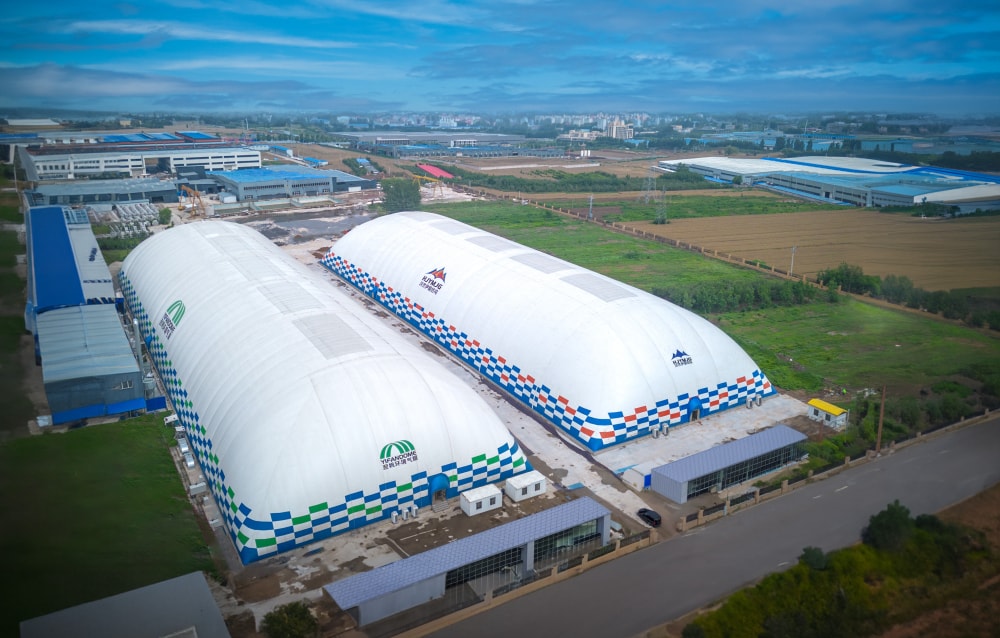
With years of deep cultivation in the air dome and membrane structure industry, we adhere to the development philosophy of green low-carbon, technological innovation and quality priority, and strictly comply with industrial construction and production standards. Supported by standardized production techniques and abundant experience in large-scale project implementation, we professionally customize various air domes, including sports stadiums, industrial warehouses, environmental enclosures, cultural tourism venues and exhibition membrane buildings, which are widely applied in sports fitness, industrial storage, environmental dust prevention, cultural tourism scenic spots and public supporting facilities.
From high-value seed cultivation to extreme desert reclamation, exploring the versatility of air-supported agricultural infrastructure.
Seed breeding is the foundation of global food security, requiring sterile, hyper-controlled environments to prevent cross-contamination and genetic drift. The hermetically sealed nature of the Greenhouse Air Dome provides an absolute barrier against external pollen, insects, and airborne diseases. By maintaining positive internal pressure, the system ensures that air only flows outward when access doors are opened, preventing any contaminants from entering. This makes it an ideal environment for universities, research institutes, and multi-national seed corporations to cultivate parent lines and genetically modified crops in complete isolation.
In arid regions like the Middle East or North Africa, traditional farming is crippled by water evaporation and intense heat. Greenhouse Air Domes can be fitted with specialized reflective PVDF membranes that block excessive infrared radiation while letting through visible light. Combined with closed-loop hydroponic or aeroponic cultivation systems, these domes reduce water consumption by up to 90% compared to open-field farming. Conversely, in sub-zero polar or high-altitude zones, double-layered air domes with thermal insulation layers trap internal heat generated by LED grow lights and biomass heating, creating a tropical microclimate amidst frozen terrains.
Consumers are demanding organic produce free from chemical pesticides. The primary challenge of organic farming is pest control. Because air domes are sealed structures equipped with high-efficiency particulate air (HEPA) filtration systems at the intake fans, pests are physically barred from entering. This drastically minimizes, or completely eliminates, the need for chemical pesticide application. Leafy greens, berries, and vine crops grown within these domes achieve higher cleanliness standards, meeting the most stringent organic certification requirements worldwide.
When natural disasters strike, restoring local food production is vital. Traditional steel-and-glass greenhouses take months to construct and require heavy foundations. In contrast, Yifan's modular air domes can be transported in standard shipping containers and inflated within days on minimal foundation work. This rapid deployment capability makes them invaluable for humanitarian aid organizations and governments seeking to re-establish local crop production and food security in post-disaster zones.
Witness our professional engineering standards, state-of-the-art equipment, and systematic manufacturing flowchart.
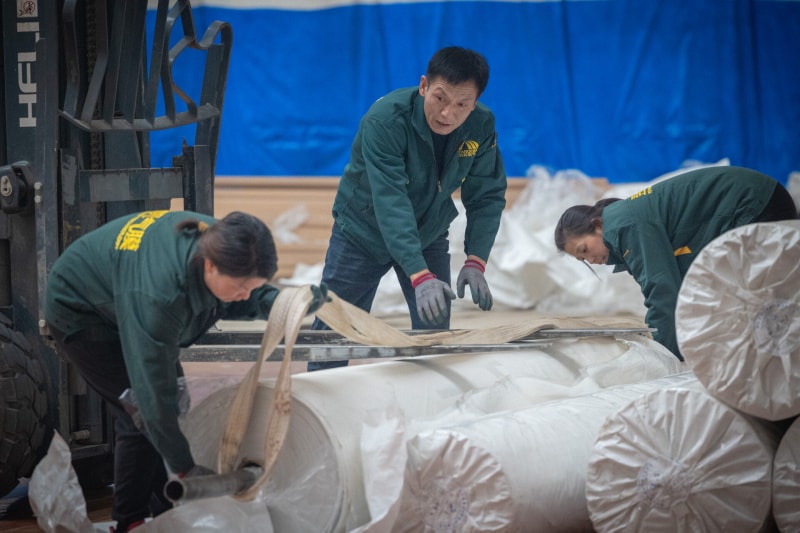
1. Select the customized membrane material
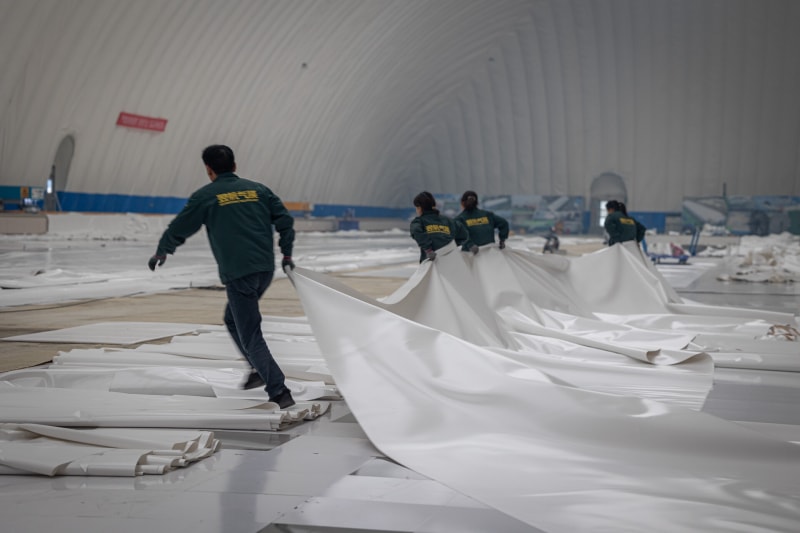
2. Deploy the membrane material
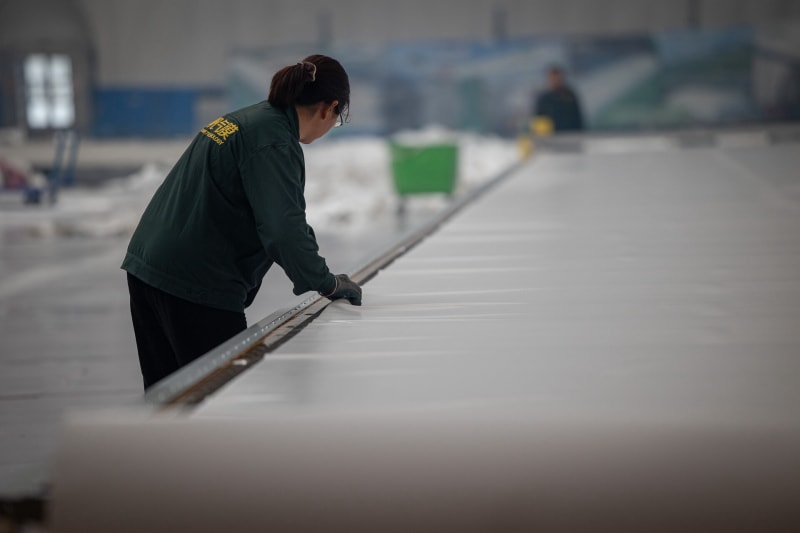
3. Lay membrane on cutting machine & import designs
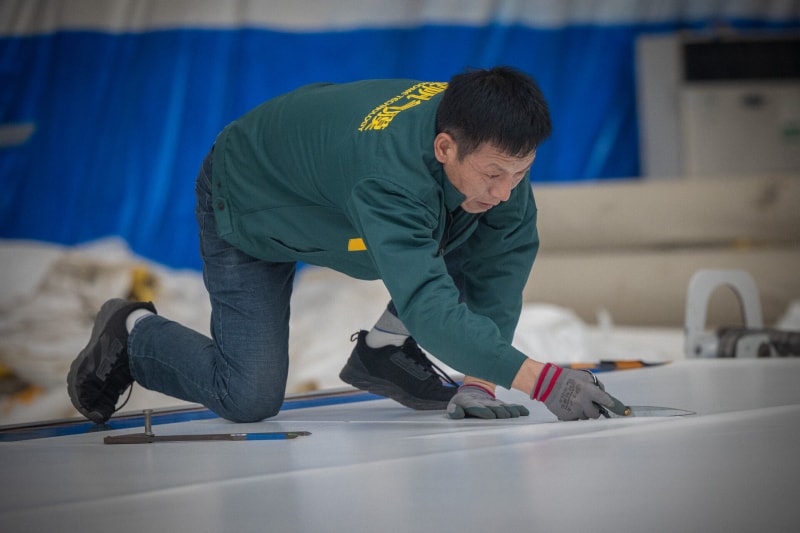
4. Manually trim edges to ensure a secure weld
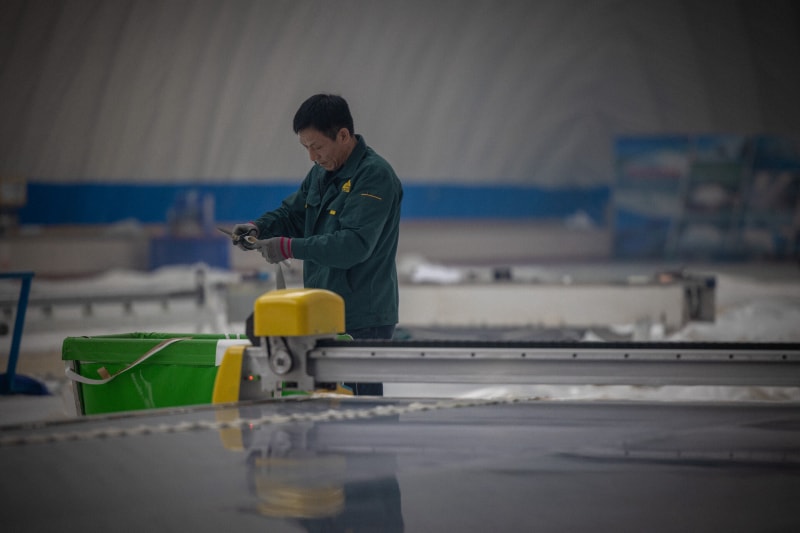
5. Cutting, Splicing, and Reinforcement Strips
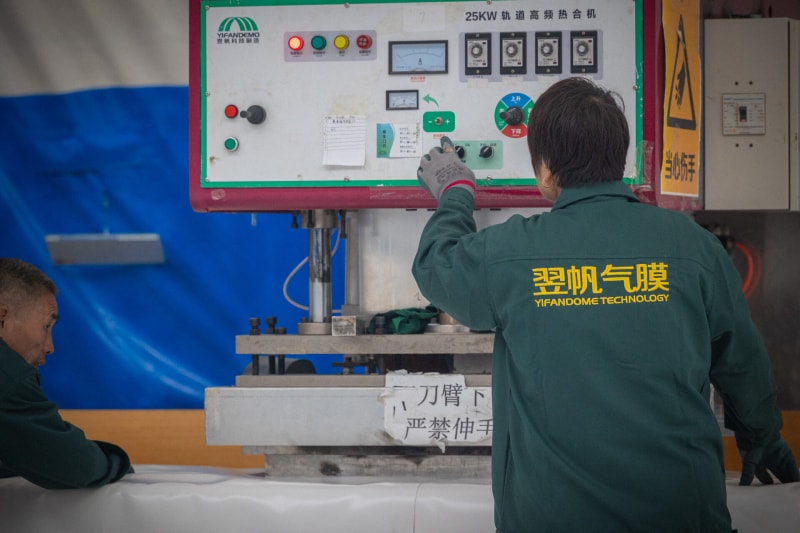
6. Weld using track-type high-frequency heat sealer
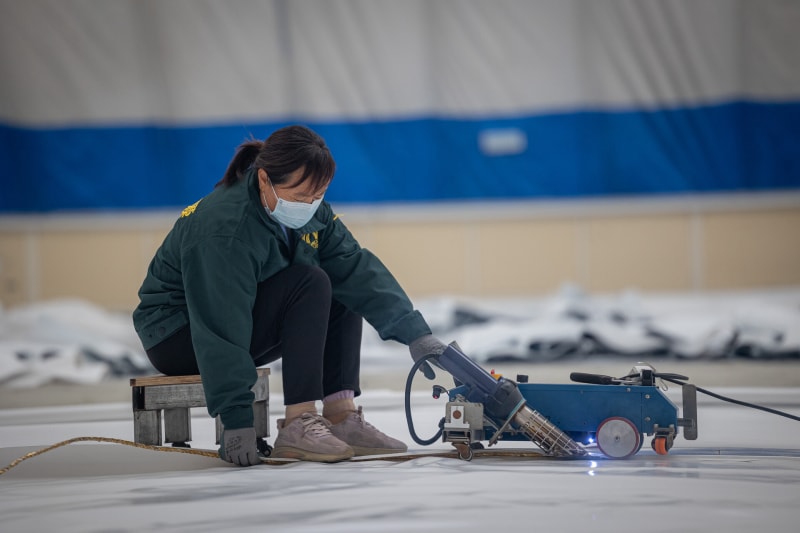
7. Small Hot Sealer Welding Rope Channel
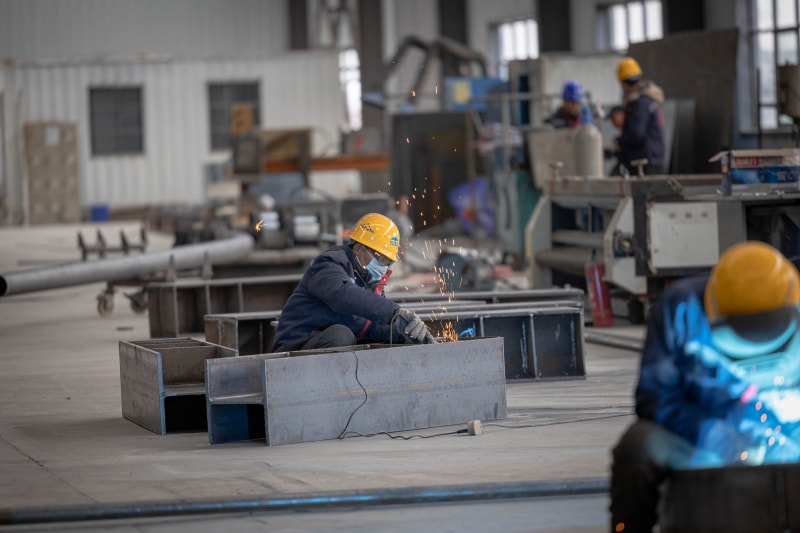
8. Manufacturing clamps, doors, windows & pipes
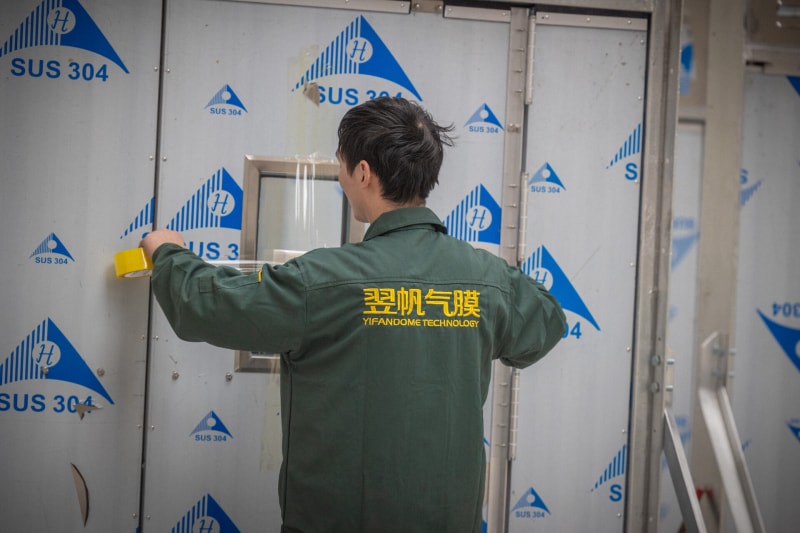
9. Check product, pack it, and prepare for transport
Understanding the structural mechanics, material science, and thermodynamic properties of Yifan's Greenhouse Air Domes.
The choice of membrane is critical to agricultural success. Yifan utilizes high-transmission PVDF (Polyvinylidene Fluoride) and ETFE (Ethylene Tetrafluoroethylene) membranes engineered specifically for greenhouse applications. These materials boast a light transmission rate of up to 90%, closely mimicking natural sunlight. Additionally, they are treated with anti-condensation and anti-dust coatings. Condensation droplets on the inner ceiling of a greenhouse can act as lenses, burning plant leaves, or drop down and encourage fungal growth. Our anti-drip coatings cause moisture to run down the sides of the dome safely into drainage channels, maintaining optimal humidity and plant health.
Unlike traditional glass greenhouses that lose heat rapidly through conduction, the air cushion within an air dome acts as a natural insulator. By utilizing a double-membrane structure with a continuous air gap, we create a thermal barrier that reduces heating and cooling energy demands by 30% to 50%. This thermal efficiency is crucial for commercial viability, especially in regions with high energy costs. The dome's HVAC systems are integrated with heat recovery ventilators (HRVs) to ensure that fresh air is pre-conditioned using the energy of the exhaust air, keeping energy waste to an absolute minimum.
The structural integrity of an air dome depends on internal air pressure. Yifan's air domes feature redundant, computerized inflation systems that monitor wind speed, snow accumulation, and internal pressure. If sensors detect high external winds or snow loads, the system automatically increases internal pressure to stiffen the structure, preventing deformation. These systems are linked to backup generators and solar storage units, ensuring uninterrupted operation even during grid failures. This level of automation guarantees that valuable crops remain protected 24/7/365.
Discover our full suite of premium air-supported structures designed for diverse global applications.