Leave Your Message
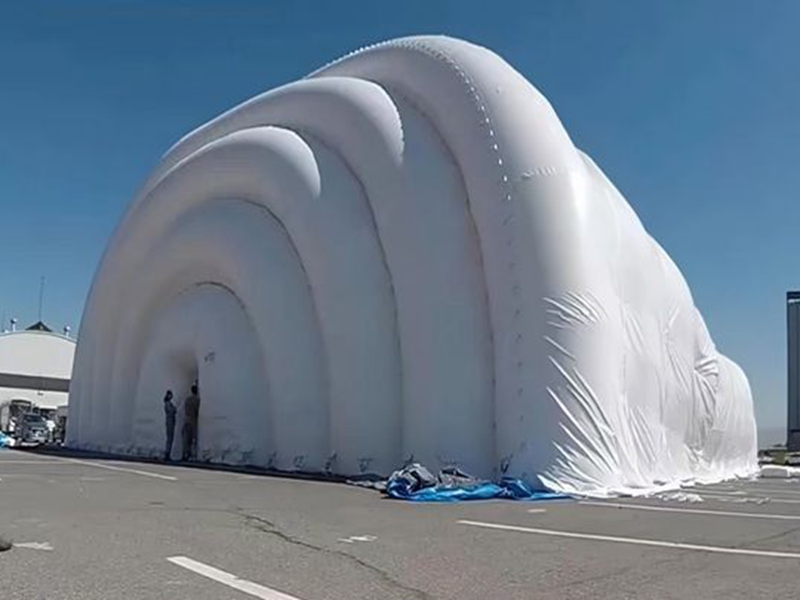
In the rapidly evolving aviation sector, agility, cost-efficiency, and sustainability have transitioned from operational preferences to strategic imperatives. Traditional brick-and-mortar aircraft hangars, while durable, present significant drawbacks: prolonged construction timelines, immense capital expenditure, and an absolute lack of mobility. Enter the Industrial Inflatable Membrane for Temporary Aircraft Hangars—a technological breakthrough that is redefining how commercial airlines, military logistics, and maintenance, repair, and overhaul (MRO) service providers manage their structural assets.
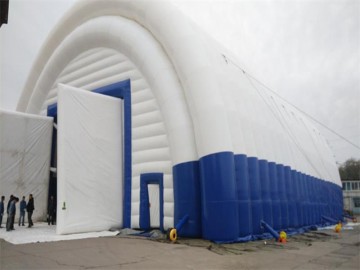
Designed to provide rapid environmental protection, these advanced air-supported structures utilize high-performance composite textiles and automated air-control systems. They offer a dynamic alternative that can be erected in a fraction of the time required for conventional steel buildings, ensuring that fleet operations remain uninterrupted regardless of geographic constraints or seasonal changes.
Inflatable hangars can be transported globally in standard containers and inflated within days, drastically reducing downtime during emergency fleet expansions or field repairs.
Constructed with recyclable PVDF-coated membranes, these structures require fewer raw materials and feature an energy-efficient design that minimizes lifetime energy consumption.
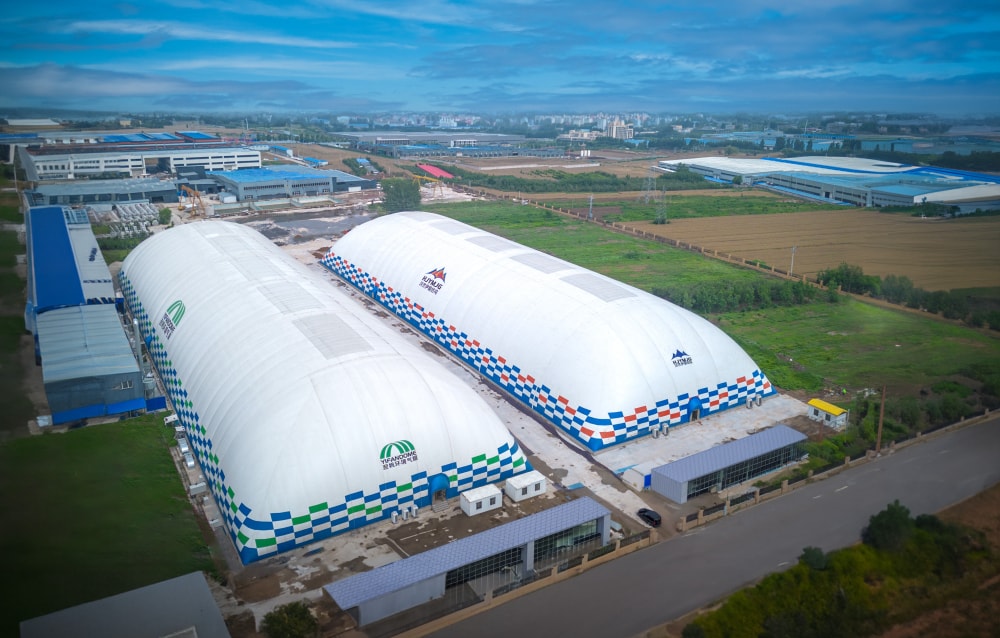
Aviation operators regularly face seasonal capacity bottlenecks. When permanent hangar space is fully booked, aircraft scheduling suffers. Temporary inflatable membrane hangars provide instant, climate-controlled environments for heavy maintenance checks, engine swaps, and composite repairs. These structures can be equipped with specialized HVAC systems and air filtration units, ensuring compliance with strict aviation dust and humidity standards.
For defense forces operating in remote or hostile environments, speed is survival. Inflatable hangars serve as tactical shelter systems for fighter jets, helicopters, and unmanned aerial vehicles (UAVs). Without the need for deep concrete foundations, these structures can be set up on packed soil, gravel, or temporary runways, shielding valuable military assets from extreme sun, sandstorms, and thermal detection.
Aerospace manufacturers often require localized, clean-room environments for final assembly, component curing, or painting. The translucent properties of advanced industrial membranes allow natural daylight to illuminate the interior, reducing the reliance on artificial lighting while maintaining a hermetically sealed space to prevent particulate contamination.
The reliability of an air-supported hangar hinges on the engineering of its membrane. Modern industrial membranes are multi-layered composite materials consisting of a high-tenacity polyester base fabric coated with polyvinyl chloride (PVC) and finished with a protective polyvinylidene fluoride (PVDF) topcoat. This chemical composition yields several critical performance characteristics:
Through advanced aerodynamic design and internal pressure regulation, inflatable hangars can withstand wind speeds up to 120 km/h and heavy snow accumulation, adapting dynamically to external forces.
Automated backup inflation systems continuously monitor internal air pressure, wind load, and structural deformation, adjusting the air supply automatically to guarantee absolute stability.
Yifan Air Dome is a high-tech enterprise dedicated to innovative, eco-friendly air-supported membrane structures and integrated air dome building solutions. As a leading integrated service provider in the application of membrane structure technology across China, we cover the full industrial chain of R&D, design, manufacturing, installation and full-cycle operation and maintenance, delivering high-efficiency, energy-saving and low-carbon sustainable building space solutions for global clients.
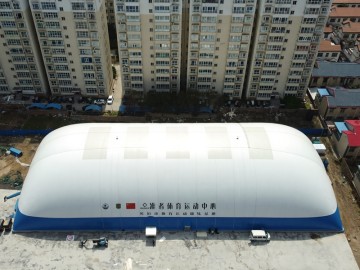
With years of deep cultivation in the air dome and membrane structure industry, we adhere to the development philosophy of green low-carbon, technological innovation and quality priority, and strictly comply with industrial construction and production standards. Supported by standardized production techniques and abundant experience in large-scale project implementation, we professionally customize various air domes, including sports stadiums, industrial warehouses, environmental enclosures, cultural tourism venues and exhibition membrane buildings, which are widely applied in sports fitness, industrial storage, environmental dust prevention, cultural tourism scenic spots and public supporting facilities.
Taking modular innovation and environmental adaptation technology as our core philosophy, we focus on the R&D and scenario application of air dome buildings. Leveraging an advanced modular structure and robust environmental adaptability, we deliver core strengths including shorter construction cycles, cost-effectiveness, easy disassembly and relocation, and recyclable reuse. Our structures perfectly withstand complex weather and natural conditions such as snow, gale winds, heavy rain, high temperature and severe cold. We adhere to tailored solutions adapted to local conditions. Fully suited for diverse application scenarios, we comprehensively meet clients’ customized needs for personalized space utilization and engineering construction.
Moving forward, Yifan will further advance core technologies in air-supported structure innovation and environmental adaptability. By deeply cultivating the global market for membrane structures, the company aspires to become a leading international provider of comprehensive solutions for air-supported buildings. Leveraging green, low-carbon technologies to empower the transformation of architectural spaces, Yifan aims to create a new global ecosystem of modular air-supported structures—one that is safer, more energy-efficient, better adapted to diverse needs, and more sustainable.
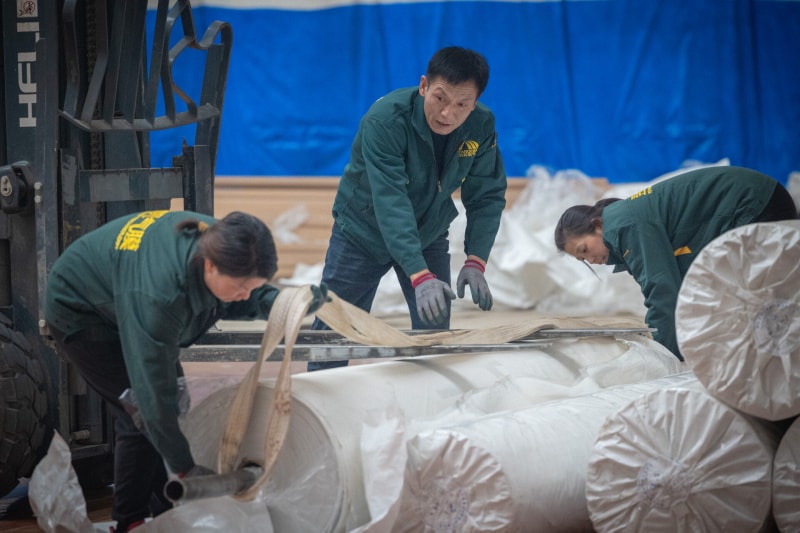
Select the customized membrane material
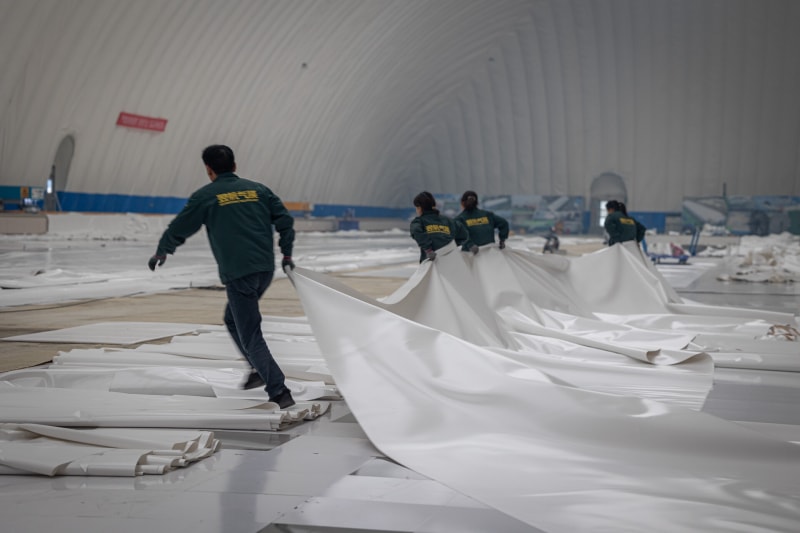
Deploy the membrane material
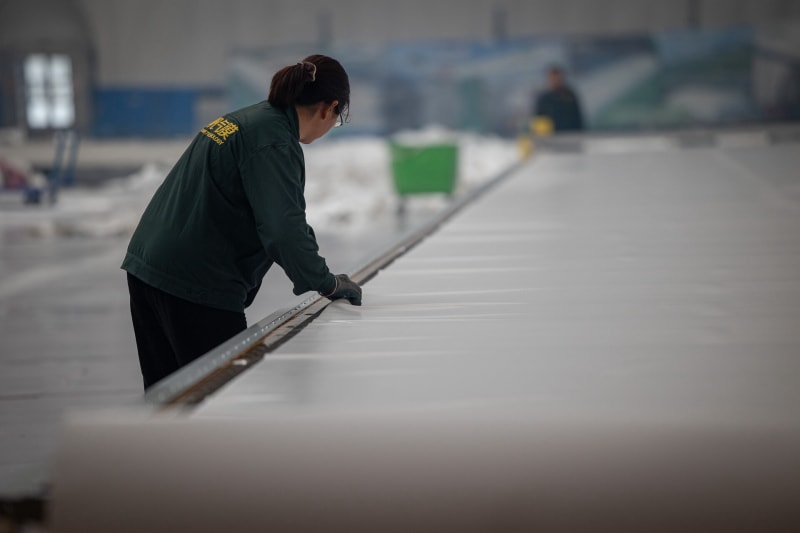
Lay the membrane material on the automated cutting machine and import the flat design drawings
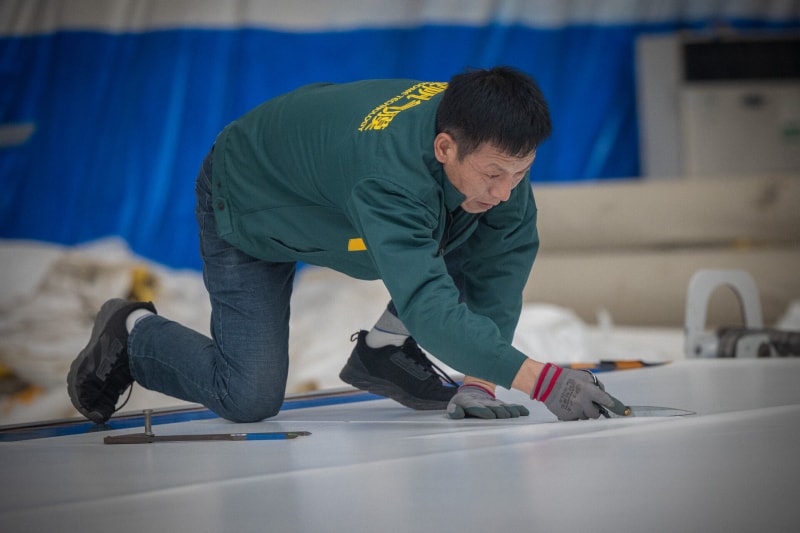
Manually trim the edges of the membrane material to remove exposed fibers and ensure a secure weld
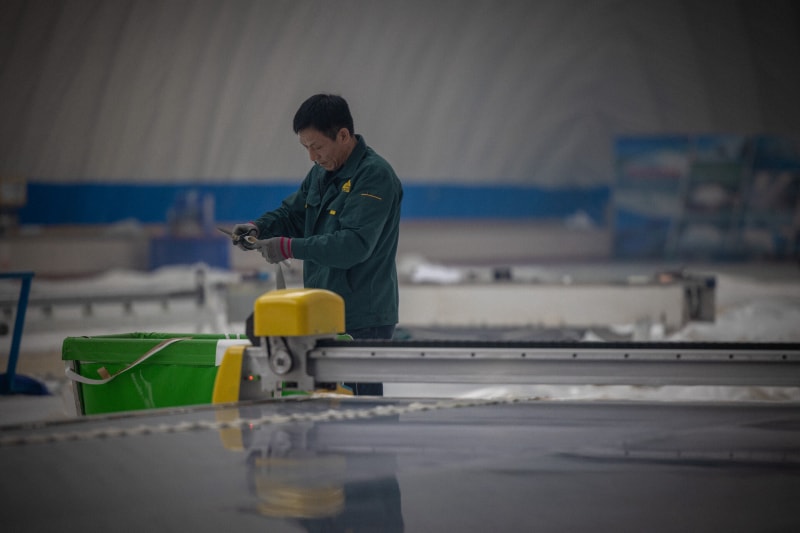
Cutting, Splicing, and Reinforcement Strips
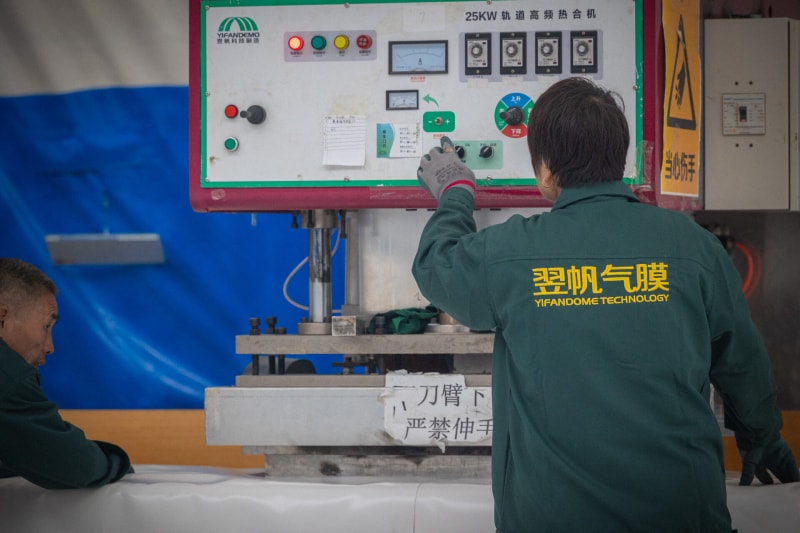
Arrange the membrane materials and weld them using a track-type high-frequency heat-sealer
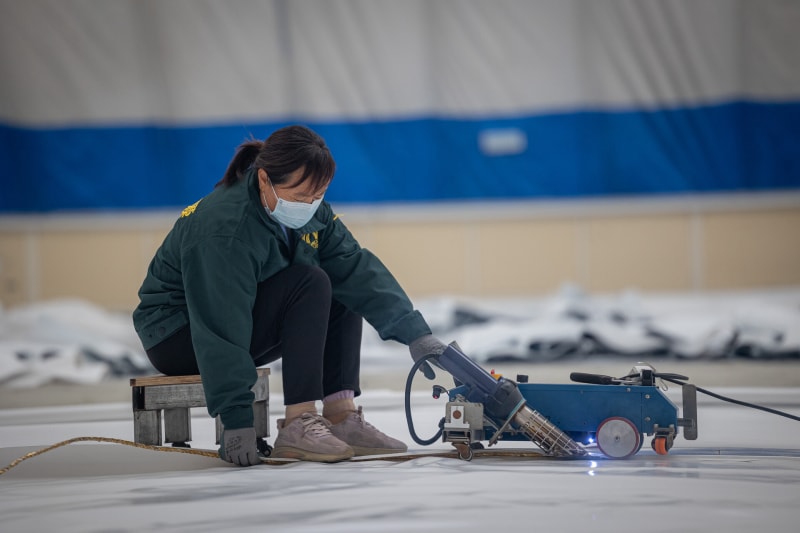
Small Hot Sealer Welding Rope Channel
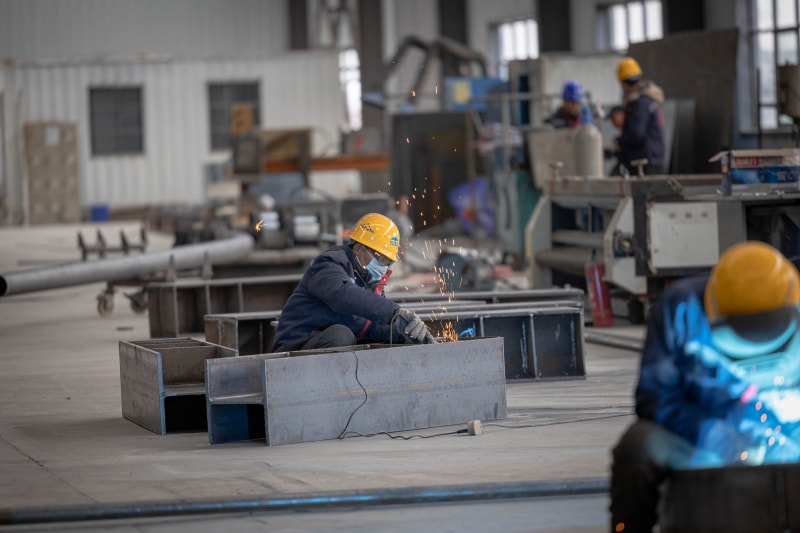
Manufacturing aluminum alloy clamps, door and window fittings, and inflatable pipes
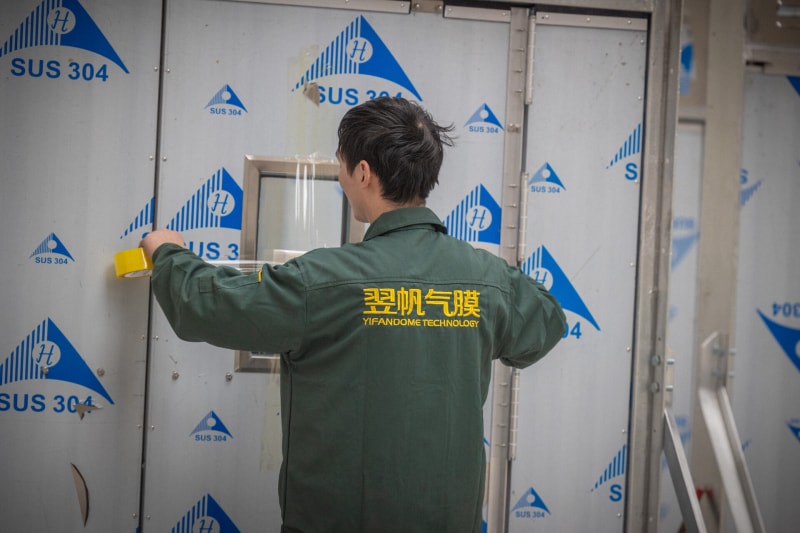
Check the final product, pack it securely, and prepare for global transportation
As the aerospace industry aims for carbon neutrality by 2050, every piece of auxiliary infrastructure must contribute to sustainability. The future of temporary hangars lies in the integration of smart technologies and circular economy principles. Key technological trends shaping this space include:
Flexible, thin-film organic solar cells are being integrated directly onto the surface of PVDF membranes, allowing hangars to generate their own clean electricity and run off-grid.
Embedded fiber-optic sensors and AI algorithms monitor stress, temperature, and pressure fluctuations in real-time, predicting structural maintenance needs before they occur.
Moreover, the modularity of these temporary structures allows for effortless relocation. When an airfield closes or an MRO project concludes, the hangar is deflated, packed, and transported to the next location, entirely eliminating the construction waste associated with building demolition. This circularity is a crucial selling point for modern, environmentally conscious airport authorities and logistics operators.