Leave Your Message
Engineered to meet the rapid deployment and high-durability demands of global aviation infrastructure.
The global aviation industry is witnessing a massive paradigm shift in how ground infrastructure is planned and deployed. With the rapid expansion of regional air networks, the rise of specialized unmanned aerial vehicle (UAV) logistics, and the continuous need for tactical military mobility, traditional brick-and-mortar hangars are no longer the sole solution. Building a conventional steel-frame hangar requires extensive architectural planning, heavy foundation pouring, complex local zoning approvals, and months of active construction. This slow process directly conflicts with the agile demands of modern aviation operators.
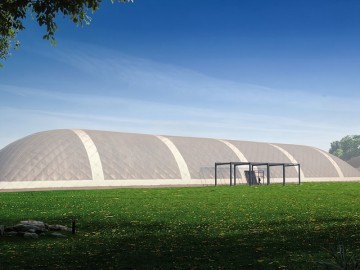
Inflatable dome construction has emerged as the definitive solution to these challenges. By utilizing advanced engineering polymers and specialized air-supporting inflation systems, these structures provide massive, column-free spans that can accommodate everything from light utility helicopters to large commercial passenger jets. These structures are not merely "tents"—they are highly engineered, pressure-controlled architectural environments capable of resisting severe weather loads while maintaining pristine interior conditions for sensitive avionics and mechanical components.
"Modern aviation requires agility. The ability to deploy a fully functional, climate-controlled aircraft hangar within days rather than months changes the unit economics of fleet maintenance and tactical operations globally."
From a commercial perspective, the ability to rapidly establish maintenance, repair, and overhaul (MRO) facilities at remote airports or seasonal hubs allows airlines to optimize their routing networks without incurring massive capital expenditure. Similarly, for military logistics, the speed of erection and dismantling of air dome hangars ensures that assets remain protected from harsh desert, arctic, or tropical environments, directly enhancing fleet readiness and operational lifespan.
Why inflatable membrane domes outperform traditional steel structures in temporary and semi-permanent aviation roles.
The interior of an air dome is supported entirely by positive air pressure, eliminating the need for internal pillars or heavy trusses. This yields 100% usable floor space, allowing aircraft to be maneuvered, turned, and serviced with absolute freedom and safety.
Engineered with high-tensile PVDF and PVC membranes, our air domes are aerodynamically optimized to withstand wind speeds up to 150 km/h and heavy snow loads. The flexible nature of the structure dissipates energy from seismic events naturally.
Unlike steel hangars that require months of construction, an inflatable dome can be manufactured offsite, shipped in modular containers, and fully inflated on a simple ring beam foundation within a matter of days, drastically reducing lead times.
Equipped with thermal insulation layers and airlock vestibules, these hangars maintain stable internal temperatures and humidity levels. This is critical for preventing corrosion on aircraft skins and protecting sensitive onboard electronics.
By utilizing translucent membrane materials, our domes maximize the transmission of natural daylight during the day. This reduces artificial lighting costs and provides technicians with a bright, glare-free working environment.
The raw materials, fabrication processes, and transport requirements for air domes represent a fraction of the carbon footprint associated with steel and concrete. When the hangar is no longer needed, it can be deflated and relocated with zero site scarring.
Analyzing how inflatable dome technology solves real-world challenges across commercial, military, and logistics sectors.
Commercial airlines frequently face the challenge of performing scheduled or unscheduled heavy maintenance at airports that lack dedicated hangar space. Leasing third-party hangar space is highly expensive and subject to availability. By deploying a temporary inflatable dome hangar, airlines can set up localized MRO stations directly adjacent to runways. These structures can be equipped with heavy-duty overhead crane supports (via specialized internal gantry structures) and explosion-proof lighting, creating a fully compliant, safe workspace for engine swaps, wing repairs, and system overhauls.
In modern military operations, air superiority depends heavily on the rapid establishment of Forward Operating Bases. Fighter jets, helicopters, and advanced reconnaissance UAVs are highly sophisticated assets that degrade rapidly when exposed to extreme desert heat, blowing sand, or freezing rain. Inflatable hangars can be packed into standard military transport containers, flown directly to a tactical runway, and erected by a small crew within 72 hours. The anti-glare, radar-attenuating, and thermal-insulating properties of modern membranes also provide crucial stealth and thermal signature reduction benefits.
During major humanitarian crises or natural disasters, local airport infrastructure is often damaged or completely destroyed. Establishing a stable air bridge is critical for delivering food, medical supplies, and rescue personnel. Inflatable domes serve as immediate, high-volume staging areas for cargo sorting, helicopter maintenance, and emergency medical triage. Their ability to operate independently of local utility grids—relying on integrated diesel generators and smart control units—makes them indispensable in austere, post-disaster environments.
The rise of commercial drone delivery networks and Electric Vertical Takeoff and Landing (eVTOL) urban air mobility systems requires a new class of decentralized infrastructure. These fleets need localized hubs for battery swapping, routine maintenance, and safe overnight storage. Inflatable domes provide a cost-effective, scalable solution that can be set up on existing parking lots or industrial zones. The integrated smart automation systems of our domes can interface directly with building management software to monitor internal air quality, gas levels (crucial for lithium-battery storage safety), and entry/exit logistics.
A global leader in high-performance air-supported membrane structures and custom architectural solutions.
Yifan Air Dome is a high-tech enterprise dedicated to innovative, eco-friendly air-supported membrane structures and integrated air dome building solutions. As a leading integrated service provider in the application of membrane structure technology across China, we cover the full industrial chain of R&D, design, manufacturing, installation and full-cycle operation and maintenance, delivering high-efficiency, energy-saving and low-carbon sustainable building space solutions for global clients.
With years of deep cultivation in the air dome and membrane structure industry, we adhere to the development philosophy of green low-carbon, technological innovation and quality priority, and strictly comply with industrial construction and production standards. Supported by standardized production techniques and abundant experience in large-scale project implementation, we professionally customize various air domes, including sports stadiums, industrial warehouses, environmental enclosures, cultural tourism venues and exhibition membrane buildings, which are widely applied in sports fitness, industrial storage, environmental dust prevention, cultural tourism scenic spots and public supporting facilities.
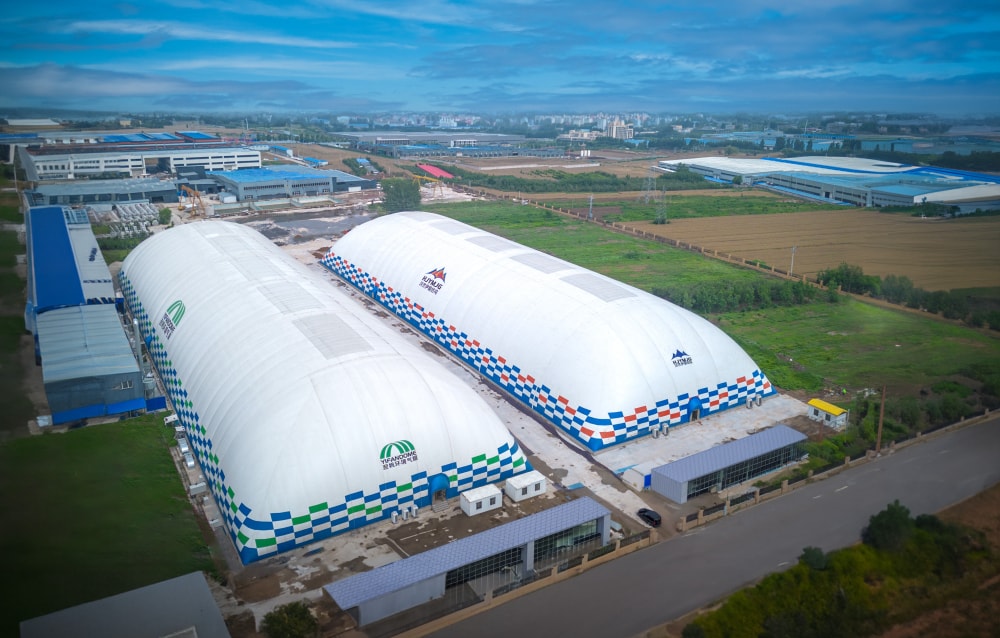
As the aviation industry strives to meet net-zero carbon emissions targets, ground operations must align with these sustainability goals. Inflatable dome construction is evolving rapidly to integrate green technologies. The next generation of aviation domes is designed to utilize flexible, ultra-lightweight photovoltaic (solar) panels integrated directly into the outer PVDF membrane layer. This allows the dome to generate its own operational power, running the inflation blowers, LED lighting, and climate control systems entirely off-grid.
Furthermore, the integration of IoT (Internet of Things) sensor arrays is transforming these structures into "smart hangars." Continuous real-time monitoring of internal pressure, membrane tension, structural load distribution, and local weather patterns allows the automated control systems to adjust blower speeds dynamically. This not only ensures maximum safety during high-wind events but also optimizes energy consumption, reducing operational costs by up to 40% compared to static air systems.
Material science is also playing a pivotal role. The development of self-cleaning, TiO2 (Titanium Dioxide) coated membranes ensures that dirt, oil, and atmospheric pollutants are broken down by UV light and washed away by rainwater. This maintains the dome's high reflectivity, preventing heat absorption and reducing the cooling load in warm climates. For aviation operators looking to future-proof their infrastructure, these advancements make inflatable domes the most technologically advanced and financially viable choice on the market.
Key Trend: The convergence of self-healing membrane materials, integrated solar harvesting, and AI-driven pressure management systems is setting a new benchmark for modern aviation infrastructure.
Discover our state-of-the-art manufacturing flow, advanced production equipment, and R&D capabilities.
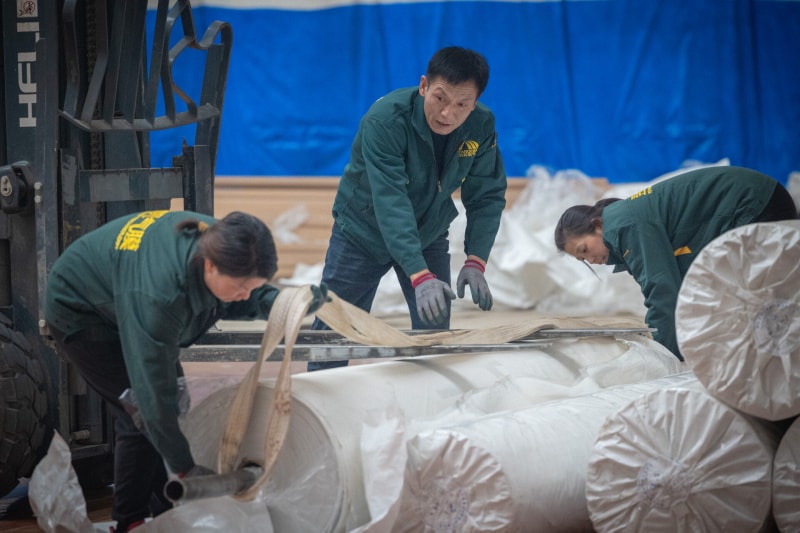
1. Select customized membrane material
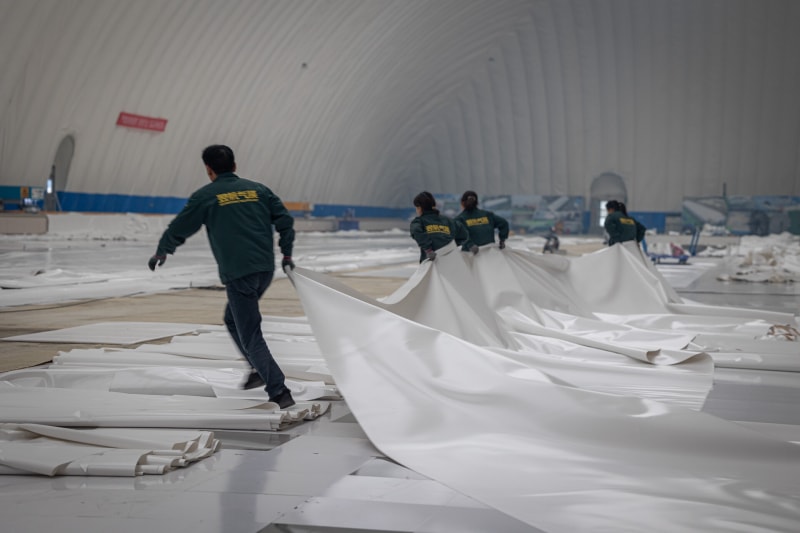
2. Deploy the membrane material
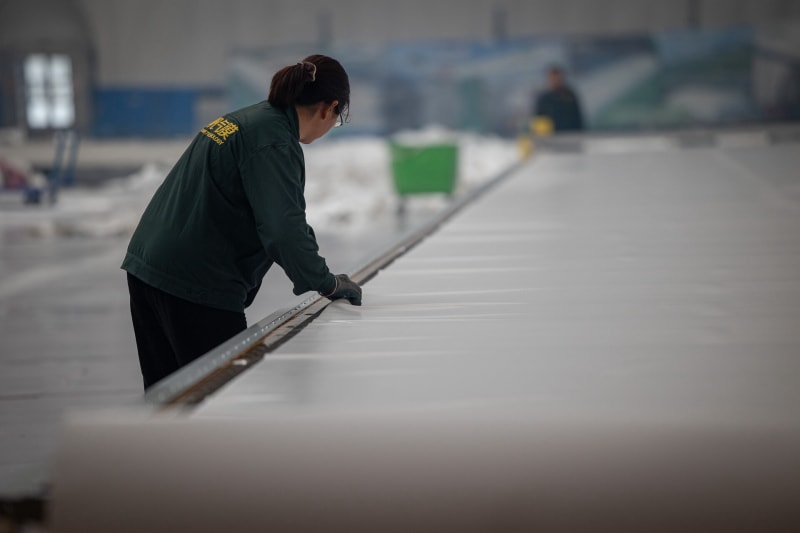
3. Automatic cutting & design import
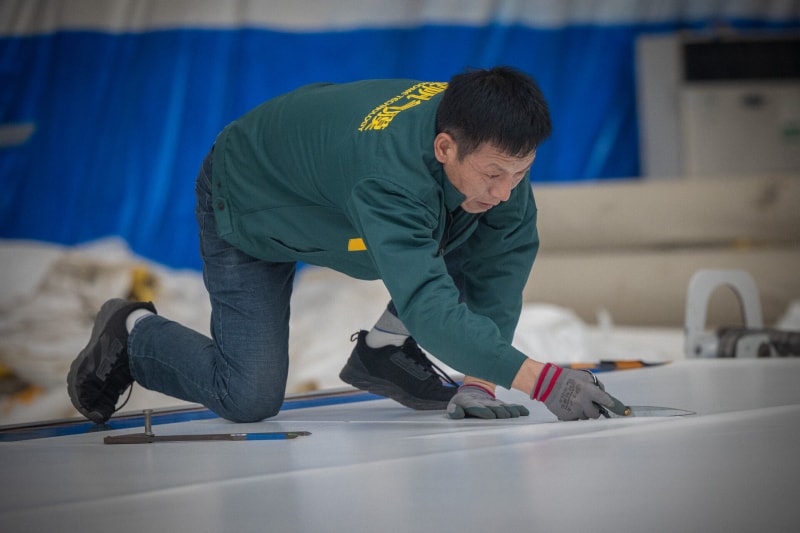
4. Manual trimming for secure weld
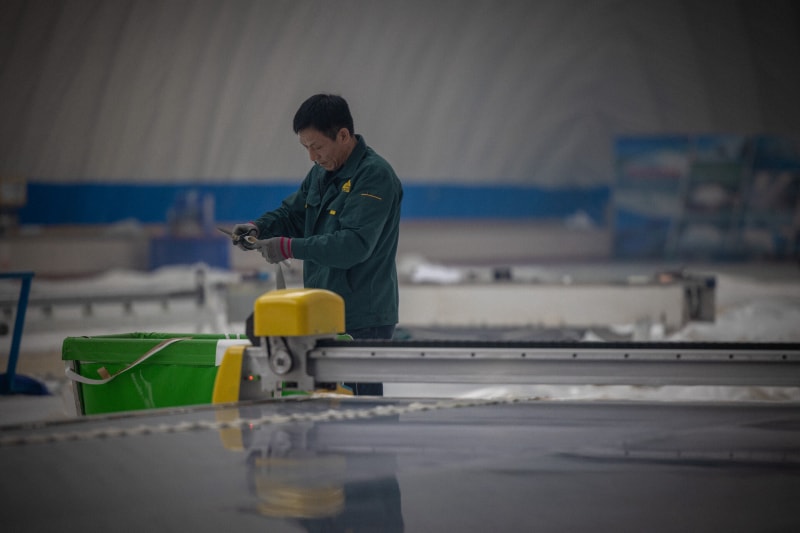
5. Splicing & reinforcement strips
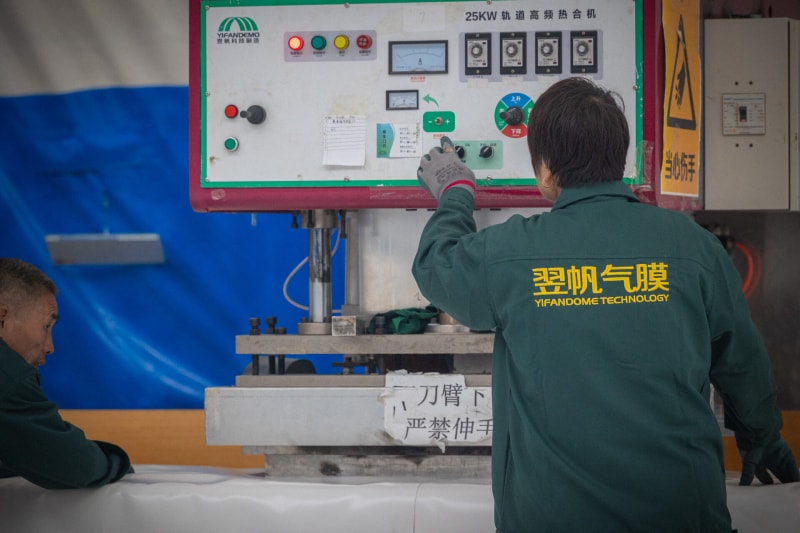
6. Track-type high-frequency welding
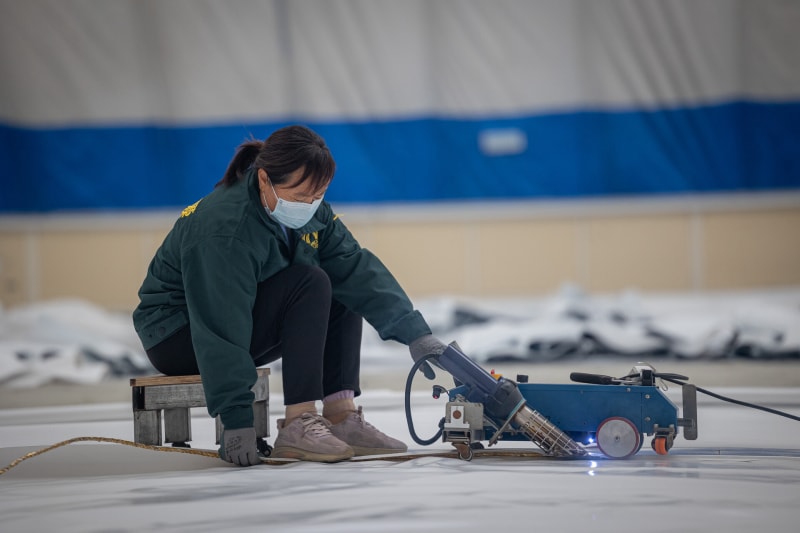
7. Welding rope channel
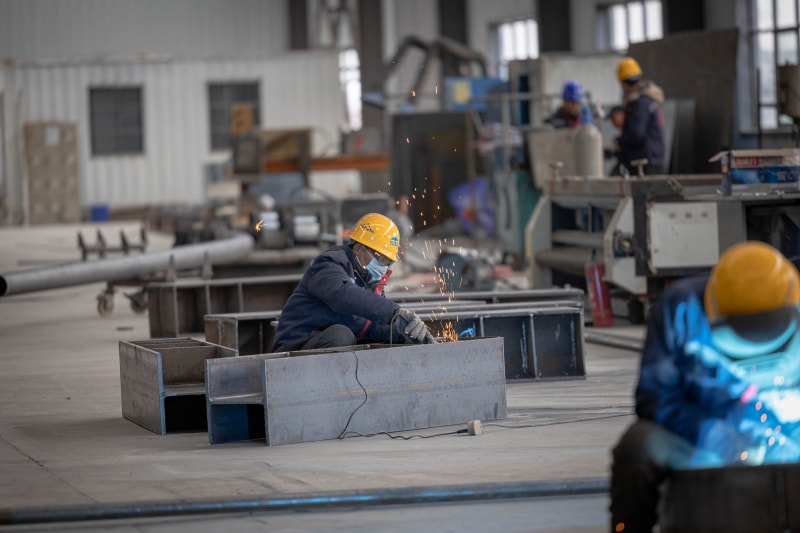
8. Clamps, fittings & pipes fabrication
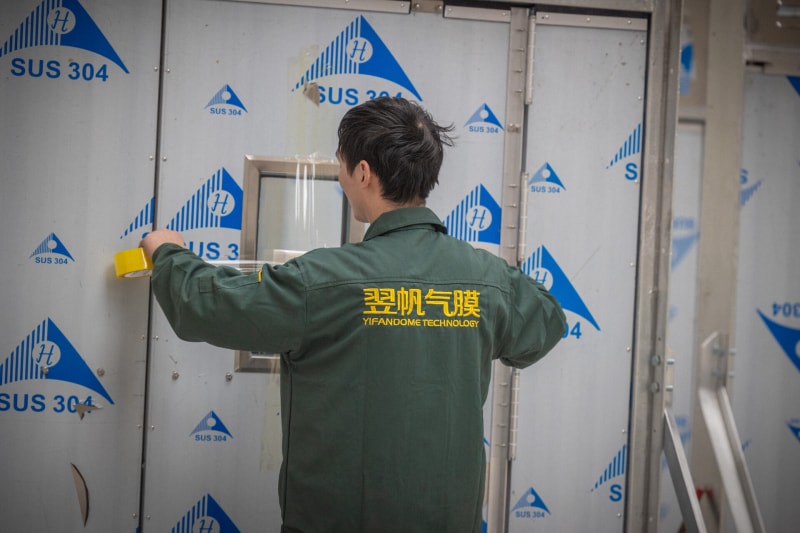
9. Quality check, packing & transport
We utilize state-of-the-art automatic cutting tables, high-frequency track welding machines, and advanced tensile strength testing equipment to guarantee the highest quality standards for every membrane panel produced.
Our dedicated engineering team constantly refines membrane formulas, improves thermal insulation layers, and designs next-generation airlock access systems specifically optimized for large-span aviation requirements.
Yifan actively showcases its innovative air dome technologies at major global aviation infrastructure and construction exhibitions, fostering collaboration with international partners.
High-performance air-supported structures tailored for diverse commercial, industrial, and tactical aviation applications.