



Are air domes really cheaper to build and operate than traditional buildings?
Construction Cost Analysis
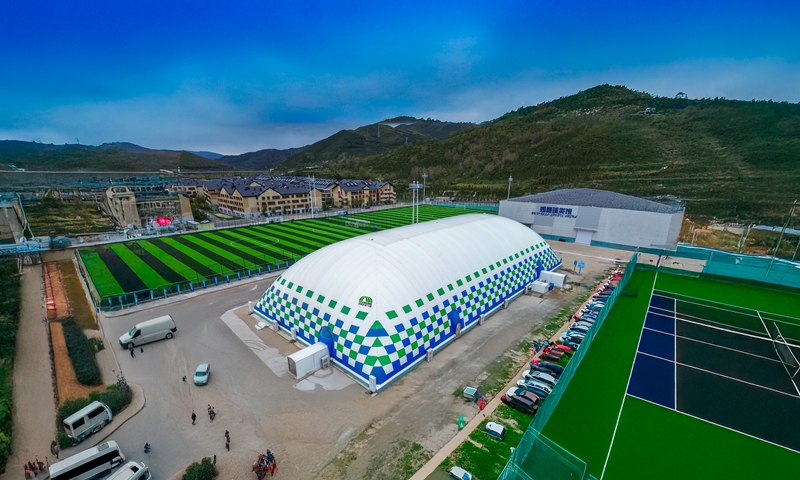
The internal sports fields (such as playgrounds or grass, hoops, or basic fitness equipment) of traditional stadiums and air-supported membrane stadiums can be built at the same cost, so the biggest difference lies in the overall framework and appearance.
Let's first look at the most basic "shell" (excluding interior decoration) of a 2000㎡ traditional steel or concrete stadium. Considering only the basic structure, deep foundation pit, heavy steel, and complex roof waterproofing, the total cost typically starts at $300,000.
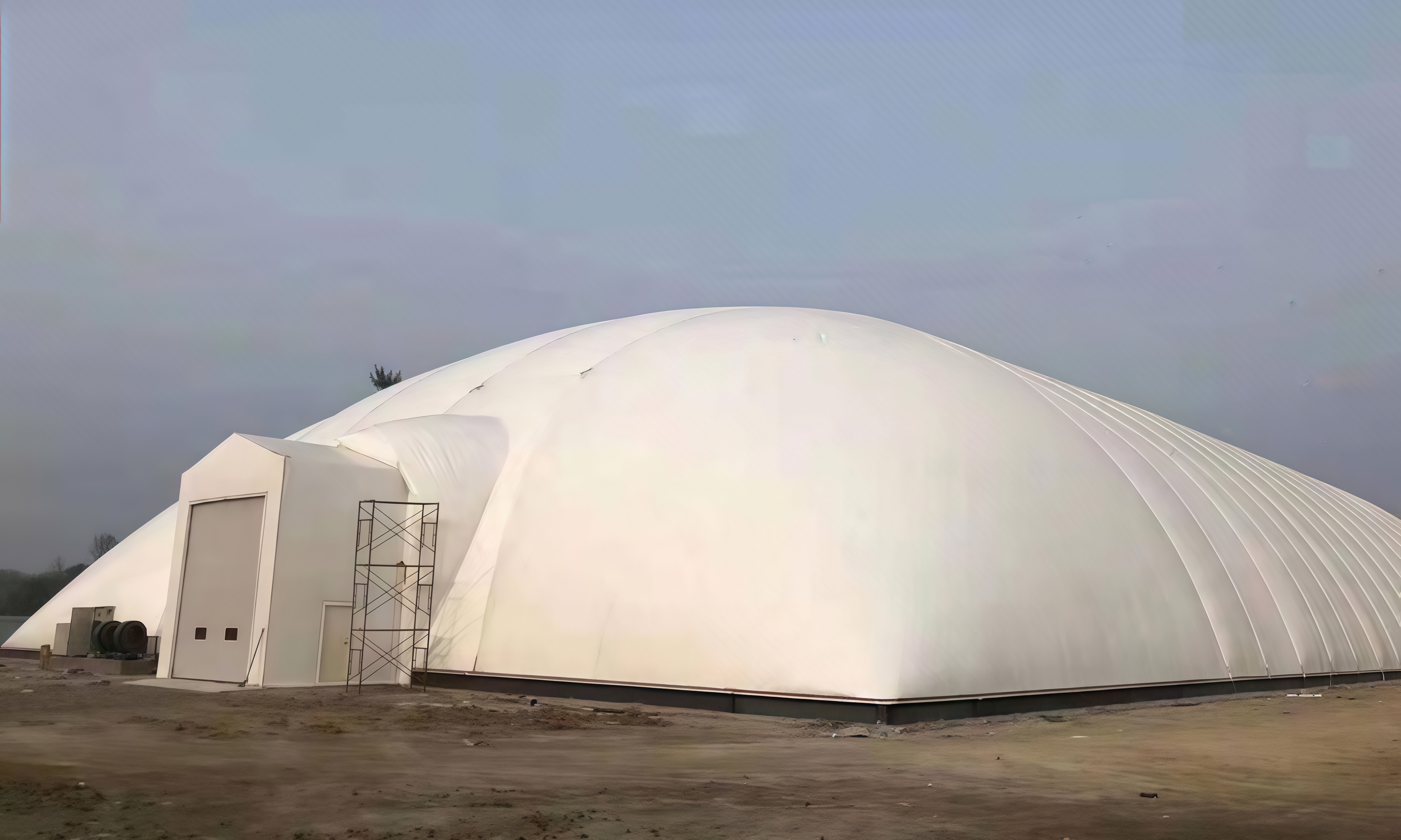
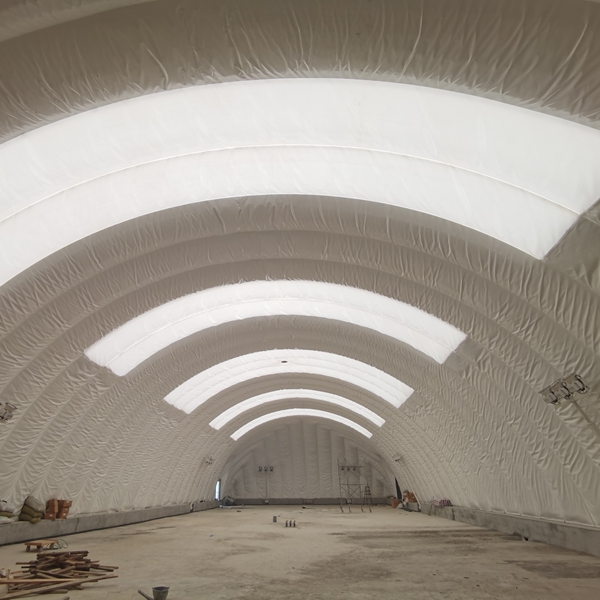
For an air-supported membrane stadium, based on a pure shell cost (including the membrane, steel cables, basic lighting, doors and windows, and the ventilation system to maintain air pressure) of $77/㎡, the total cost of this 2000㎡ stadium would be $154,000.
In the early stages of construction, civil engineering accounts for a very small percentage of the overall investment, directly cutting at least half of the fixed costs. Of course, this is not cutting corners; it's the value inherent in air-supported membrane structures. Air-supported membrane structures are extremely lightweight, eliminating the need for deep foundations, piling, and heavy foundations required for stability in traditional construction. This largely eliminates the "heavy asset" investment of traditional civil engineering.
The remaining investment is primarily allocated to high-tech membrane materials, structural design, foundation environmental control, and lighting. This includes the main body of the air-supported membrane structure: high-performance, chemically and physically resistant PVDF or PVC inner and outer membrane materials and insulation layers; wind and snow-resistant reinforced steel cable nets and door entry systems; mechanical units such as differential pressure sensors; and control systems.
Considering its use as a sports stadium, the cost figure presented here represents a mid-range configuration.
Operating Cost Analysis
If the constructed stadium is to be used for commercial operation, then the electricity costs after completion will be a significant factor affecting profits.
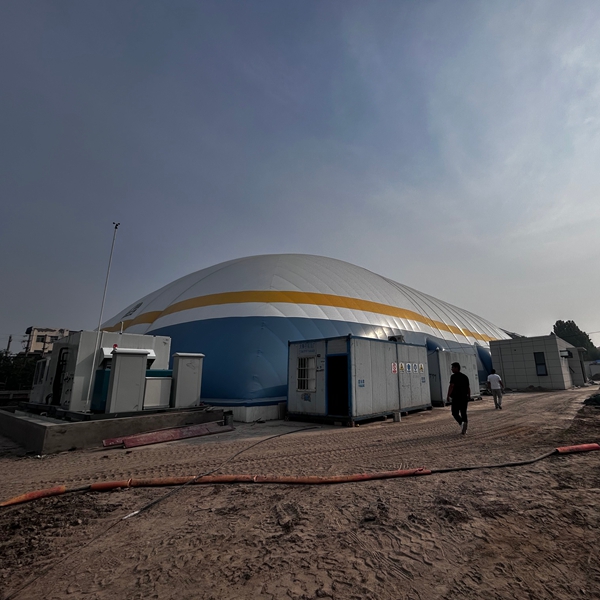
Traditional stadiums have relatively weak thermal insulation properties, and cool air is lost very quickly. In order to maintain a comfortable temperature in a 2,000-square-meter stadium, it is usually necessary to equip it with a large and energy-intensive air conditioning unit. Furthermore, indoor stadiums typically keep their lighting and high-powered fresh air units on continuously during use due to lighting and air circulation requirements.
Air-supported membrane stadiums require air pressure to maintain structural stability, thus necessitating the use of fans. This operation automatically exchanges air, eliminating the need for a separate fresh air system. The fans do not need to maintain high-frequency inflation 24/7. Once the air-supported membrane structure is inflated and stable, low-frequency operation (industry standard 30% of rated power) is required to maintain constant air pressure. A typical stadium of this size is equipped with one main inflation system and one backup system (switching periodically), with a single fan power of 5.5KW and a total power of 11KW. Maintaining its shape consumes only 1200 kWh per month. Furthermore, air-supported dome stadiums can utilize translucent membrane materials. Assuming the stadium is used for 10 hours daily, it only needs to be opened at night or on cloudy or rainy days, averaging only about 5 hours of lighting per day.
The sports air-supported dome stadium also uses a double-layer membrane material + insulation layer, which has excellent heat reflection and insulation performance. In addition, the high degree of airtightness of the internal space can lock in more cold and warm airflow. For the same size, only a low-power, low-energy air conditioner is needed to achieve excellent temperature and humidity control.
This shows that, regardless of whether air conditioning energy consumption is included, the operating electricity cost of an air-supported dome stadium is lower than that of a traditional stadium.
Time Cost Analysis
Time is a significant investment cost, especially for commercial sports venues.
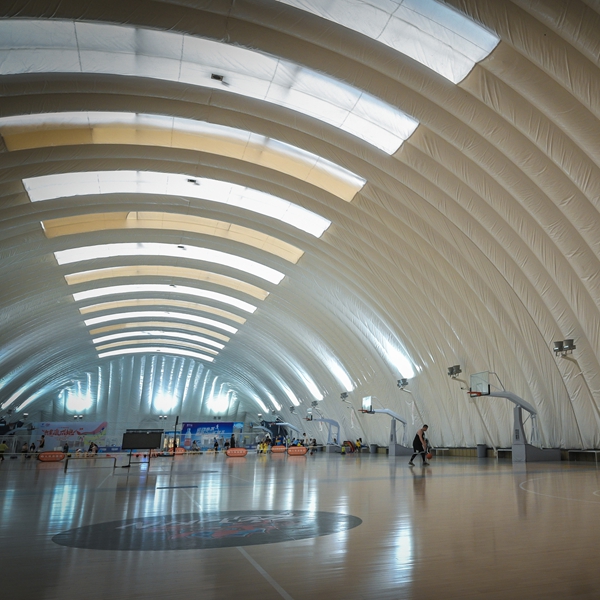
Traditional sports venues typically require six months to a year from approval and foundation excavation to steel structure construction and topping out, with continuous capital investment throughout this period.
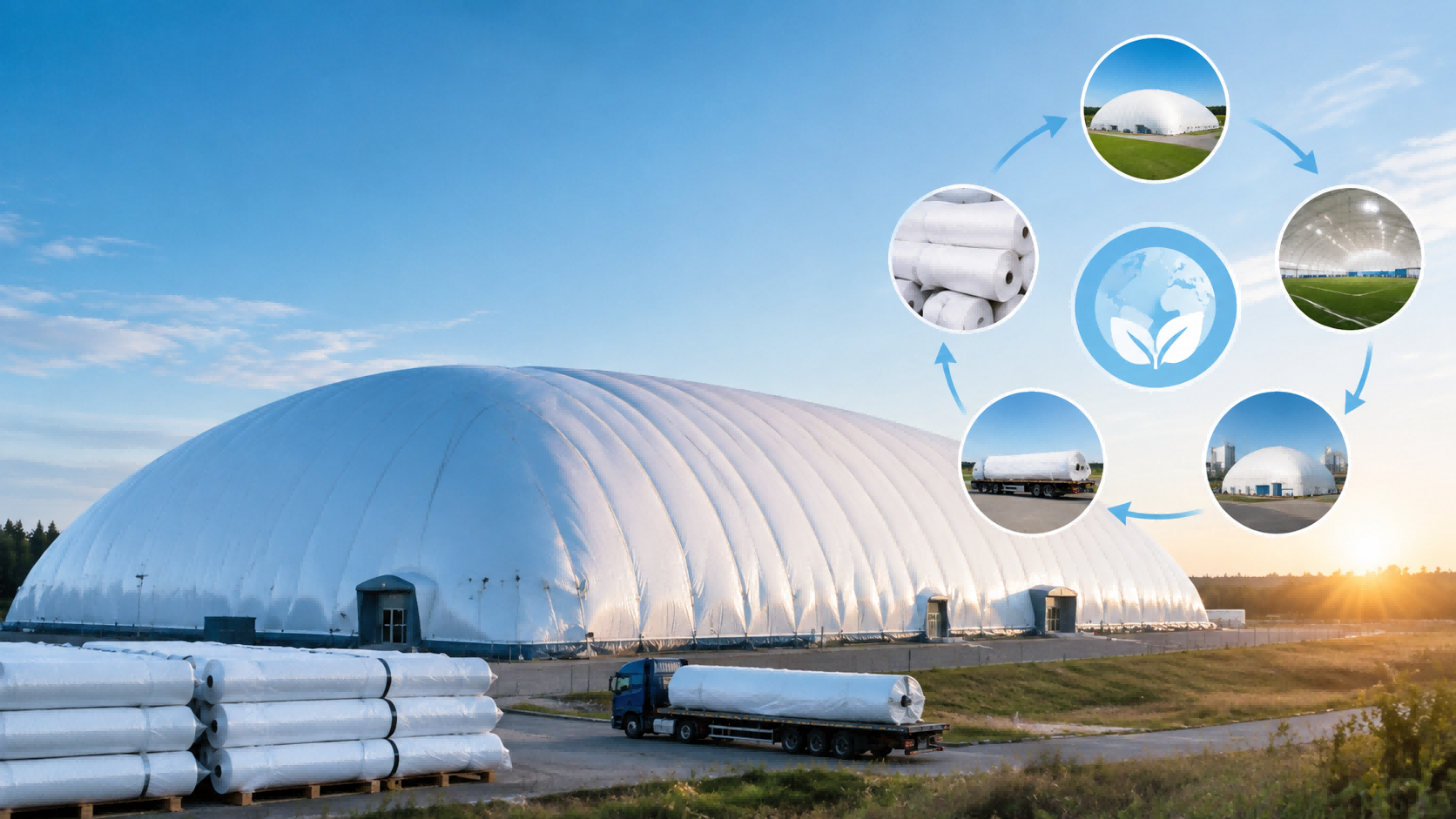
In contrast, air-supported membrane structures can be operational in as little as 15-60 days. This is because their prefabricated construction allows for multiple parallel construction projects. The main membrane material is prefabricated in a factory; on-site work only involves foundation laying and assembly, with final inflation and installation taking a maximum of 10 days. Therefore, air-supported membrane stadiums can open earlier to generate revenue from venue rentals, training fees, etc. The cash flow can offset a portion of the construction investment.
In summary, from a cost-benefit perspective, air-supported membrane structures, while meeting demand, not only achieve low-cost construction and operation but also generate profits earlier.