




How to maintain an inflatable air dome under extreme weather conditions? Professional advice to help you.
In recent years, the construction scale and application scenarios of Inflatable Air Domes have grown rapidly worldwide. This means that future inflatable air dome projects will need to face more complex environmental and climatic conditions. Extreme weather events such as strong winds, heavy rain, and blizzards not only affect the structural design of air-supported membrane structures, but also directly impact daily operation and maintenance. Therefore, the operation and maintenance methods for air-supported membrane domes under extreme weather conditions become crucial. This article compiles authoritative operation and maintenance recommendations in the field of air-supported membranes, combined with practical experience from multiple implemented projects, to form an extreme weather operation and maintenance guide, providing professional reference for the long-term safe and stable operation of air-supported membrane projects.
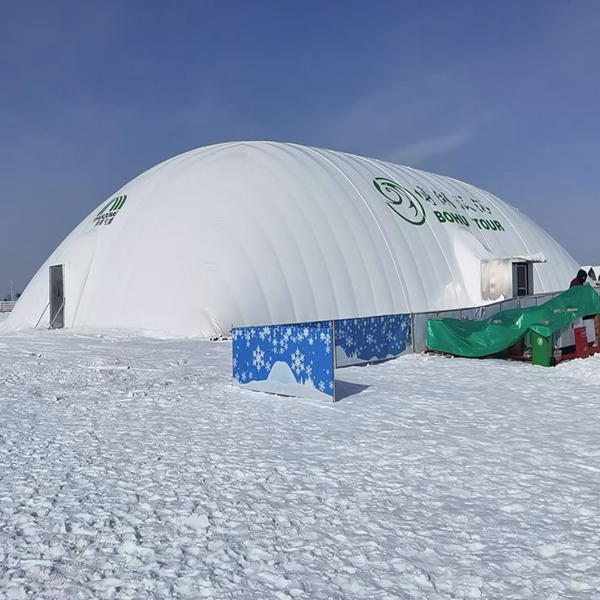

- Pay close attention to weather forecasts and warnings issued by meteorological bureaus, focusing on real-time changes in wind speed, rainfall intensity, etc., and do not actively interfere with the intelligent pressure control system's adjustment of internal pressure.
- After a weather warning is issued, check the airtightness of the inflation equipment, the normal operation of the frequency converter and alarm devices, and for blockages in the air inlet, outlet, and return vents, as well as the pressure transmission pipelines.
- Reinforce the fans, cable installations, and other surrounding supports in advance. After a weather warning is issued, conduct a second check to ensure they remain stable under extreme weather conditions.
- After a weather warning is issued, check the stability of surrounding buildings and facilities to prevent strong winds from blowing components off and damaging the inflatable dome buildings.
- Regularly check the performance of the backup generator to ensure it can start promptly in case of power failure.
- Regularly check the operation of the access control system, paying particular attention to any air leaks. During extreme weather, keep active ventilation switches and emergency doors closed as much as possible, and avoid opening vehicle access routes.
- Regularly check the welds between membrane materials, the connections between membrane units, and the connections between the membrane and other structural components to ensure they are in normal condition.
- During installation, commissioning, and daily operation, under pressure-holding conditions, check the operational stability of sensors, control systems, and fans, as well as the connection between anchors and steel cables, and the tightness of the steel cables.