
Leave Your Message
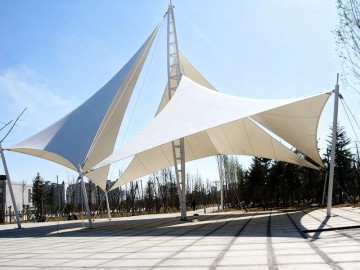
Premium structural membrane offering superior UV filtration and durability for modern agricultural systems.
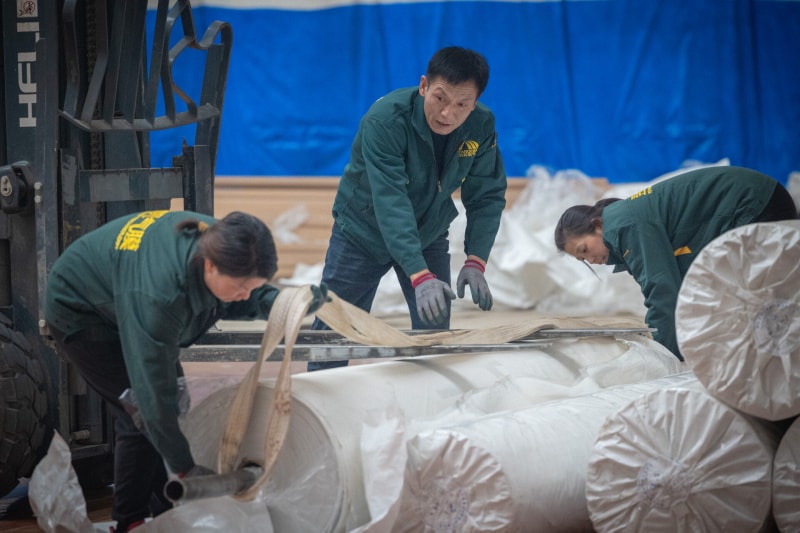
Tailored fabrics designed to control microclimates and enhance photosynthesis in crop protection setups.
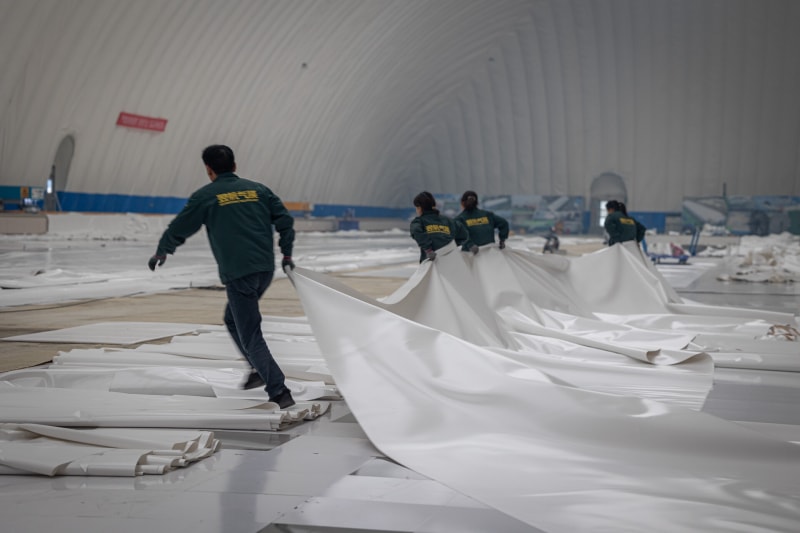
Highly flexible and resilient structural sheets optimized for fast deployment over large spans.
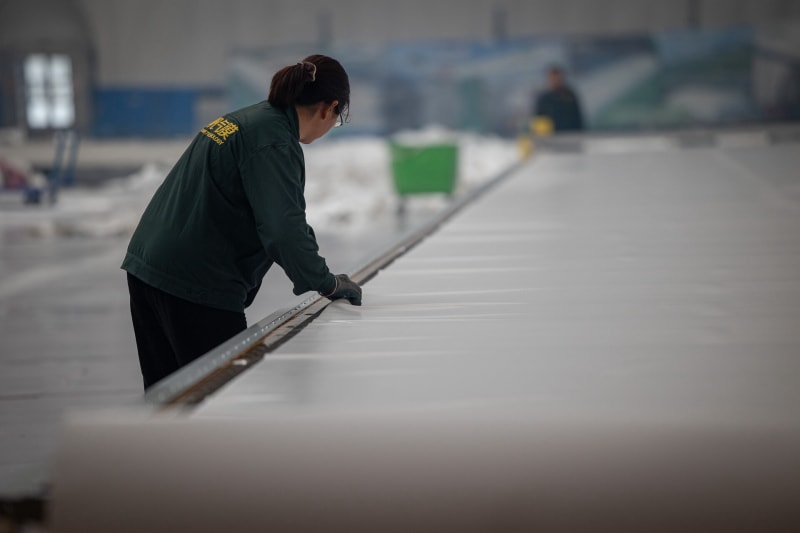
CNC-cut membrane systems designed to eliminate structural weak points and resist high wind loads.
Global agriculture is undergoing a profound structural transition. Driven by the compounding challenges of climate change, erratic weather patterns, and the escalating demand for high-yield food production, traditional greenhouse designs are rapidly evolving. Glass and simple polyethylene film structures, long the mainstays of crop protection, are showing their limitations. While glass offers high transparency, its capital expenditure (CAPEX) is prohibitive, and it is highly vulnerable to extreme weather events such as hail and heavy snow. On the other hand, traditional plastic films require frequent replacement, leading to high operational costs (OPEX) and significant environmental waste.
Enter the tensile fabric roof. Originally popularized in architectural landmarks, sports stadiums, and industrial logistics hubs, tensile membrane structures are now revolutionizing the agricultural landscape. By utilizing advanced polymers like PVDF-coated PVC, PTFE glass fiber, and ETFE, commercial growers can establish highly durable, large-span microclimates that maximize crop yield while minimizing structural overhead. The commercial demand for these structures is growing exponentially as global agricultural enterprises realize the long-term ROI of investing in resilient, low-maintenance protective envelopes.
Industry Insight: Modern agricultural operations are no longer just looking at the initial purchase price of a greenhouse. They are evaluating the total lifecycle cost, energy efficiency, and disaster mitigation capabilities. Tensile fabric roofs provide an optimal middle ground: lower initial costs than glass, far greater longevity than simple poly-tunnels, and unparalleled structural strength.
Unlike conventional rigid frames, tensile structures utilize pre-stressed membranes supported by cables and minimal steel arches, or are fully supported by internal air pressure (air domes). This structural efficiency offers several key advantages:
When evaluating the feasibility of a tensile fabric roof for an agricultural greenhouse or crop protection facility, understanding the cost components is critical. The total project cost is generally divided into design and engineering, membrane material selection, structural support systems, civil works, and installation labor.
On average, the cost of a high-quality agricultural tensile fabric roof structure ranges from $35 to $120 per square meter, depending heavily on the material chosen, the span of the structure, and whether the system is frame-supported or air-supported. Below is an in-depth breakdown of these variables.
| Structure & Material Type | Estimated Cost (USD/sqm) | Lifespan | Best Suited For |
|---|---|---|---|
| PVDF-PVC Air Dome (Air-Supported) | $35 - $65 | 12 - 15 Years | Large-scale grain storage, multi-span crop cultivation |
| PVDF-PVC Steel Frame Tensile Roof | $50 - $85 | 10 - 15 Years | Horticulture, retail nurseries, livestock shelters |
| PTFE Glass Fiber Tensile Roof | $90 - $150 | 25+ Years | High-end research greenhouses, permanent botanical gardens |
| ETFE Multi-Layer Cushion Roof | $150 - $300 | 30+ Years | Commercial vertical farming, high-value organic hydroponics |
Tensile fabric structures are no longer just basic covers; they are integrated components of high-efficiency agricultural ecosystems. Let's explore how they are applied in various scenarios:
Horticulture, particularly the cultivation of berries, grapes, and exotic flowers, is highly sensitive to microclimate fluctuations. A single heavy hailstorm or a sudden frost can wipe out an entire season's revenue. Tensile fabric roofs act as a reliable shield. By selecting membranes with specific light-diffusion properties, growers can eliminate harsh shadows and prevent leaf scorch, ensuring uniform growth across the entire field.
Modern hydroponic facilities require precise climate control. Air-supported membrane domes provide a completely sealed environment, preventing the entry of pests and airborne pathogens. This hermetic seal reduces the need for chemical pesticides, aligning with organic farming standards. Furthermore, the thermal insulation properties of double-layer membranes with dead-air space significantly reduce the HVAC energy costs associated with heating and cooling the greenhouse.
Algae cultivation and commercial fish farming require strict water temperature regulation. Tensile fabric roofs over aquaculture ponds prevent rapid water evaporation and protect aquatic life from excessive UV radiation. The anti-corrosive properties of PVDF and PTFE membranes make them ideal for high-humidity, saline environments where traditional steel structures would quickly rust and degrade.
Beyond crop growth, modern agriculture relies heavily on post-harvest logistics. Bulk grains, fertilizers, and heavy machinery must be kept dry and protected from weather elements. Large-span air domes and tensile membrane warehouses offer a cost-effective, rapidly deployable storage solution that can be easily relocated or expanded as seasonal demands shift.
The convergence of material science and agricultural technology (AgTech) is driving exciting innovations in tensile roofing systems. One of the most promising trends is the integration of Building-Integrated Photovoltaics (BIPV). Flexible solar cells can now be laminated directly onto tensile membranes, allowing the greenhouse roof to generate its own electricity to power automated irrigation, ventilation fans, and smart sensor arrays.
Additionally, the integration of AI-driven climate control systems in air domes is optimizing resource consumption. Smart sensors monitor changes in wind speed, atmospheric pressure, and snow accumulation, automatically adjusting the internal pressure of the dome or activating automated snow-melting heating cables to maintain structural integrity. This automated resilience dramatically lowers labor costs and minimizes human error.
While the initial cost of a tensile fabric roof may be higher than simple plastic tunnels, the investment pays off rapidly. The combination of a 15-to-30-year lifespan, reduced crop loss due to weather anomalies, lower energy bills from optimized light transmission, and minimal structural maintenance ensures that most commercial farms achieve full amortization and positive ROI within 3 to 5 years of operation.
Yifan Air Dome is a high-tech enterprise dedicated to innovative, eco-friendly air-supported membrane structures and integrated air dome building solutions. As a leading integrated service provider in the application of membrane structure technology across China, we cover the full industrial chain of R&D, design, manufacturing, installation and full-cycle operation and maintenance, delivering high-efficiency, energy-saving and low-carbon sustainable building space solutions for global clients.
With years of deep cultivation in the air dome and membrane structure industry, we adhere to the development philosophy of green low-carbon, technological innovation and quality priority, and strictly comply with industrial construction and production standards. Supported by standardized production techniques and abundant experience in large-scale project implementation, we professionally customize various air domes, including sports stadiums, industrial warehouses, environmental enclosures, cultural tourism venues and exhibition membrane buildings, which are widely applied in sports fitness, industrial storage, environmental dust prevention, cultural tourism scenic spots and public supporting facilities.
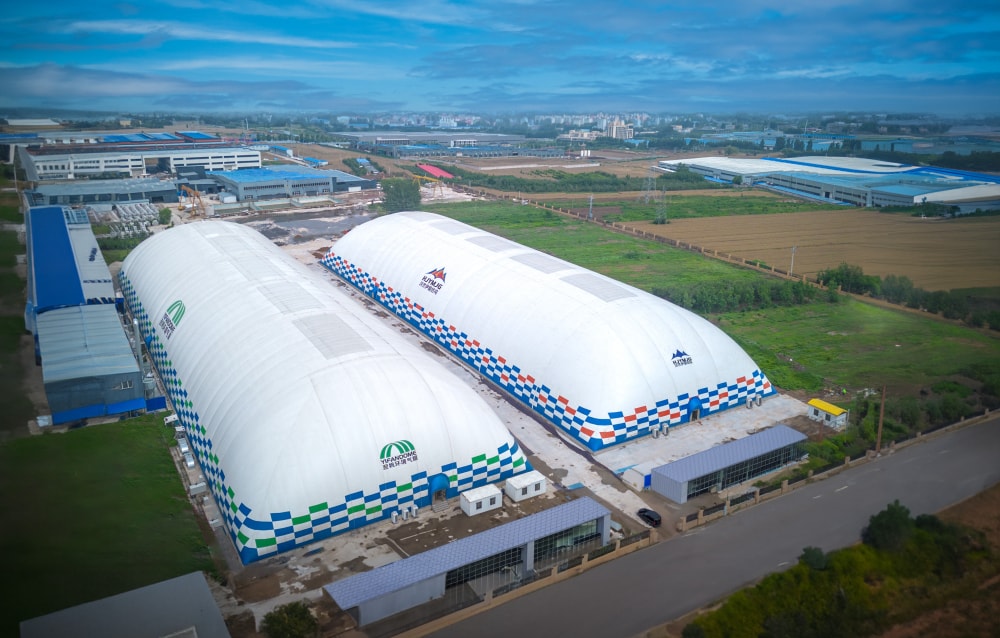
➢ Taking modular innovation and environmental adaptation technology as our core philosophy, we focus on the R&D and scenario application of air dome buildings. Leveraging an advanced modular structure and robust environmental adaptability, we deliver core strengths including shorter construction cycles, cost-effectiveness, easy disassembly and relocation, and recyclable reuse. Our structures perfectly withstand complex weather and natural conditions such as snow, gale winds, heavy rain, high temperature and severe cold. We adhere to tailored solutions adapted to local conditions. Fully suited for diverse application scenarios, we comprehensively meet clients’ customized needs for personalized space utilization and engineering construction.
➢ Moving forward, Yifan will further advance core technologies in air-supported structure innovation and environmental adaptability. By deeply cultivating the global market for membrane structures, the company aspires to become a leading international provider of comprehensive solutions for air-supported buildings. Leveraging green, low-carbon technologies to empower the transformation of architectural spaces, Yifan aims to create a new global ecosystem of modular air-supported structures—one that is safer, more energy-efficient, better adapted to diverse needs, and more sustainable.
1. Select the customized membrane material
2. Deploy the membrane material
3. Lay material on cutting machine & import design drawings
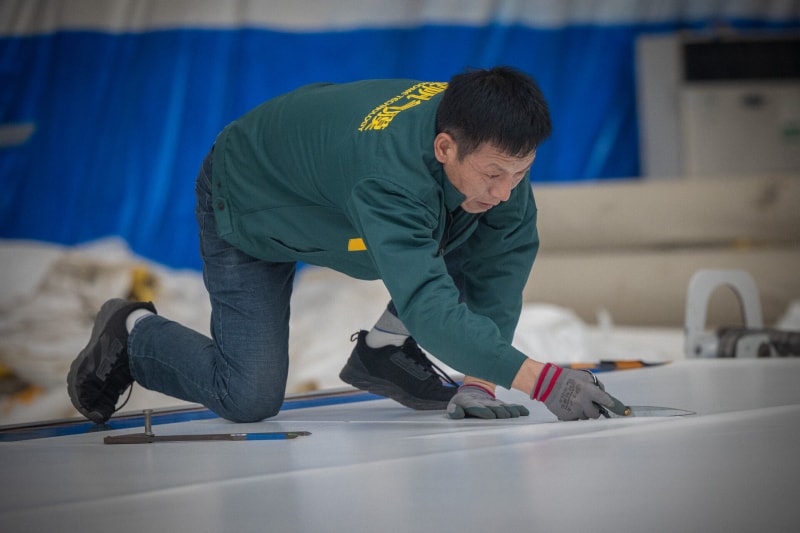
4. Manually trim edges to remove exposed fibers for secure weld
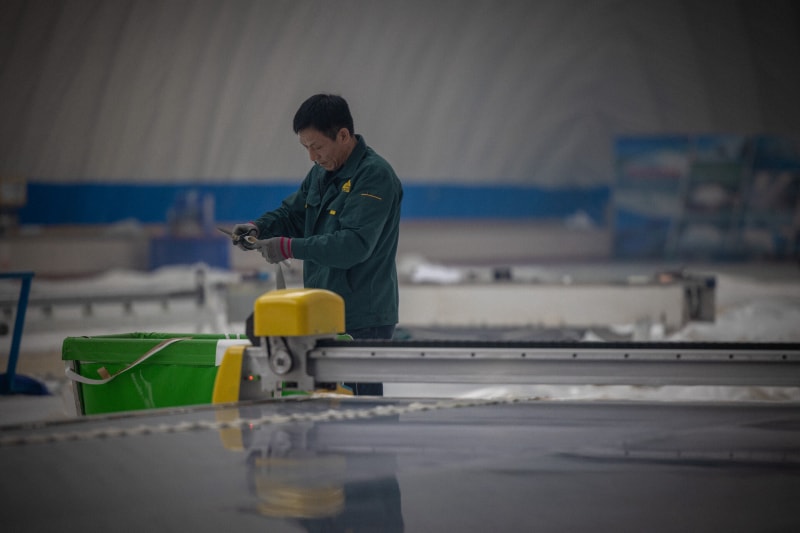
5. Cutting, Splicing, and Reinforcement Strips
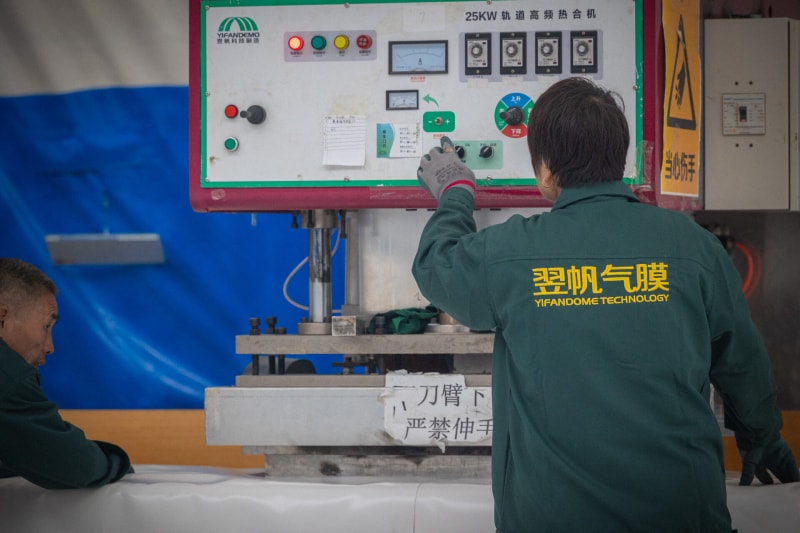
6. Arrange materials and weld using track-type high-frequency sealer
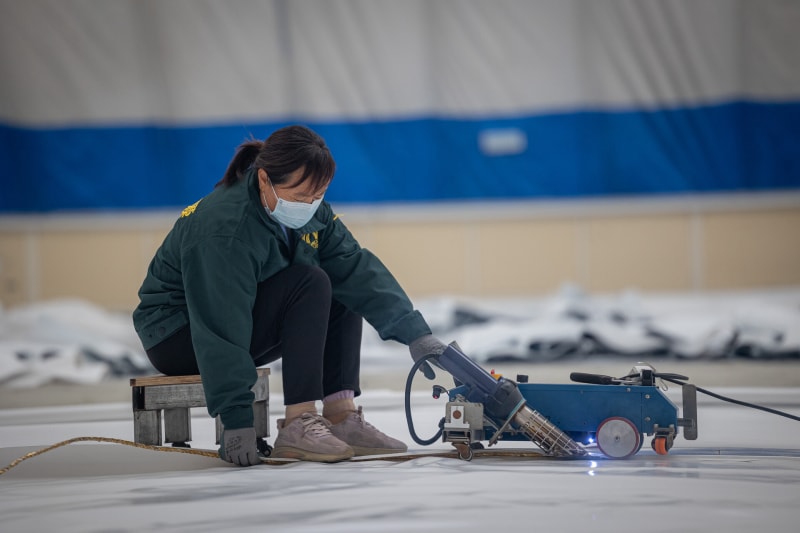
7. Small Hot Sealer Welding Rope Channel
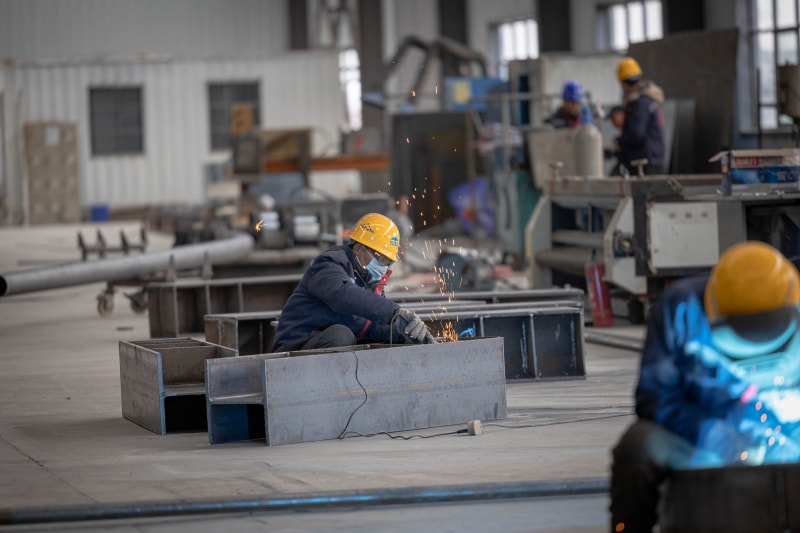
8. Manufacturing alloy clamps, fittings, & inflation pipes
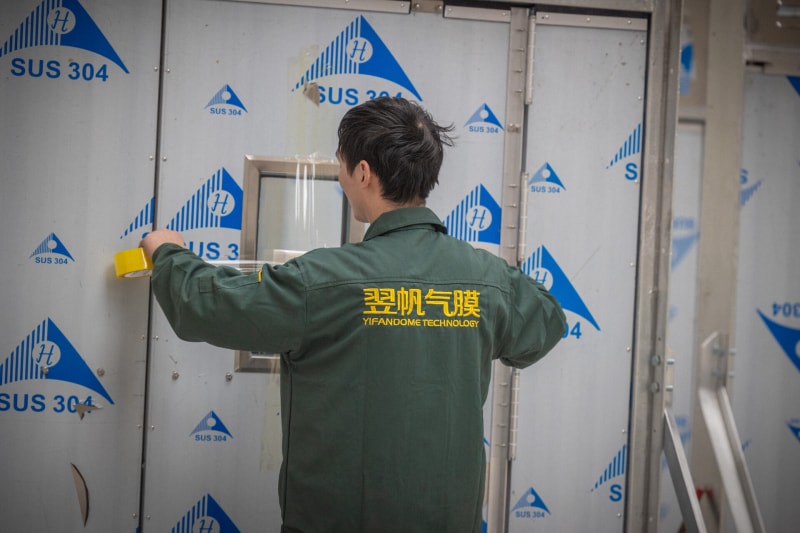
9. Quality check, packing, and dispatch preparation
Our factory is equipped with fully automated CNC cutting platforms, heavy-duty continuous track high-frequency welding lines, and advanced tension testing equipment to ensure every square meter of agricultural membrane meets international engineering standards.
Our dedicated R&D team works in partnership with leading agricultural universities to study the impact of light spectra on crop yields under various membrane types, continually optimizing the thermal and light transmission profiles of our fabrics.
Yifan actively participates in global agricultural technology exhibitions and green building conferences, showcasing our latest modular air dome solutions and sharing industry insights on sustainable crop protection.
Features manually trimmed and reinforced double-sealed edges for maximum wind load resistance in open plains.
Spliced and strip-reinforced modular membranes tailored for large-scale multi-span commercial farming.
Precision track-welded sheets ensuring absolute waterproofness and structural consistency.
Equipped with integrated rope channels for secure anchoring and quick tension adjustment.
Corrosion-resistant clamps, fittings, and air pipes engineered specifically for humid greenhouse climates.
Quality-checked and packed modular components ready for quick global dispatch and assembly.
Designed for extensive agricultural warehouses, processing plants, and livestock protection systems.
Advanced PVDF membrane with high self-cleaning capability and excellent light diffusion.