Leave Your Message
In the rapidly evolving aviation sector, the demand for flexible, cost-effective, and fast-to-deploy structures has never been higher. Modern airlines, military operations, and MRO (Maintenance, Repair, and Overhaul) service providers are moving away from traditional brick-and-mortar or heavy steel hangars. Instead, they are turning to temporary aircraft hangars utilizing high-strength tensile fabric roofs.
A Tensile Fabric Roof Cost For Temporary Aircraft Hanger And Aviation is significantly lower than that of conventional permanent structures. This makes it an ideal choice for operations requiring seasonal storage, sudden fleet expansions, remote geographical projects, or tactical military air bases. By utilizing advanced polymers and high-frequency welding, these temporary structures offer the same durability and safety profiles as traditional hangars, but at a fraction of the time and capital expenditure.
The cost of a tensile fabric roof for aviation hangars typically ranges from $50 to $150 per square meter for the membrane and basic hardware, and $150 to $350 per square meter for fully integrated turnkey temporary hangar systems (including structural framing, foundations, and installation). Compared to permanent steel hangars which easily exceed $500 to $800 per square meter, tensile fabric structures save up to 60% on initial CapEx.
Understanding the cost breakdown of a tensile fabric roof for temporary aircraft hangars requires looking at several engineering and design variables:
| Hangar Component / Parameter | Estimated Cost Range (USD / Sq. Meter) | Key Performance Features |
|---|---|---|
| Standard PVC Fabric Roof | $40 - $70 | Flame retardant, UV resistant, basic weatherproofing, 10-15 year lifespan. |
| Premium PVDF Coated Membrane | $75 - $130 | Advanced self-cleaning, superior UV block, high tear resistance, 15-25 year lifespan. |
| Structural Frame (Aluminum/Steel) | $100 - $220 | Clear-span engineering, modular bolt-together design, rapid assembly. |
| Foundation & Anchoring | $20 - $60 | Earth anchors, ballast weights, or basic concrete footings (highly relocatable). |
| Installation & Commissioning | $30 - $70 | Fast setup with minimal heavy machinery required, reducing labor costs. |
Yifan Air Dome is a high-tech enterprise dedicated to innovative, eco-friendly air-supported membrane structures and integrated air dome building solutions. As a leading integrated service provider in the application of membrane structure technology across China, we cover the full industrial chain of R&D, design, manufacturing, installation and full-cycle operation and maintenance, delivering high-efficiency, energy-saving and low-carbon sustainable building space solutions for global clients.
With years of deep cultivation in the air dome and membrane structure industry, we adhere to the development philosophy of green low-carbon, technological innovation and quality priority, and strictly comply with industrial construction and production standards. Supported by standardized production techniques and abundant experience in large-scale project implementation, we professionally customize various air domes, including sports stadiums, industrial warehouses, environmental enclosures, cultural tourism venues and exhibition membrane buildings, which are widely applied in sports fitness, industrial storage, environmental dust prevention, cultural tourism scenic spots and public supporting facilities.
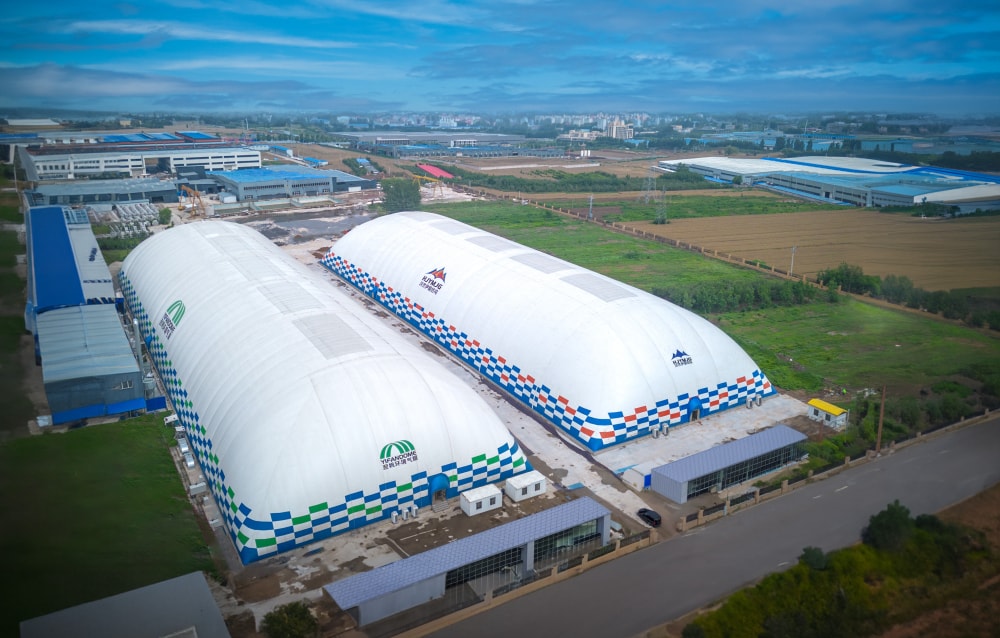
Temporary aircraft hangars are no longer viewed as simple "tents." They are highly engineered structures utilized across various sectors of the aviation industry:
Airlines and third-party maintenance providers often experience sudden surges in demand for aircraft servicing (such as C-checks or retrofitting). Building a permanent hangar takes years of planning and permits. A temporary hangar with a tensile fabric roof can be erected in weeks, allowing MROs to capitalize on immediate market opportunities. The cost-saving aspect of these structures directly enhances the operational margins of aviation maintenance businesses.
For military aviation, speed and mobility are critical. Cargo aircraft, fighter jets, and helicopters require protection from harsh desert heat, sandstorms, or freezing arctic conditions. Lightweight, modular tensile fabric hangars can be shipped in standard containers and assembled rapidly by military crews using basic tools. The low thermal conductivity of advanced fabric roofs helps maintain comfortable interior temperatures, protecting sensitive avionics and maintenance personnel.
E-commerce growth has put immense pressure on airport logistics. Temporary fabric structures serve as cargo sorting facilities, airmail processing centers, or GSE (Ground Support Equipment) storage. Because these structures can be easily expanded, shortened, or relocated as logistics flows change, they provide unmatched flexibility to airport authorities.
Our tensile membranes are designed to meet stringent international building codes, including fire retardancy certifications (such as DIN 4102 B1 and NFPA 701). They feature high tear strength, wind resistance up to 150 km/h, and snow load capacities engineered for regional requirements. The translucent nature of the fabric allows natural daylight to illuminate the hangar interior, reducing day-time energy consumption for lighting by up to 70%.
The long-term cost efficiency of a tensile fabric roof is heavily influenced by manufacturing technology. High-frequency welding ensures that seams are completely airtight and waterproof, eliminating weak points that could fail under high wind loads. PVDF and TiO2 (Titanium Dioxide) coatings create a self-cleaning surface where dirt is washed away by rainfall, minimizing maintenance labor. Furthermore, modular structural framing allows individual fabric panels to be replaced if damaged, rather than replacing the entire roof.
Take a look inside our state-of-the-art production process. From material selection to final quality check and packaging, we maintain the highest industry standards for every tensile membrane structure we deliver.
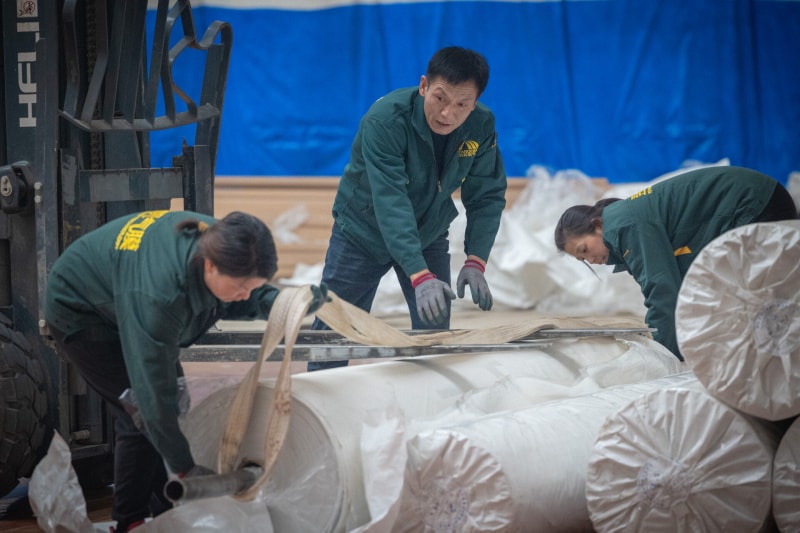
1. Select the customized membrane material
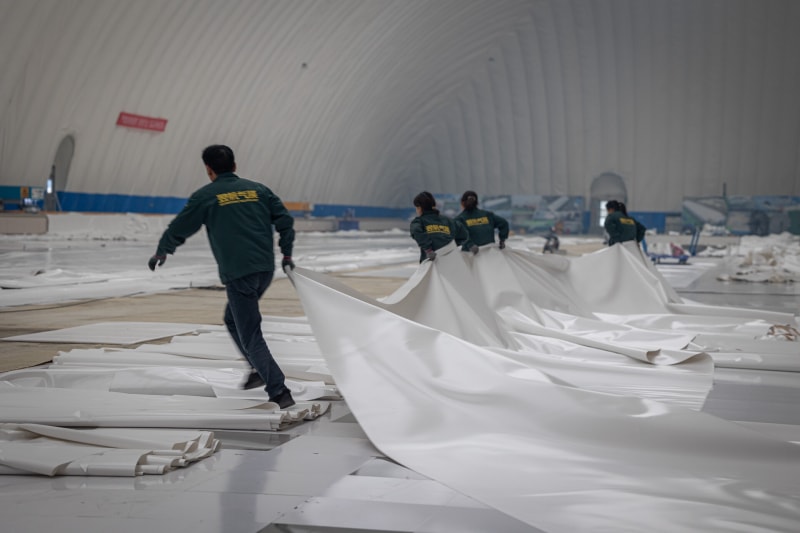
2. Deploy the membrane material
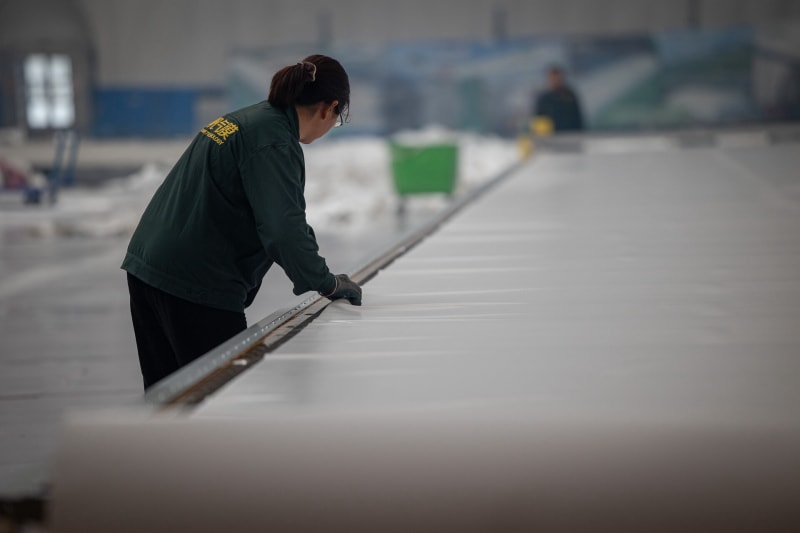
3. Lay material on automated cutting machine & import flat design drawings
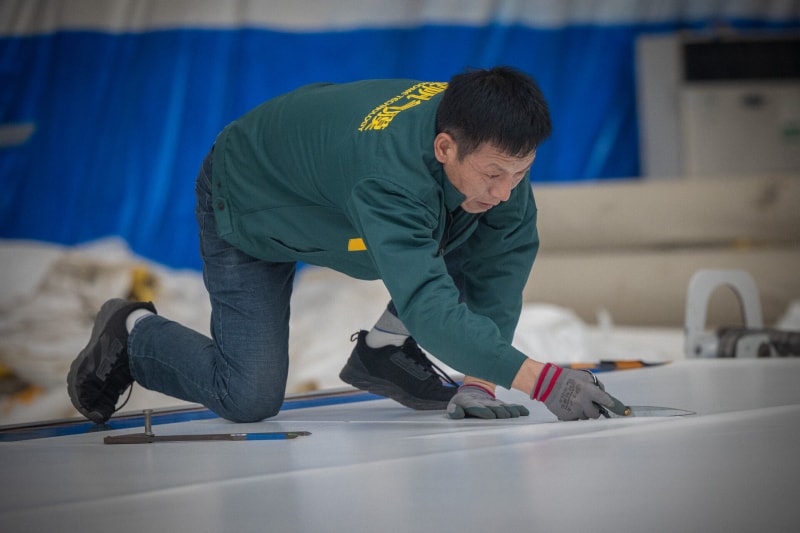
4. Manually trim edges to remove exposed fibers & ensure secure weld
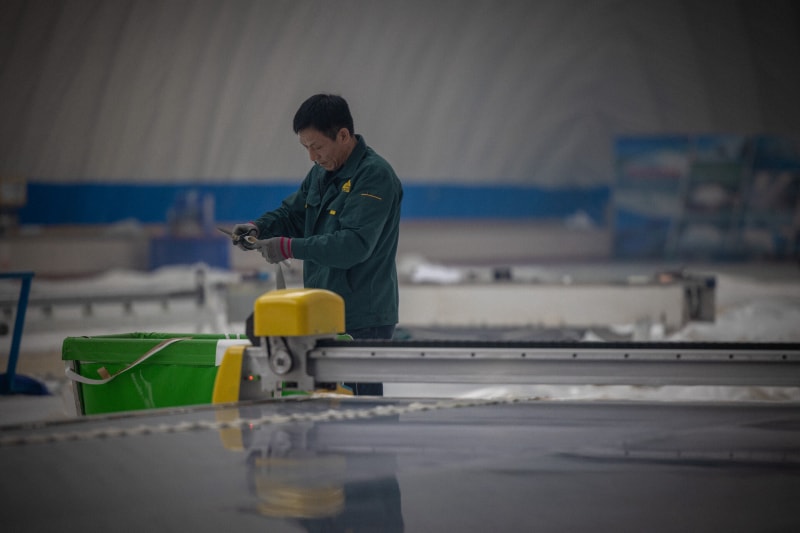
5. Cutting, Splicing, and Reinforcement Strips
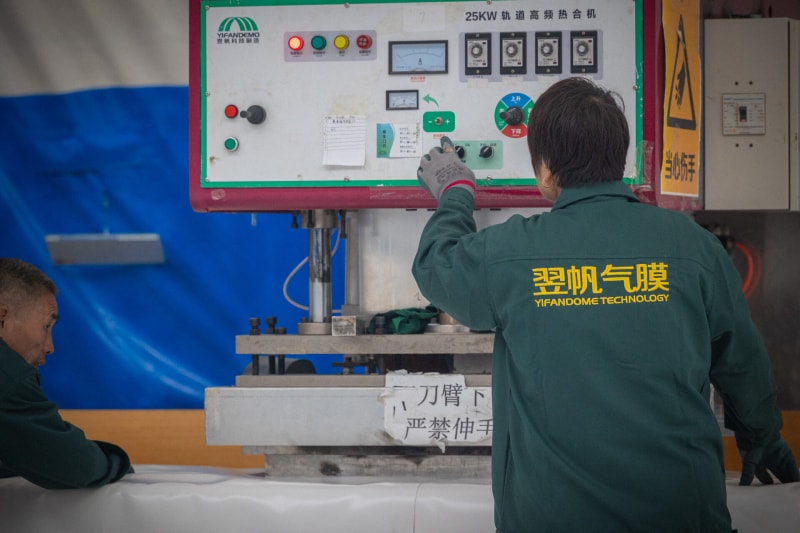
6. Arrange materials & weld using track-type high-frequency heat sealer
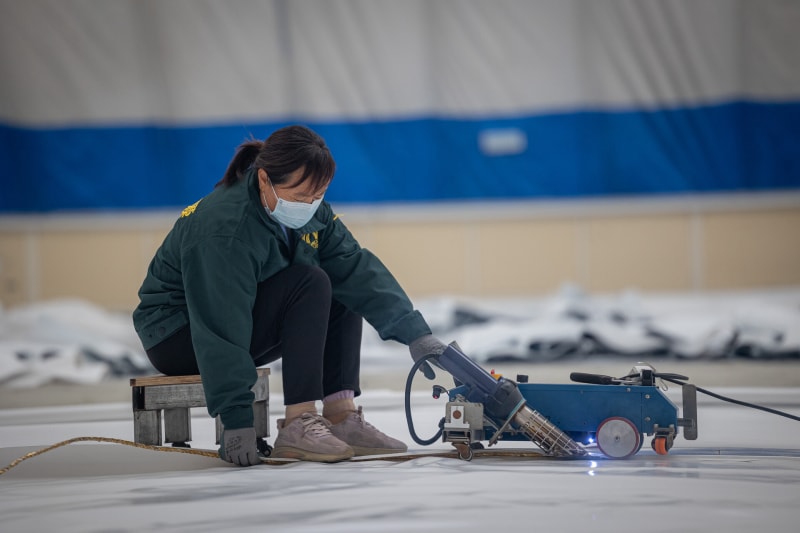
7. Small Hot Sealer Welding Rope Channel
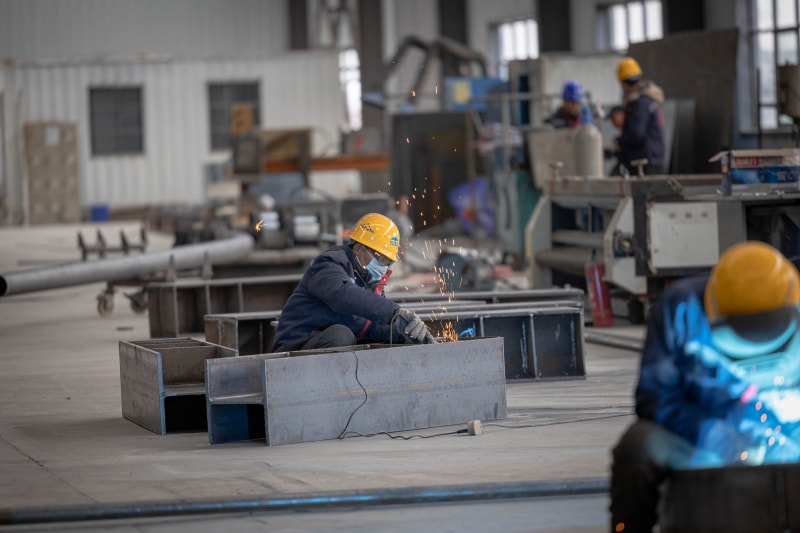
8. Manufacturing aluminum alloy clamps, door/window fittings & pipes
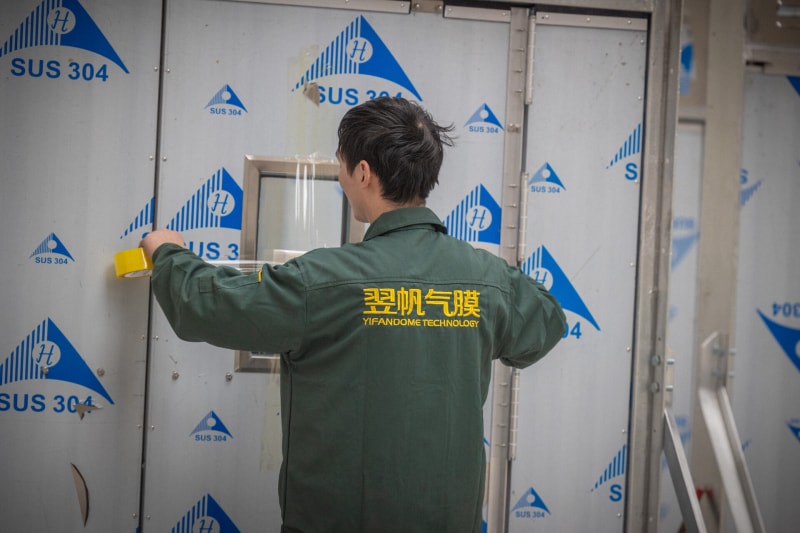
9. Check the product, pack it, and prepare for transportation
As environmental sustainability and smart technologies dominate industrial development, the temporary aviation hangar sector is undergoing rapid transformation. Several notable trends are shaping the future of tensile fabric roof costs and designs:
Modern tensile hangars are increasingly incorporating IoT (Internet of Things) sensors within the membrane and structural framing. These sensors monitor real-time tension levels, wind pressure, snow accumulation, and internal humidity. By providing early warnings, airport operators can perform predictive maintenance, extending the lifespan of the fabric roof and preventing unexpected structural failures.
To meet the aviation industry’s net-zero carbon goals, manufacturers are experimenting with flexible, lightweight organic photovoltaic (OPV) cells laminated directly onto the tensile fabric. This allows the hangar roof to generate its own electricity, power interior LED lighting, ventilation systems, and aircraft servicing equipment, effectively turning the hangar into an off-grid power generator.
The demand for fully recyclable materials is pushing the R&D of next-generation membranes. While traditional PVC presents recycling challenges, newer composite polymers can be melted down and re-manufactured into new architectural membranes at the end of their 20-year service life. This minimizes the environmental footprint and aligns with green airport building standards.
When calculating the true ROI of a Tensile Fabric Roof Cost For Temporary Aircraft Hanger And Aviation, businesses must look beyond the initial purchase price. The speed of installation (weeks vs. months) translates to immediate operational revenue. Furthermore, because these structures are classified as temporary, they often benefit from favorable tax treatments (accelerated depreciation) and lower permit costs. If the operational requirement ends, the hangar can be sold on the secondary market or relocated to another airfield, preserving asset value.
A premium PVC/PVDF tensile fabric roof has a typical lifespan of 15 to 25 years depending on environmental conditions. The structural aluminum or steel framing can last over 50 years, meaning you only need to replace the fabric skin after a few decades of service.
Yes, they are engineered to meet local building codes. By utilizing curved structural profiles and high-tension membranes, snow naturally slides off the roof, and the structures can be rated to withstand wind loads up to Class 4 or 5 hurricanes (over 200 km/h).
On average, a tensile fabric hangar reduces overall project costs by 40% to 60% compared to a conventional pre-engineered metal building (PEMB). The savings come from lower material costs, simplified foundation requirements, and dramatically reduced installation times.
Absolutely. Double-skin insulation systems can be installed with an air gap between two membrane layers. This setup provides excellent thermal performance, making it highly efficient to heat or air-condition the hangar even in extreme climates.