
Leave Your Message
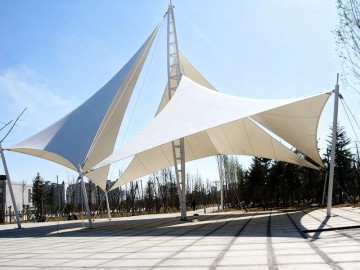
High-durability structures engineered to withstand heavy snow loads and extreme wind shear across Canadian municipalities.
Rapidly deployable storage solutions optimized for Alberta mining, forestry, and heavy equipment protection.
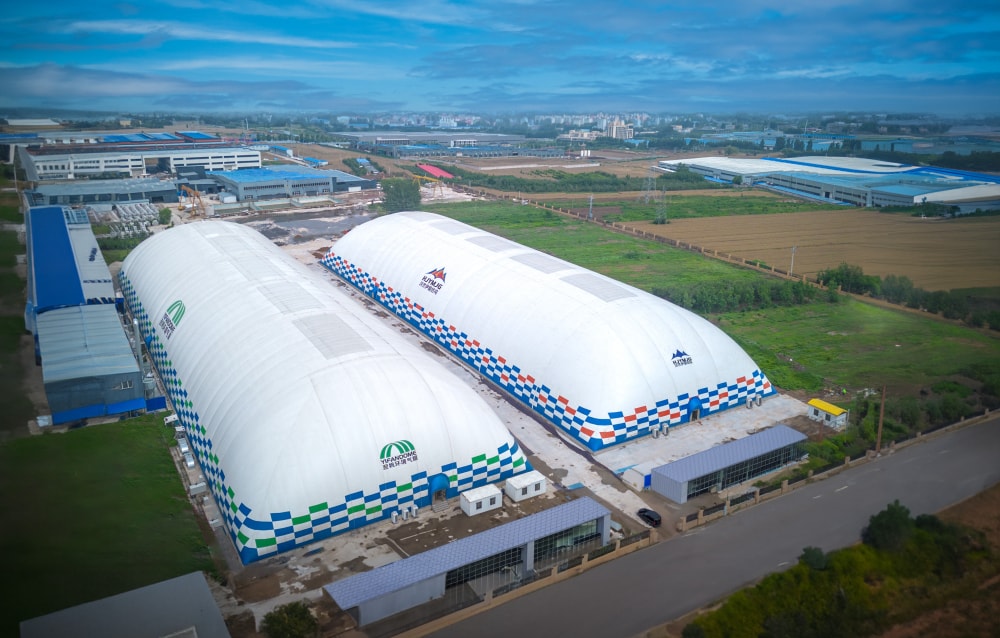
Thermal-insulated air domes designed for year-round sports, soccer, and tennis facilities in Quebec and Ontario.
Modern architectural fabric solutions offering low-carbon footprints and high aesthetic appeal for urban centers.
Canada’s vast geography, stretching from the temperate coast of British Columbia to the sub-zero tundra of the northern territories, presents unique challenges for commercial and industrial infrastructure. Traditional brick-and-mortar or standard structural steel buildings often require months of planning, heavy capital investment, and are highly susceptible to delays caused by short construction seasons. This is where tensile fabric sheds and air-supported membrane structures have emerged as a disruptive, highly efficient solution.
In provinces like Ontario, Quebec, and Alberta, industries are increasingly seeking modular, weather-resistant, and cost-effective alternatives to house raw materials, protect heavy machinery, and provide shelter for community activities. Tensile fabric sheds offer rapid deployment times and the ability to span massive, column-free distances. This is particularly crucial for bulk storage, port facilities, and remote mining sites where structural flexibility and speed are paramount to maintaining operational momentum.
Building in Canada requires meeting some of the most stringent engineering and building codes in the world, specifically concerning snow loads, wind resistance, and thermal performance (National Building Code of Canada - NBC). Modern fabric structures are no longer considered temporary tents; they are highly engineered permanent or semi-permanent assets.
As Canadian industries align with federal net-zero emission targets, the sustainability profile of building materials is under intense scrutiny. Tensile fabric structures represent a major leap forward in eco-friendly architecture.
The lightweight nature of structural membranes dramatically reduces the carbon footprint associated with transportation and foundation preparation. Furthermore, translucent fabrics allow natural daylight to flood the interior during daytime hours, significantly lowering electrical consumption for artificial lighting. When a project reaches the end of its lifecycle, these membrane materials are recyclable, and the entire structure can be disassembled and relocated without leaving a scar on the local ecosystem.
The versatility of tensile fabric sheds allows them to serve distinct roles depending on the localized economic drivers of each Canadian region. From resource extraction in the West to municipal sports infrastructure in the East, our custom-engineered membrane buildings are built to perform.
In remote mining hubs like Fort McMurray or the interior of British Columbia, setting up maintenance bays, truck wash facilities, and mineral storage sheds quickly is critical. Tensile fabric structures can be anchored directly to concrete blocks, shipping containers, or even raw earth, bypassing complex foundation pouring. This allows resource companies to establish operational bases in record time, even in rugged, off-grid terrains.
The Canadian Prairies demand massive, dry storage spaces for grains, fertilizers, and agricultural equipment. Traditional wood or metal barns are prone to moisture condensation, rust, and pests. Our high-strength tensile membrane structures provide a sealed, well-ventilated, and naturally illuminated environment that prevents mold growth and protects valuable machinery from rust and harsh UV degradation.
Municipalities in Toronto, Montreal, and Ottawa face long winters that limit outdoor recreational activities. Air-supported structures and tensile fabric domes offer an affordable way to cover soccer fields, tennis courts, and swimming pools. These domes feature advanced HVAC integration and thermal barriers, providing local communities with comfortable, energy-efficient indoor sports spaces all year round.
Ports handle millions of tons of bulk cargo annually, requiring immediate shelter from rain and sea spray. Tensile fabric sheds provide column-free interiors up to 80 meters wide, allowing heavy machinery, cranes, and trucks to navigate inside without structural obstruction. The non-corrosive properties of PVC/PVDF membranes ensure they do not rust when exposed to salty marine environments, outlasting traditional steel cladding by decades.
Environmental regulations in Canada mandate that waste processing, soil remediation, and recycling operations must control odor and prevent rainwater runoff contamination. Negative-pressure air dome structures and tightly sealed fabric sheds contain airborne particles and gases, allowing air filtration systems to process fumes before release, ensuring compliance with provincial environmental protection acts.
Yifan Air Dome is a high-tech enterprise dedicated to innovative, eco-friendly air-supported membrane structures and integrated air dome building solutions. As a leading integrated service provider in the application of membrane structure technology across China, we cover the full industrial chain of R&D, design, manufacturing, installation and full-cycle operation and maintenance, delivering high-efficiency, energy-saving and low-carbon sustainable building space solutions for global clients.
With years of deep cultivation in the air dome and membrane structure industry, we adhere to the development philosophy of green low-carbon, technological innovation and quality priority, and strictly comply with industrial construction and production standards. Supported by standardized production techniques and abundant experience in large-scale project implementation, we professionally customize various air domes, including sports stadiums, industrial warehouses, environmental enclosures, cultural tourism venues and exhibition membrane buildings, which are widely applied in sports fitness, industrial storage, environmental dust prevention, cultural tourism scenic spots and public supporting facilities.
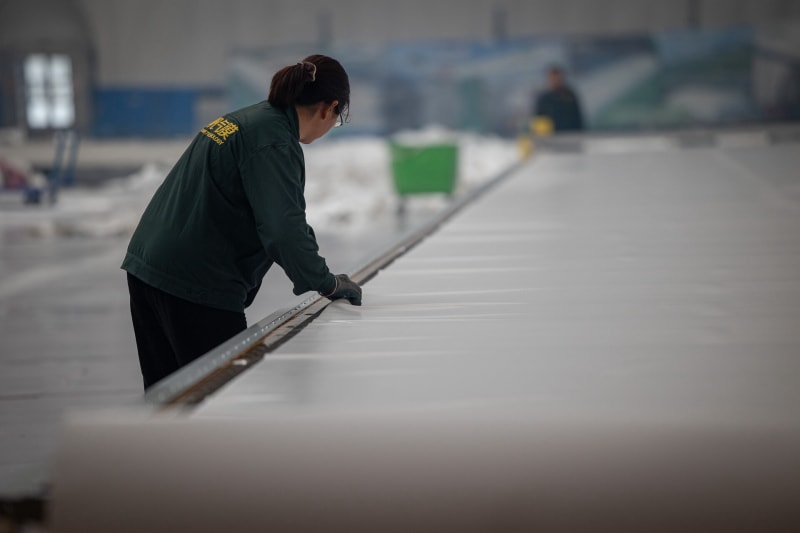
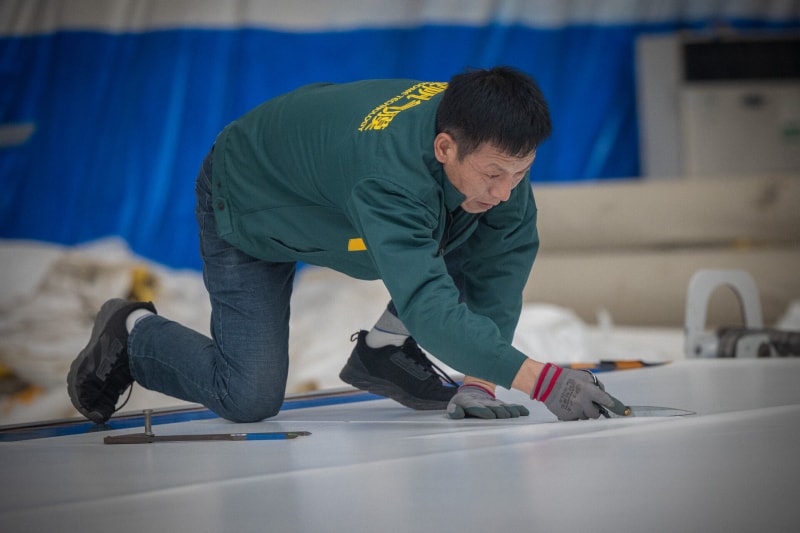
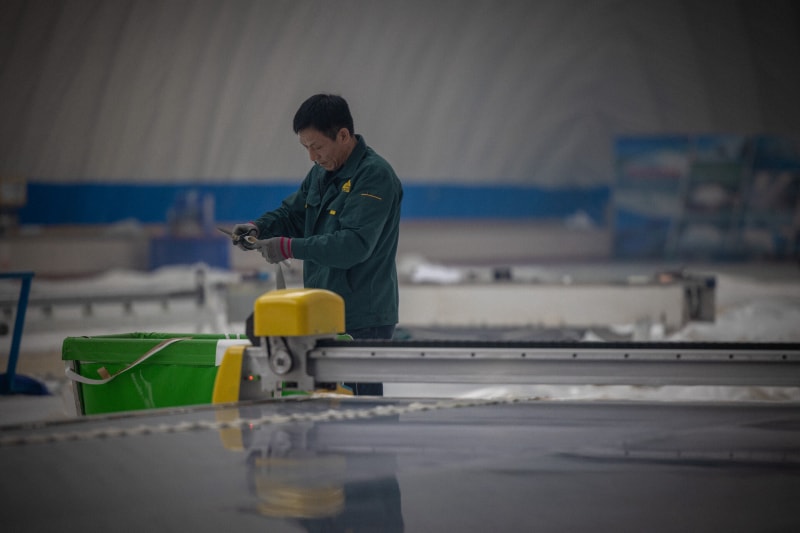
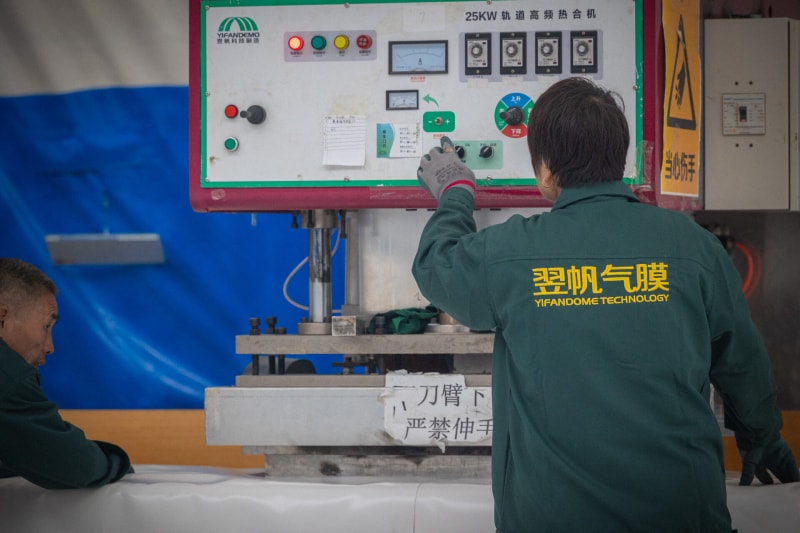
At Yifan, we maintain a state-of-the-art manufacturing process to ensure that every tensile fabric shed and air dome leaving our facility meets global engineering standards. Our production workflow combines advanced automated machinery with rigorous quality checkpoints.
The tensile fabric structure industry is undergoing a rapid technological evolution, driven by the demands of cold-weather efficiency, structural intelligence, and circular economy principles. In Canada, where winter heating costs can be prohibitive, the focus has shifted heavily toward thermal optimization and smart building automation.
1. Advanced Thermal Insulation & Multi-Skin Systems: Modern fabric sheds are no longer limited to single-sheet membranes. By utilizing dual or triple-layer membranes with dead-air spaces or specialized translucent aerogel insulation, manufacturers can achieve R-values comparable to traditional insulated metal panels. This dramatically reduces the heating load required to maintain comfortable indoor temperatures in provinces like Ontario and Quebec.
2. Smart Pressure and Environmental Monitoring: For air-supported structures, reliability is paramount. The integration of IoT sensors allows real-time monitoring of internal air pressure, outdoor wind speed, and snow accumulation. Automated inflation systems can adjust internal pressure dynamically to counteract heavy wind loads or activate localized snow-melting heating cables, ensuring structural integrity without manual intervention.
3. High-Performance Coating Technologies: Next-generation PVDF and PTFE coatings provide superior self-cleaning properties. When rain or melting snow slides off the structure, it washes away dirt and environmental pollutants. This maintains the aesthetic appeal of the building and ensures maximum light transmission over a design lifespan exceeding 25 years.
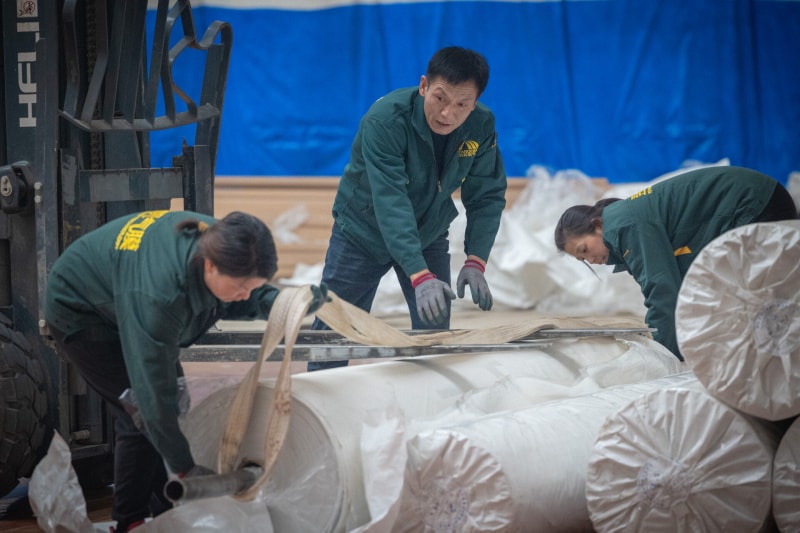
We select premium, low-temperature resistant PVC/PVDF fabrics designed to survive harsh Canadian winters.
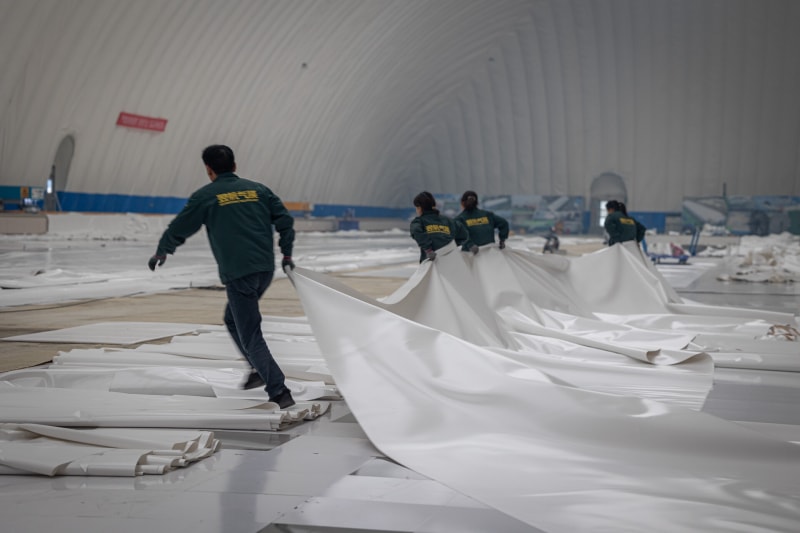
Careful layout and inspection of raw membrane panels prior to the high-frequency welding process.
CAD designs are imported directly to our automated cutting tables for millimeter-level precision.
Hand-finished edge trimming removes exposed fibers, guaranteeing an airtight, waterproof seal.
Adding heavy-duty reinforcement strips to high-stress areas to prevent wind shear damage.
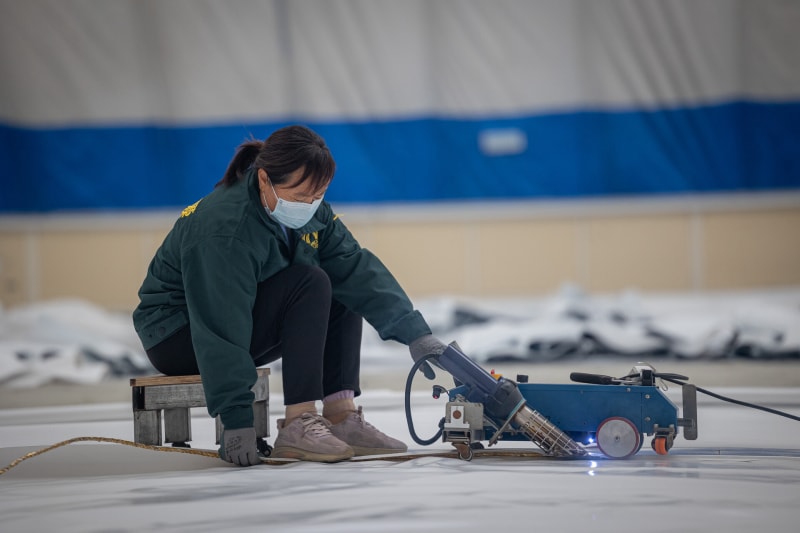
Track-mounted thermal welders fuse membrane panels into a single, highly durable structural envelope.
Precision welding of boundary rope channels to ensure uniform tension distribution across the canopy.
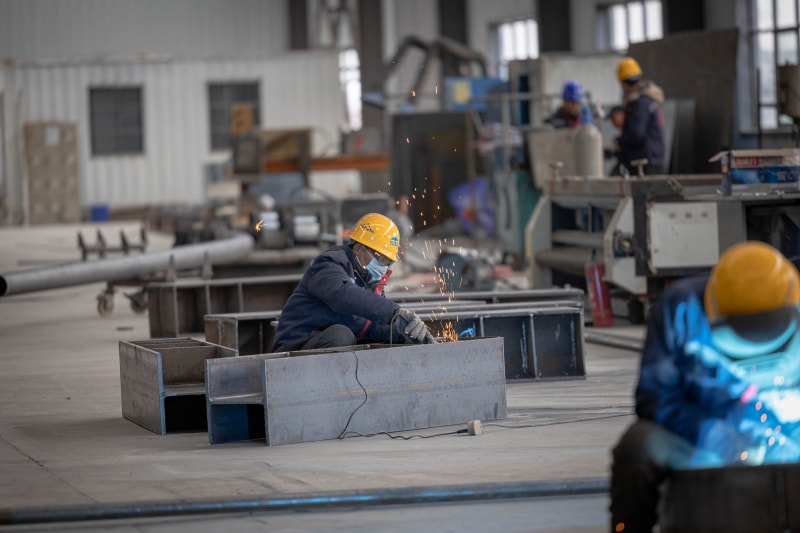
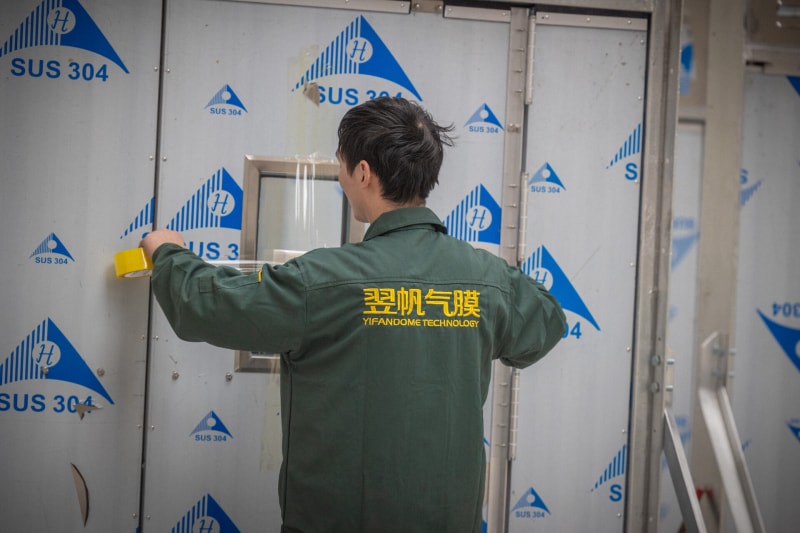
Corrosion-resistant structural fittings, doors, and anchoring clamps engineered for high-wind loads.