Leave Your Message
In the era of rapid global industrial transformation and strict environmental regulations, the management of bulk material storage sites, particularly coal yards, has undergone a fundamental shift. Traditional open-air coal depots face immense pressure due to fugitive dust emissions, runoff pollution, and wind-driven material loss. Regulatory bodies worldwide, including the EPA and global environmental ministries, have mandated complete enclosures for bulk material operations to mitigate particulate matter (PM2.5 and PM10) dispersion.
Historically, steel-framed space frames and concrete structures were the default choices for industrial enclosures. However, these traditional systems suffer from severe limitations when applied to coal storage. Coal yards are highly corrosive environments due to the release of sulfurous gases, moisture, and chemical compounds from stored coal. Traditional steel structures require continuous, expensive anti-corrosion treatments and are prone to structural degradation over time.
The emergence of the Tensile Fabric Shed For Bulk Material Coal Site Enclosure represents a paradigm shift. Utilizing advanced architectural membranes (such as PVDF or PTFE coated fabrics) tensioned over structural steel or air-supported structures, these systems offer unmatched resistance to corrosion, rapid construction timelines, and significantly lower lifecycle maintenance costs.
The market for bulk material enclosures is moving rapidly towards smart, sustainable, and relocatable solutions. Driven by carbon neutrality goals, industrial operators are looking for building systems that minimize carbon footprints during construction and operation. Tensile fabric structures require significantly less steel than traditional metal clad buildings, reducing embodied carbon by up to 40%. Furthermore, the translucent nature of high-strength membranes allows natural daylight to illuminate the interior, minimizing the need for artificial lighting during daytime operations and saving substantial energy costs.
The application of tensile fabric sheds for bulk material enclosures extends far beyond basic storage. Let's analyze the primary industrial scenarios where these structures deliver maximum value:
Ports handle massive volumes of coal and bulk minerals daily. These sites are exposed to harsh marine environments characterized by high salinity, humidity, and strong coastal winds. Traditional metal cladding corrodes rapidly in these conditions, leading to structural failures and frequent shutdowns. Tensile fabric sheds, with their non-corrosive membrane surfaces and marine-grade protective coatings on structural supports, offer the perfect solution. They easily withstand high wind loads and salt spray, ensuring uninterrupted port logistics.
Power plants require huge, unobstructed spaces for stacker-reclaimers to operate efficiently. The large-span capability of tensile fabric structures (often exceeding 100 meters without internal support columns) allows for seamless machinery operations. Additionally, these structures can be integrated with intelligent monitoring systems, including thermal imaging cameras to detect coal self-combustion, automated ventilation systems, and dust suppression misting systems.
Located often in remote or mountainous regions, mining sites face extreme weather conditions such as heavy snow loads, low temperatures, and seismic activities. The lightweight nature and high flexibility of tensile membranes enable them to absorb seismic energy and distribute heavy snow loads safely. Their modular design allows for rapid transport and assembly in remote areas where traditional construction would be logistically impossible and cost-prohibitive.
Understanding the engineering excellence behind Tensile Fabric Sheds highlights why they are the preferred choice for modern bulk material coal site enclosures:
Yifan Air Dome is a high-tech enterprise dedicated to innovative, eco-friendly air-supported membrane structures and integrated air dome building solutions. As a leading integrated service provider in the application of membrane structure technology across China, we cover the full industrial chain of R&D, design, manufacturing, installation and full-cycle operation and maintenance, delivering high-efficiency, energy-saving and low-carbon sustainable building space solutions for global clients.
With years of deep cultivation in the air dome and membrane structure industry, we adhere to the development philosophy of green low-carbon, technological innovation and quality priority, and strictly comply with industrial construction and production standards. Supported by standardized production techniques and abundant experience in large-scale project implementation, we professionally customize various air domes, including sports stadiums, industrial warehouses, environmental enclosures, cultural tourism venues and exhibition membrane buildings, which are widely applied in sports fitness, industrial storage, environmental dust prevention, cultural tourism scenic spots and public supporting facilities.
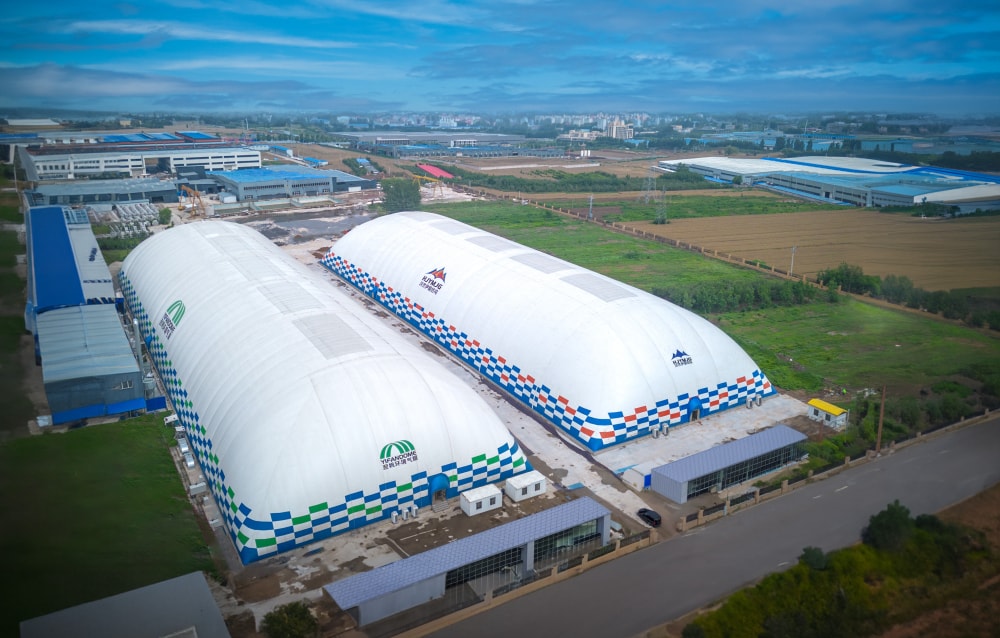
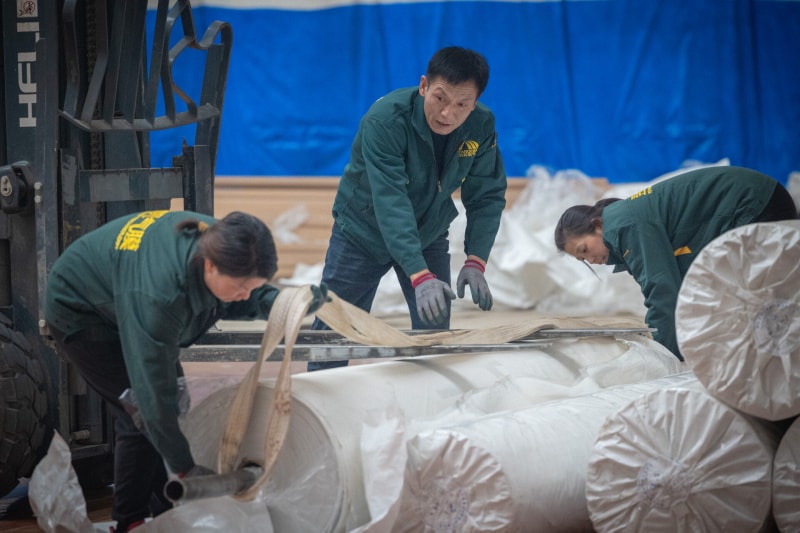
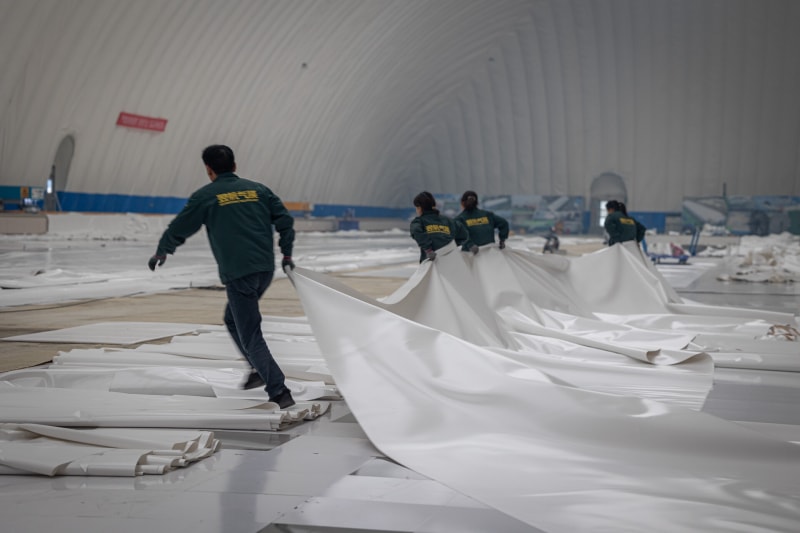
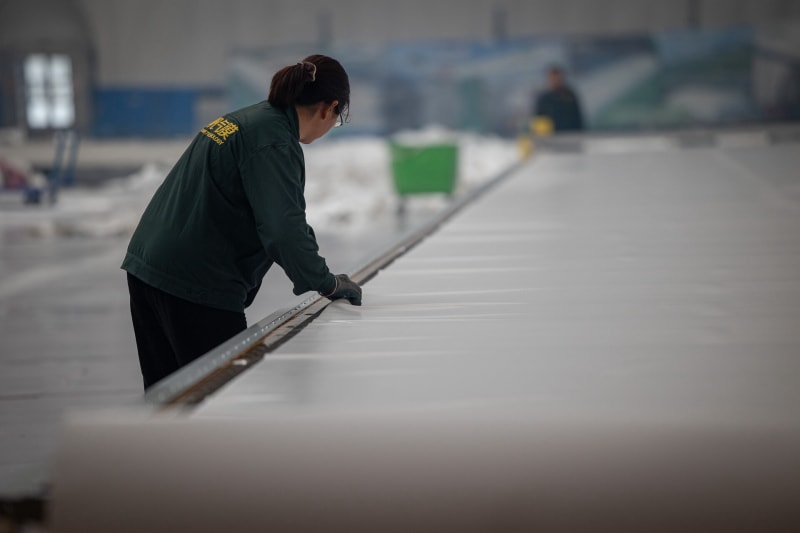
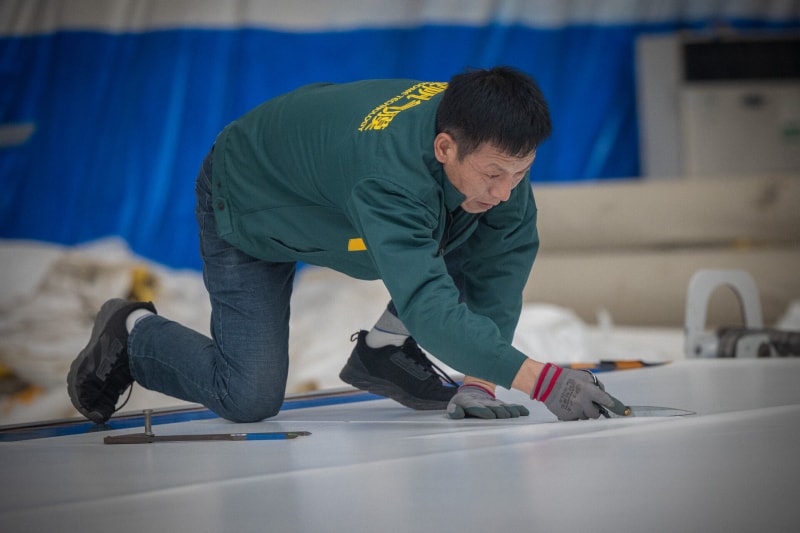
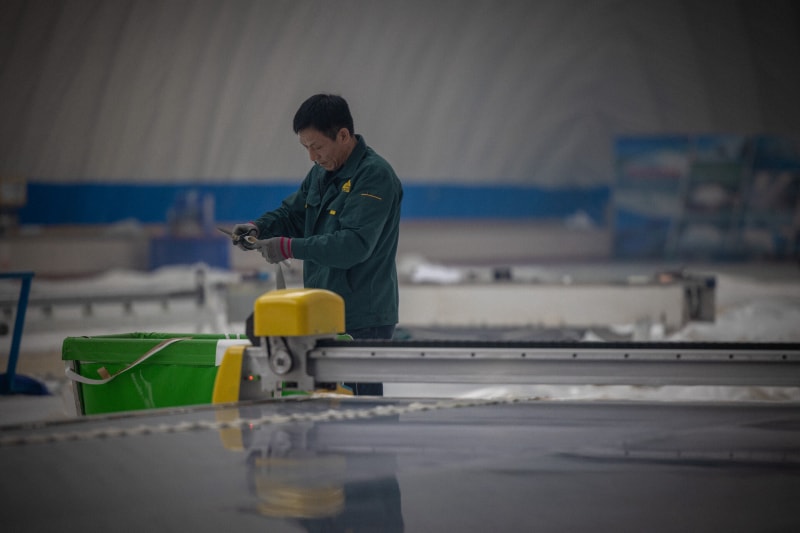
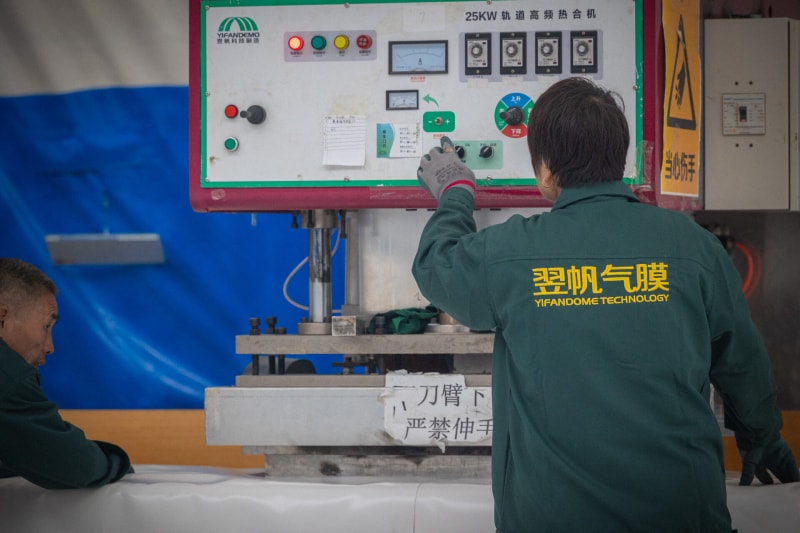
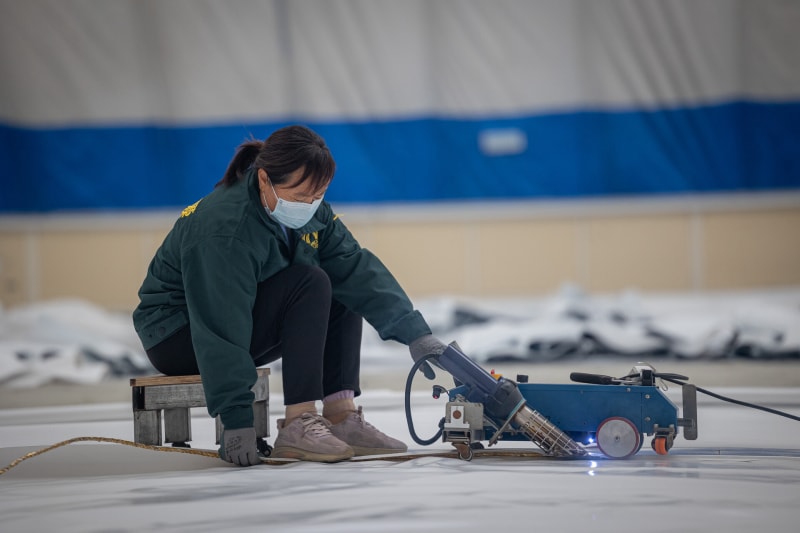
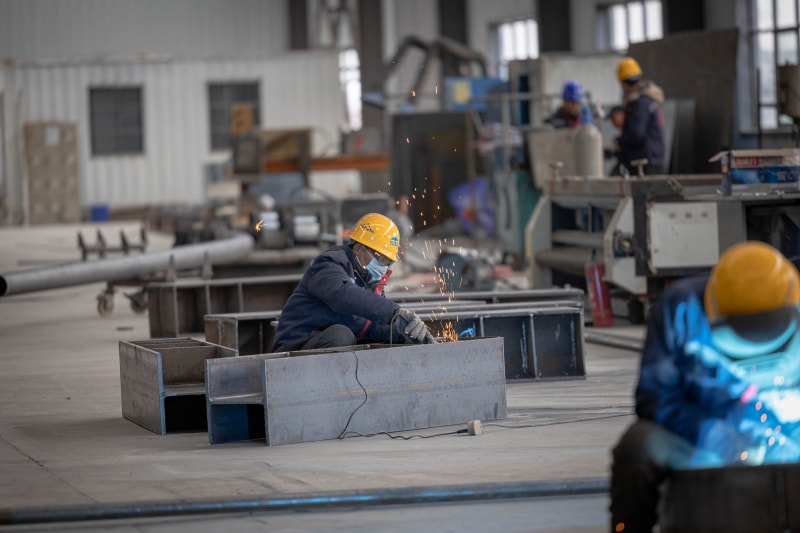
Our standardized manufacturing process ensures that every single membrane panel used for our coal site enclosures meets the highest quality and safety standards. Below is our rigorous step-by-step operational flowchart: