Leave Your Message
Yifan Air Dome is a high-tech enterprise dedicated to innovative, eco-friendly air-supported membrane structures and integrated air dome building solutions. As a leading integrated service provider in the application of membrane structure technology across China, we cover the full industrial chain of R&D, design, manufacturing, installation and full-cycle operation and maintenance, delivering high-efficiency, energy-saving and low-carbon sustainable building space solutions for global clients.
With years of deep cultivation in the air dome and membrane structure industry, we adhere to the development philosophy of green low-carbon, technological innovation and quality priority, and strictly comply with industrial construction and production standards. Supported by standardized production techniques and abundant experience in large-scale project implementation, we professionally customize various air domes, including sports stadiums, industrial warehouses, environmental enclosures, cultural tourism venues and exhibition membrane buildings, which are widely applied in sports fitness, industrial storage, environmental dust prevention, cultural tourism scenic spots and public supporting facilities.
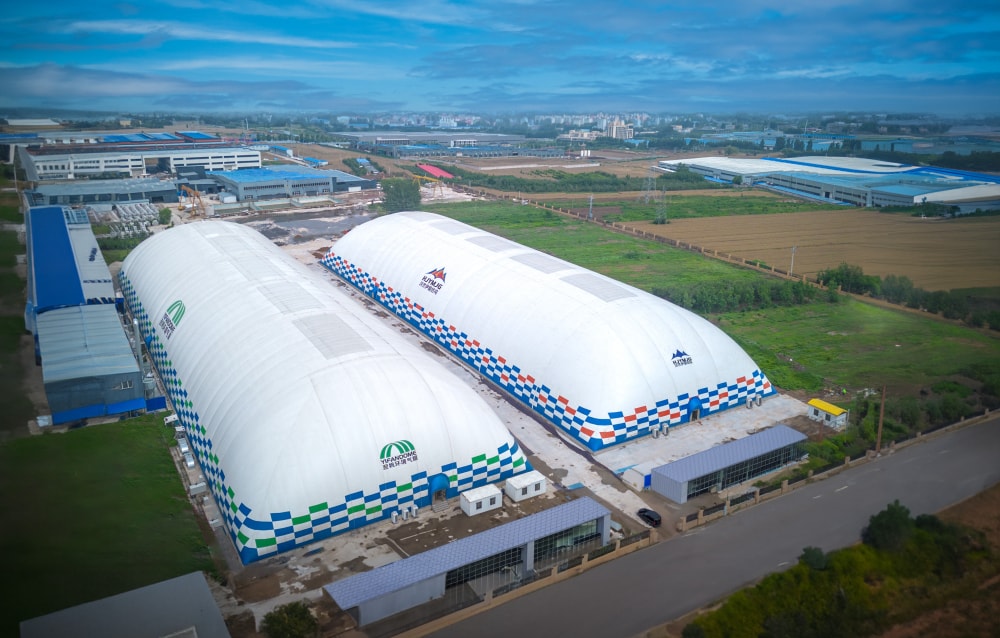
Taking modular innovation and environmental adaptation technology as our core philosophy, we focus on the R&D and scenario application of air dome buildings. Leveraging an advanced modular structure and robust environmental adaptability, we deliver core strengths including shorter construction cycles, cost-effectiveness, easy disassembly and relocation, and recyclable reuse. Our structures perfectly withstand complex weather and natural conditions such as snow, gale winds, heavy rain, high temperature and severe cold. We adhere to tailored solutions adapted to local conditions. Fully suited for diverse application scenarios, we comprehensively meet clients’ customized needs for personalized space utilization and engineering construction.
Moving forward, Yifan will further advance core technologies in air-supported structure innovation and environmental adaptability. By deeply cultivating the global market for membrane structures, the company aspires to become a leading international provider of comprehensive solutions for air-supported buildings. Leveraging green, low-carbon technologies to empower the transformation of architectural spaces, Yifan aims to create a new global ecosystem of modular air-supported structures—one that is safer, more energy-efficient, better adapted to diverse needs, and more sustainable.
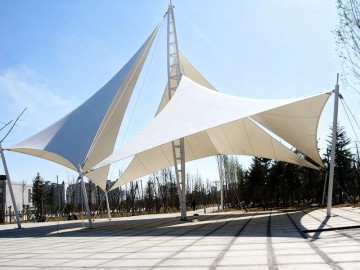
Mexico's architectural landscape is undergoing a massive transformation. Driven by the rapid expansion of industrial parks, commercial centers, and sports facilities, developers are increasingly turning to lightweight, high-strength tensile membrane structures. But what does a tensile roof cost in Mexico, and what factors influence the pricing structure from local factories and manufacturers?
On average, the cost of designing, fabricating, and installing a tensile roof in Mexico ranges from $1,200 MXN to $4,500 MXN per square meter (approximately $70 to $260 USD/m²). This variance depends heavily on the materials used, structural complexity, and local site conditions. To help Mexican project managers, engineers, and architects make informed procurement decisions, we break down the critical cost drivers below.
The choice between PVC (Polyvinyl Chloride), PTFE (Polytetrafluoroethylene), and ETFE (Ethylene Tetrafluoroethylene) membranes dictates up to 50% of the total project cost. PVC is highly cost-effective for commercial awnings, while PTFE offers unmatched durability for major Mexican transportation hubs and stadiums.
Tensile structures rely on high-tension cables and steel support frames. Because Mexico experiences diverse geological and meteorological conditions—ranging from high seismic activity in Mexico City to hurricane-force winds in Cancun—engineering these systems requires precise calculation, which impacts steel weight and foundation depth.
Partnering with global manufacturers who have streamlined logistics channels into Mexico (such as Monterrey, Tijuana, and Querétaro) ensures competitive pricing. Standardized modular designs reduce import duties and fast-track custom clearance, keeping overall installation costs low.
The global shift toward "nearshoring" has positioned Mexico as North America's premier manufacturing and logistics hub. States like Nuevo León, Chihuahua, and Coahuila are witnessing unprecedented demand for rapid-assembly warehousing. Traditional brick-and-mortar factories take months to build, whereas tensioned membrane structures and air domes can be operational in a fraction of the time.
This industrial boom has accelerated the adoption of large-span tensile roofs for logistics centers. Because these structures do not require internal support pillars, they maximize usable floor space, allowing logistics companies to optimize their racking layouts and forklift pathways. Furthermore, the translucent properties of high-strength membranes allow natural daylight to illuminate the interior, significantly lowering electricity costs for industrial operations in Mexico.
Tensile structures are highly versatile and adapt beautifully to the diverse microclimates across Mexico:
Our Step-by-Step Manufacturing & Quality Assurance Flowchart
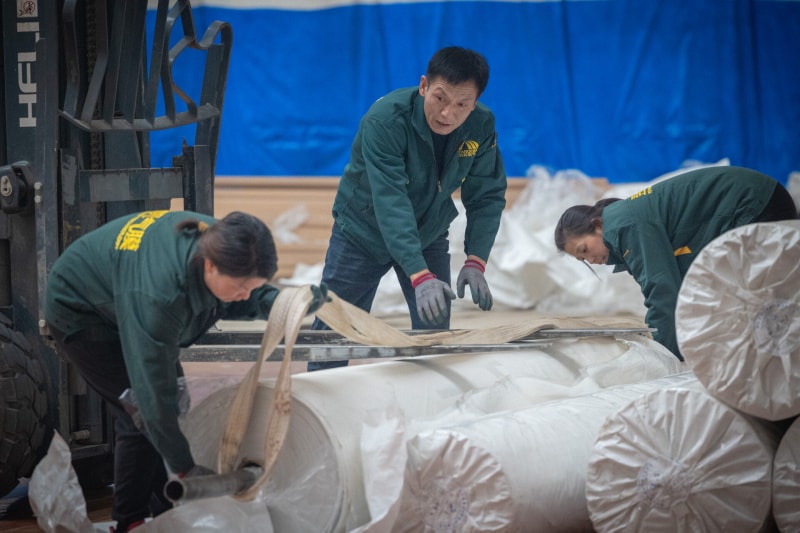
1. Select the customized membrane material
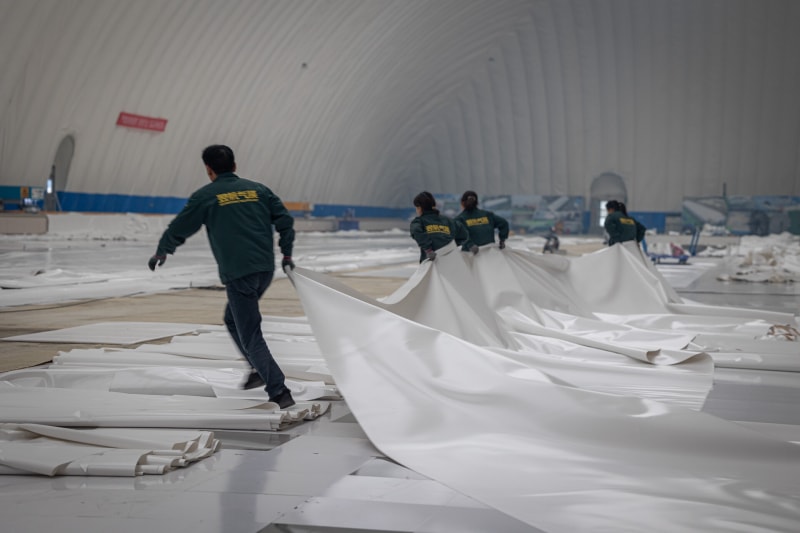
2. Deploy the membrane material
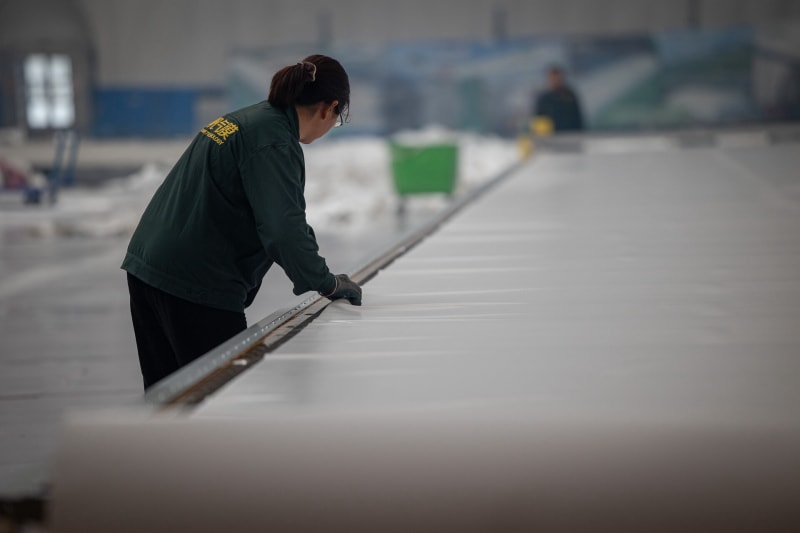
3. Lay membrane on cutting machine & import flat designs
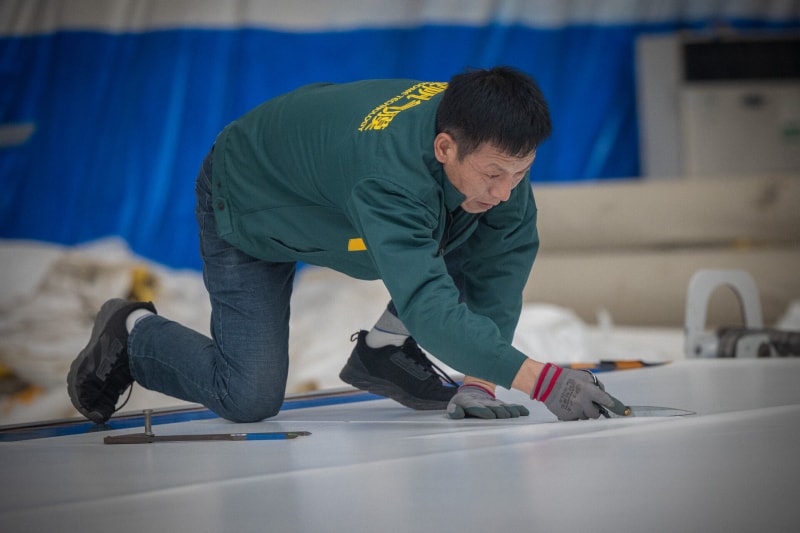
4. Manually trim edges to remove exposed fibers
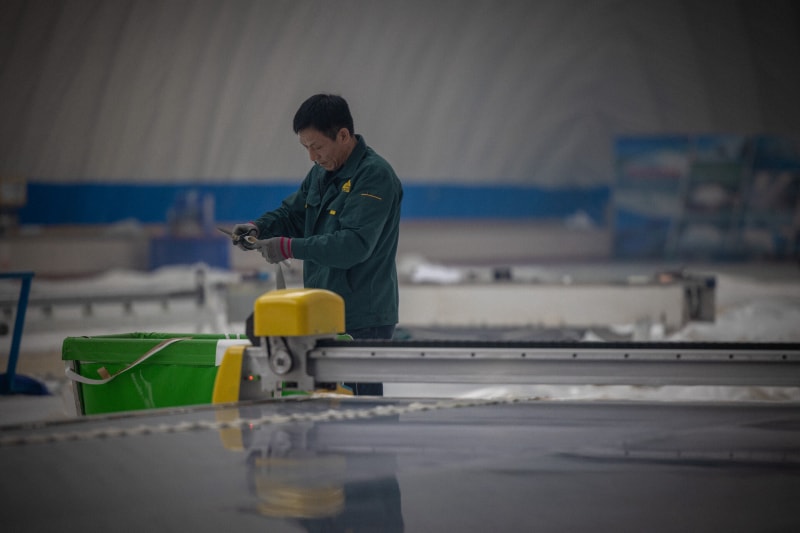
5. Cutting, Splicing, and Reinforcement Strips
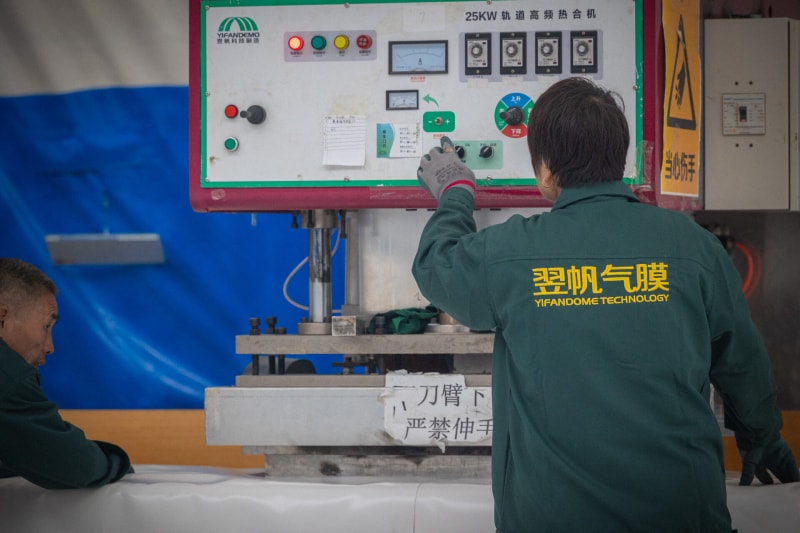
6. Arrange materials & weld with high-frequency heat-sealer
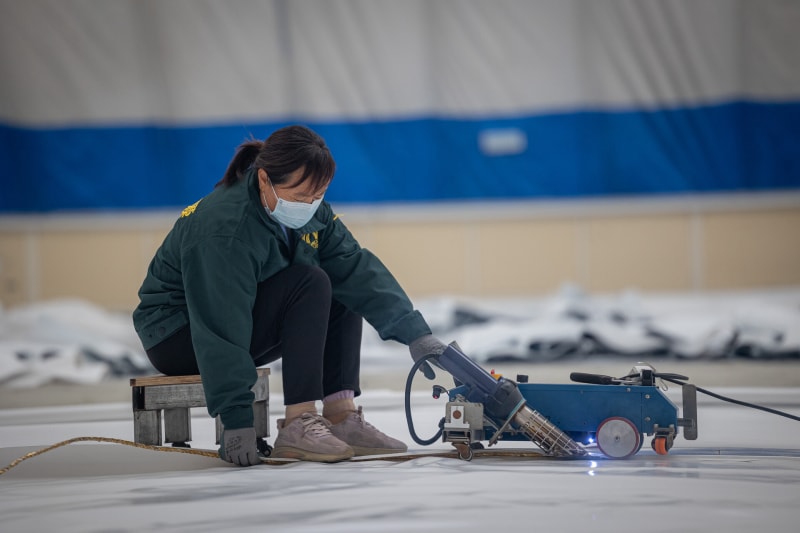
7. Small Hot Sealer Welding Rope Channel
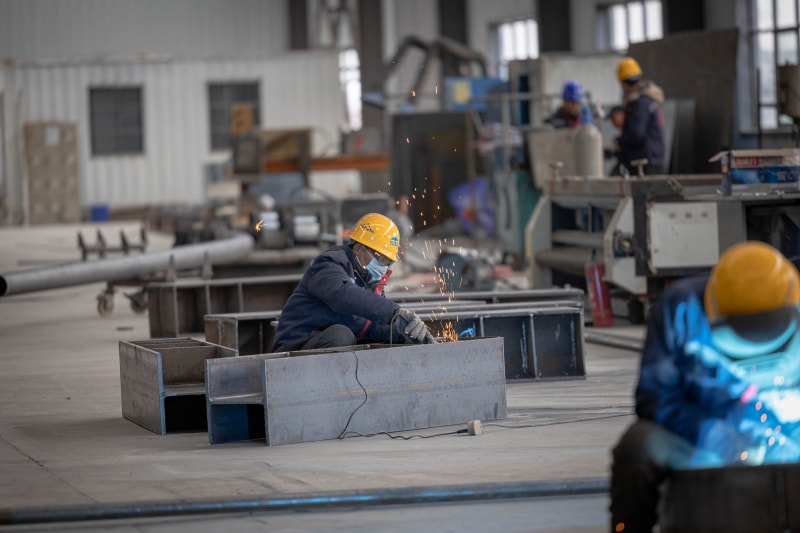
8. Manufacturing clamps, fittings, & inflatable pipes
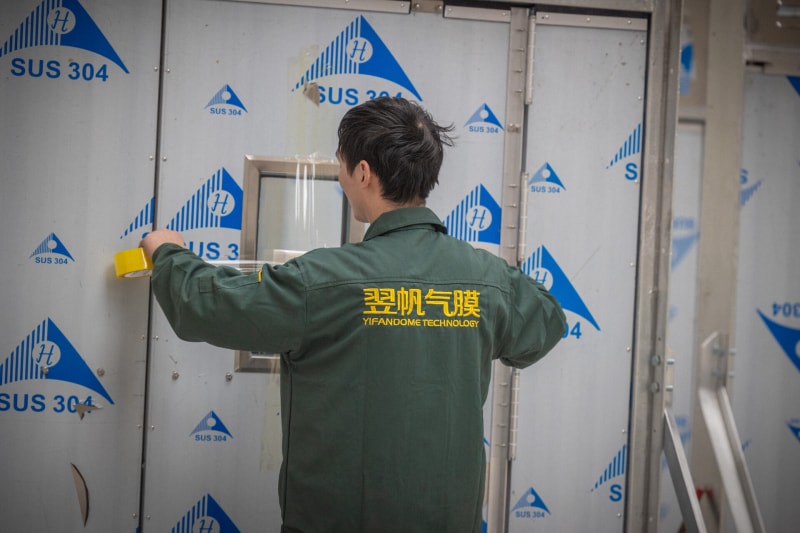
9. Check product, pack, & prepare for transportation
Tailored Membrane Solutions Across Major Mexican States