


Step 01
Select the customized membrane material based on specific chemical resistance requirements.
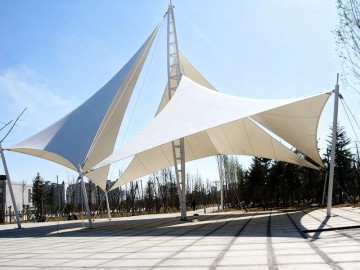
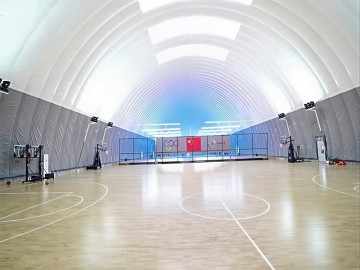
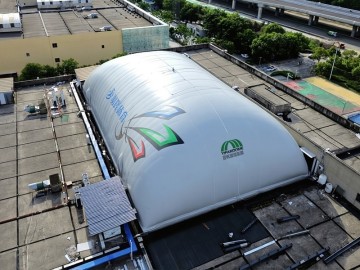
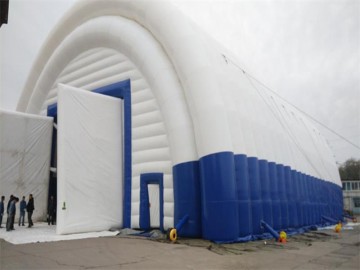
Soil contamination has transitioned from a localized environmental challenge into a multi-billion-dollar global industry. As urbanization expands and heavy industrial sites are decommissioned, the reclamation of contaminated land has become crucial for sustainable development. However, the process of excavating, treating, and managing contaminated soil presents significant environmental hazards, particularly the release of volatile organic compounds (VOCs), hazardous dust, and runoff from rain. This is where Tensile Roof Structure Design for Eco-friendly Soil Remediation Projects steps in as a game-changing engineering solution. By providing large-span, airtight, and rapidly deployable containment enclosures, tensile membrane structures and air domes ensure that soil remediation activities are conducted safely, efficiently, and in strict compliance with environmental regulations.
Modern soil remediation projects require highly specialized structural solutions. Traditional rigid steel buildings are often cost-prohibitive, slow to construct, and difficult to relocate once a cleanup project is completed. In contrast, tensile membrane systems—especially air-supported domes—offer an agile, modular alternative. By utilizing advanced engineering polymers and negative pressure systems, these structures act as a secure seal over contaminated sites, preventing the migration of toxic particulates and gases into surrounding residential or commercial areas.
By integrating advanced airtight membrane technology with negative air pressure and carbon filtration systems, tensile structures achieve up to 99.9% containment of volatile organic emissions and fugitive dust during active soil excavation and treatment cycles.
The versatility of tensile roof structures allows them to be customized for a wide array of environmental remediation projects. Understanding these specific application scenarios highlights why this technology has become the industry standard for environmental engineers worldwide.
In densely populated metropolitan areas, decommissioned chemical plants, gasworks, and factories represent prime real estate. However, excavating these sites releases noxious odors and hazardous vapors that can trigger public health concerns. A customized air dome enclosure creates a physical and olfactory barrier. The structure operates under continuous negative pressure, ensuring that fresh air enters while contaminated air is channeled through specialized gas scrubbers before being discharged. This allows remediation to proceed safely, even within meters of schools, offices, and residential neighborhoods.
Sites heavily contaminated with volatile hydrocarbons, chlorinated solvents, or pesticides require strict emission controls. Traditional open-air excavation is no longer permitted under modern environmental regulations. Tensile membrane enclosures provide a massive, column-free workspace that accommodates heavy machinery, excavators, and dump trucks. The translucent properties of the membrane material maximize natural daylighting, reducing energy consumption and improving safety for operators working inside the enclosure.
One of the greatest challenges during soil washing or excavation is rain. When rainwater contacts contaminated soil, it creates toxic leachate that can seep into the local water table or run off into nearby rivers. A tensile roof structure acts as an impervious umbrella. By diverting 100% of precipitation away from the active remediation zone, it simplifies moisture control, prevents the spread of contaminants, and reduces the volume of liquid waste that must be treated.
Some projects utilize on-site thermal desorption or bioremediation piles. These processes require controlled thermal environments to optimize the breakdown of contaminants. Insulated double-skin tensile membranes help maintain stable internal temperatures, accelerating the biological or physical treatment of the soil. Once a specific section of the site is clean, the lightweight structure can be disassembled and moved to the next sector, offering unmatched operational flexibility.
The global market for environmental containment is undergoing a rapid technological evolution. As governments enforce stricter environmental compliance standards, the demand for smart, sustainable, and reliable containment systems is at an all-time high. Several key trends are shaping the future of tensile roof structures in this sector:
Yifan Air Dome is a high-tech enterprise dedicated to innovative, eco-friendly air-supported membrane structures and integrated air dome building solutions. As a leading integrated service provider in the application of membrane structure technology across China, we cover the full industrial chain of R&D, design, manufacturing, installation and full-cycle operation and maintenance, delivering high-efficiency, energy-saving and low-carbon sustainable building space solutions for global clients.
With years of deep cultivation in the air dome and membrane structure industry, we adhere to the development philosophy of green low-carbon, technological innovation and quality priority, and strictly comply with industrial construction and production standards. Supported by standardized production techniques and abundant experience in large-scale project implementation, we professionally customize various air domes, including sports stadiums, industrial warehouses, environmental enclosures, cultural tourism venues and exhibition membrane buildings, which are widely applied in sports fitness, industrial storage, environmental dust prevention, cultural tourism scenic spots and public supporting facilities.
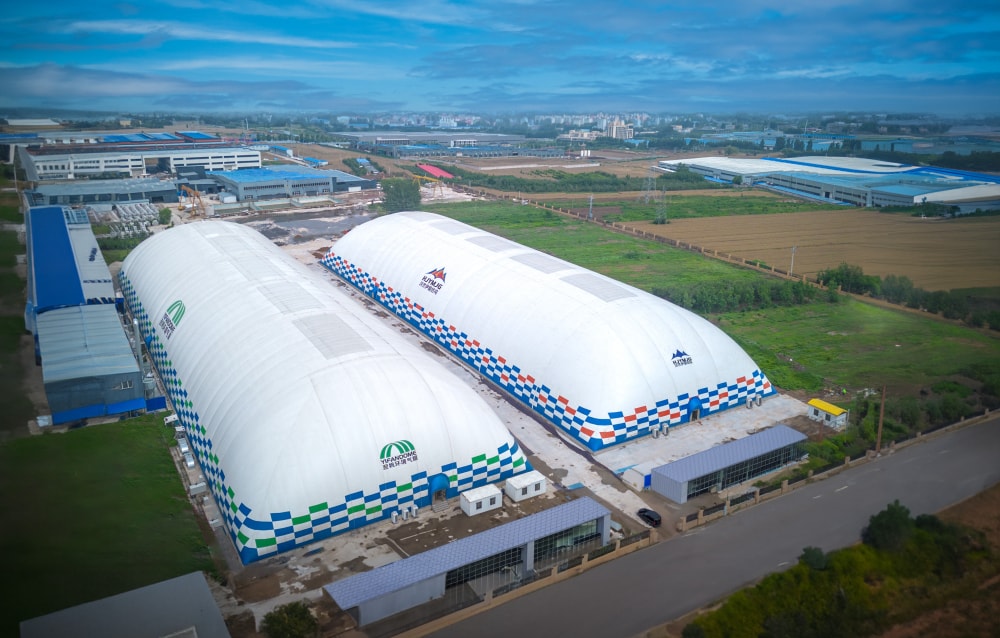
Taking modular innovation and environmental adaptation technology as our core philosophy, we focus on the R&D and scenario application of air dome buildings. Leveraging an advanced modular structure and robust environmental adaptability, we deliver core strengths including shorter construction cycles, cost-effectiveness, easy disassembly and relocation, and recyclable reuse. Our structures perfectly withstand complex weather and natural conditions such as snow, gale winds, heavy rain, high temperature and severe cold. We adhere to tailored solutions adapted to local conditions. Fully suited for diverse application scenarios, we comprehensively meet clients’ customized needs for personalized space utilization and engineering construction.
Moving forward, Yifan will further advance core technologies in air-supported structure innovation and environmental adaptability. By deeply cultivating the global market for membrane structures, the company aspires to become a leading international provider of comprehensive solutions for air-supported buildings. Leveraging green, low-carbon technologies to empower the transformation of architectural spaces, Yifan aims to create a new global ecosystem of modular air-supported structures—one that is safer, more energy-efficient, better adapted to diverse needs, and more sustainable.
Our standardized production flow ensures the highest level of quality control and airtight integrity for every membrane panel we manufacture. Below is the detailed step-by-step process of our manufacturing operations:
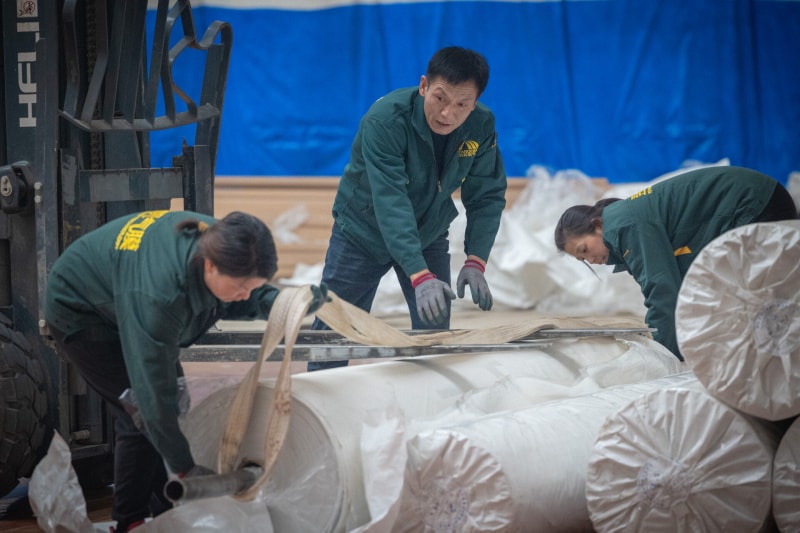
Select the customized membrane material based on specific chemical resistance requirements.
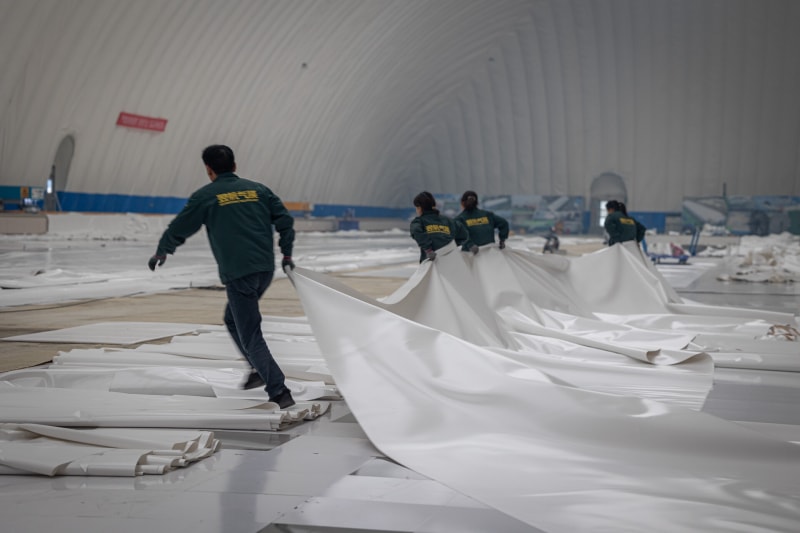
Deploy the membrane material carefully on our clean preparation floor.
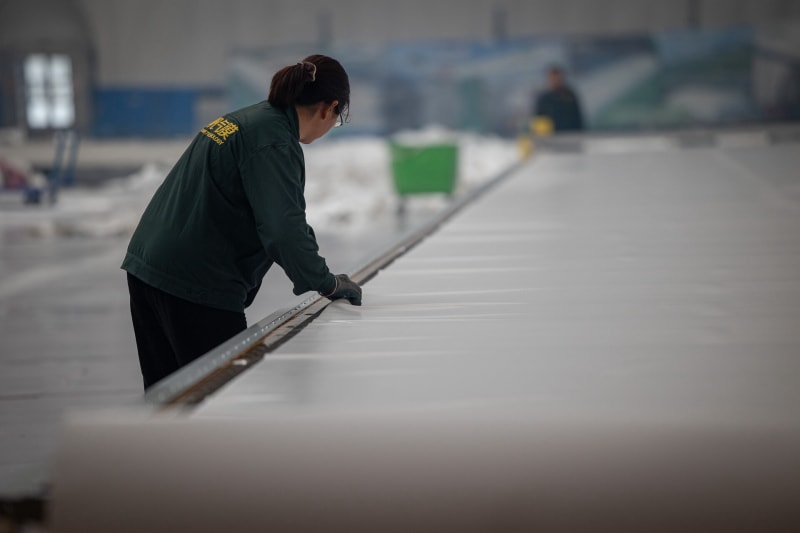
Lay the membrane material on the automated cutting machine and import the flat design drawings.
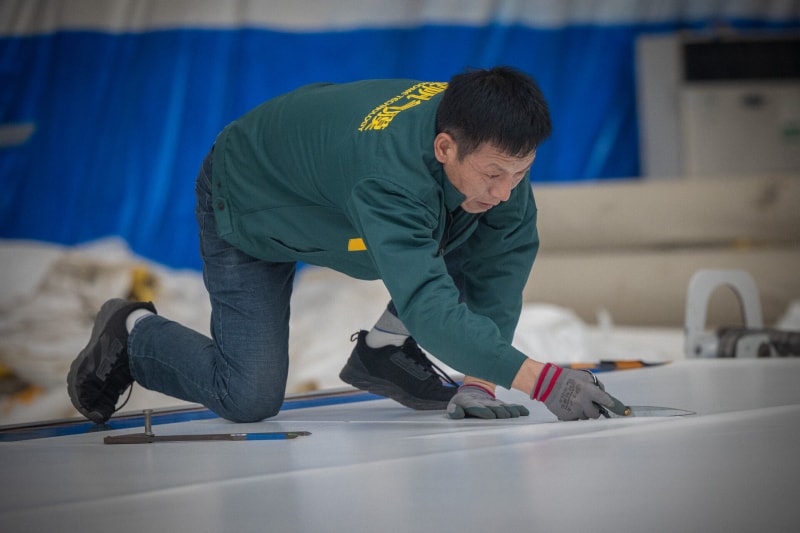
Manually trim the edges of the membrane material again to remove exposed fibers and ensure a secure weld.
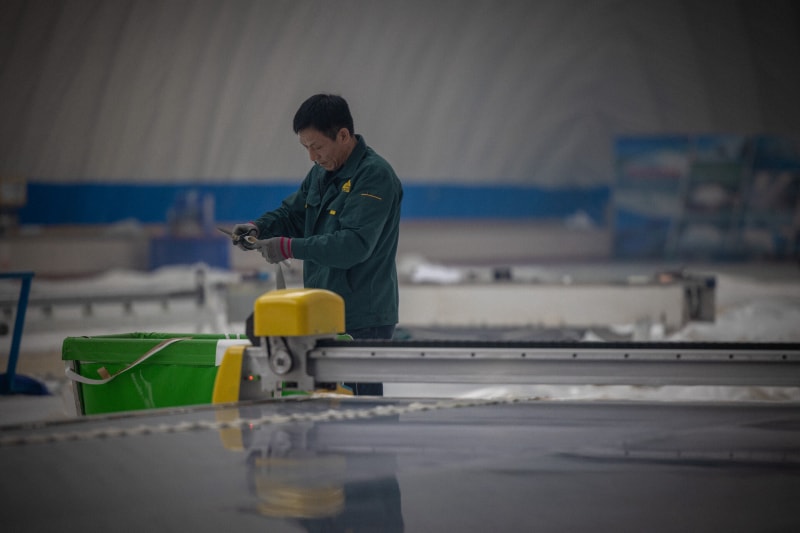
Cutting, Splicing, and Reinforcement Strips for high-stress areas.
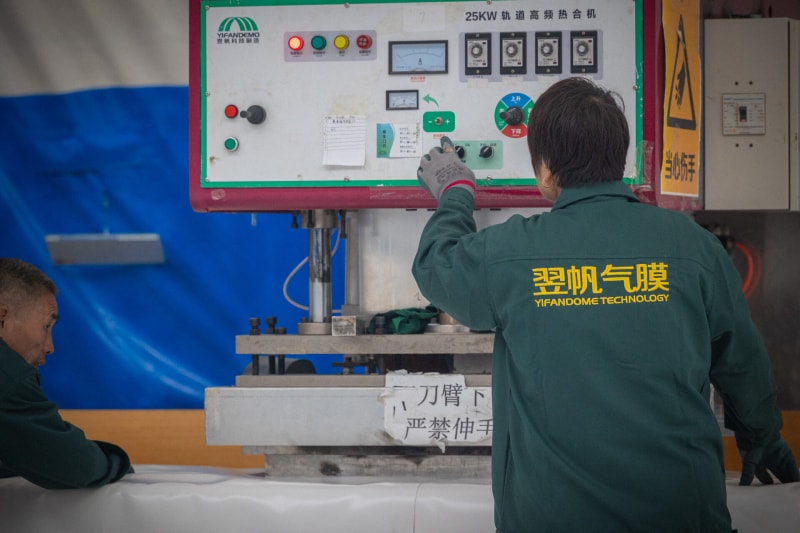
Workers arrange the membrane materials according to the layout drawings and weld them using a track-type high-frequency heat-sealer.
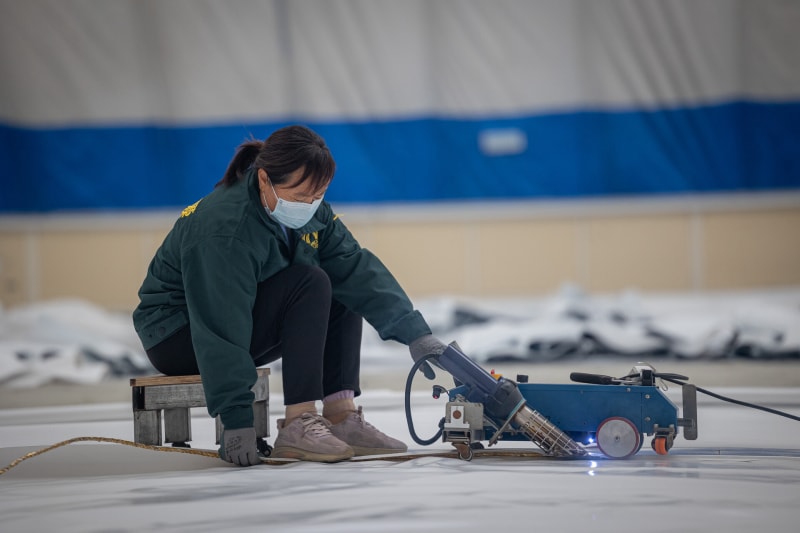
Small Hot Sealer Welding Rope Channel for structural stability and anchoring.
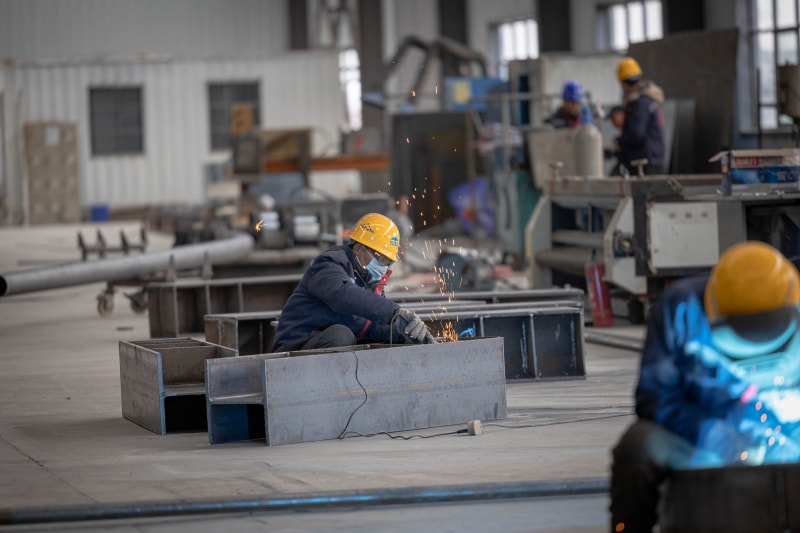
Manufacturing aluminum alloy clamps, door and window fittings, and inflatable pipes.
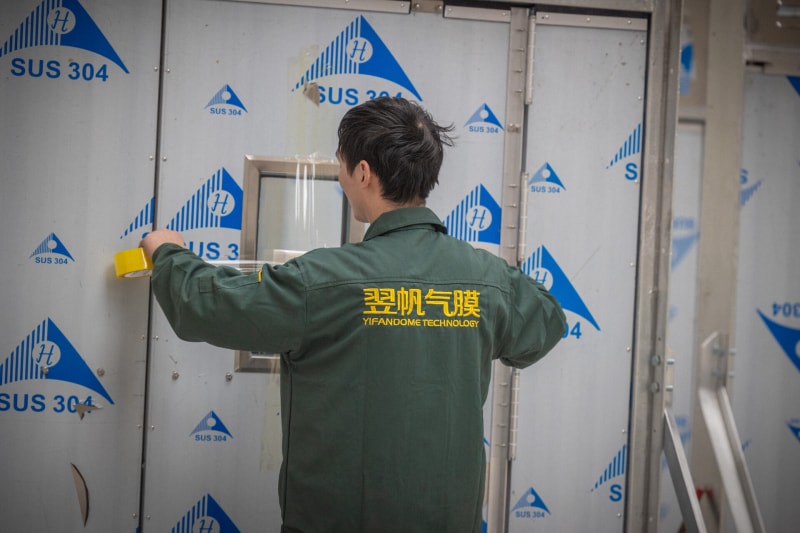
Check the product quality, pack it securely, and prepare for global transportation.