Leave Your Message
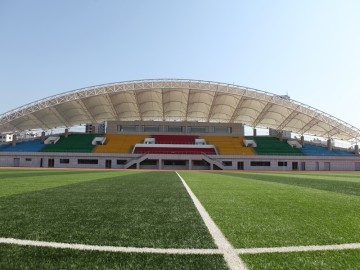
Thailand's architectural landscape is undergoing a dramatic shift toward sustainability, lightweight construction, and iconic visual designs. As urban centers like Bangkok, Pattaya, and Phuket continue to expand, the demand for innovative roofing systems that combine high aesthetic value with extreme environmental resilience has never been higher. Tensile roof structure design has emerged as the premier solution for developers, industrial operators, and municipal planners seeking to cover massive spans without the structural weight and carbon footprint of traditional concrete or heavy steel buildings.
According to recent infrastructure reports in Southeast Asia, the adoption of membrane structures in Thailand has grown by over 18% annually, driven by the expansion of the Eastern Economic Corridor (EEC), the modernization of sports facilities, and the booming eco-tourism sector.
Designing structures for Thailand requires a deep understanding of its unique tropical climate. Characterized by intense UV radiation, heavy seasonal monsoons, high humidity, and occasional tropical depressions, the local environment presents severe challenges to traditional building materials. Conventional metal roofs are prone to corrosion, heat absorption, and high acoustic noise during downpours, while concrete structures degrade under constant humidity.
High-performance tensile membranes, such as PTFE (Polytetrafluoroethylene), PVDF-coated PVC, and ETFE, are engineered to overcome these challenges. These materials offer exceptional UV resistance, preventing yellowing and degradation over decades. Their self-cleaning properties ensure that tropical downpours wash away dust and organic matter, keeping the structures pristine. Furthermore, their high reflectivity significantly reduces solar heat gain, lowering cooling costs for indoor spaces—a critical factor for energy conservation in Thailand.
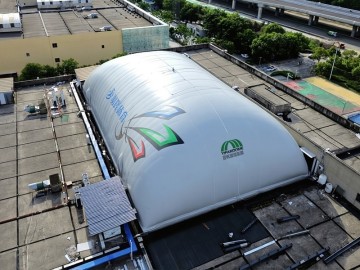
Yifan Air Dome is a high-tech enterprise dedicated to innovative, eco-friendly air-supported membrane structures and integrated air dome building solutions. As a leading integrated service provider in the application of membrane structure technology across China and Southeast Asian markets, we cover the full industrial chain of R&D, design, manufacturing, installation and full-cycle operation and maintenance, delivering high-efficiency, energy-saving and low-carbon sustainable building space solutions for global clients.
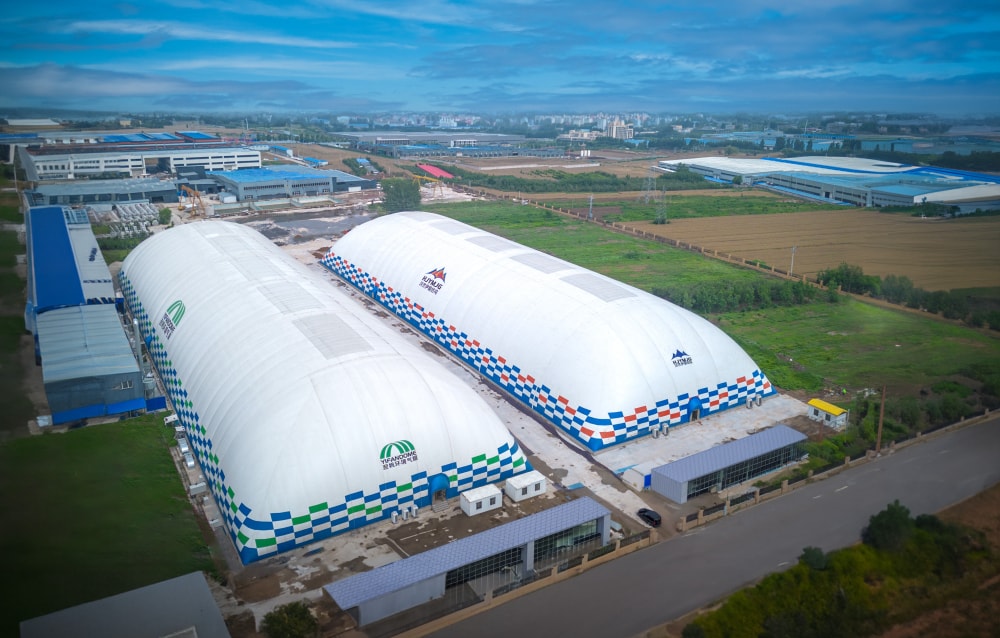
With years of deep cultivation in the air dome and membrane structure industry, we adhere to the development philosophy of green low-carbon, technological innovation and quality priority, and strictly comply with industrial construction and production standards. Supported by standardized production techniques and abundant experience in large-scale project implementation, we professionally customize various air domes, including sports stadiums, industrial warehouses, environmental enclosures, cultural tourism venues and exhibition membrane buildings, which are widely applied in sports fitness, industrial storage, environmental dust prevention, cultural tourism scenic spots and public supporting facilities.
As a leading tensile roof structure designer and manufacturer, we recognize that different sectors in Thailand require distinct engineering approaches. Here is how our membrane structures are applied across the country:
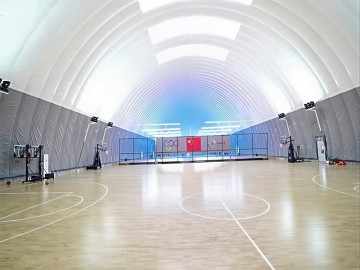
Bangkok's rapid urbanization has limited the space available for large-scale sports arenas. Air-supported structures and lightweight steel-membrane roofs offer the perfect solution. By utilizing our anti-glare air domes, local sports clubs can establish indoor badminton halls, basketball courts, and soccer fields that operate 24/7, unaffected by heavy monsoon rains or extreme midday heat. The translucent nature of the membrane allows natural daylight to illuminate the courts, significantly reducing electricity consumption.
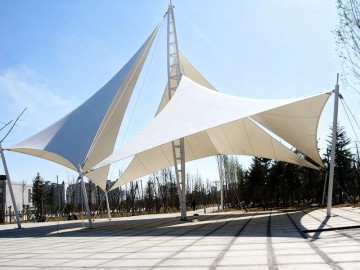
In destinations like Phuket, Koh Samui, and Krabi, aesthetics are just as important as functionality. Tensile fabric canopies are widely used to cover outdoor dining areas, beachside lounges, and event spaces. Their fluid, organic shapes blend seamlessly with the natural coastal landscape while providing tourists with comfortable shade. These structures are built to withstand high wind speeds and coastal salt spray, ensuring long-term durability without rust.
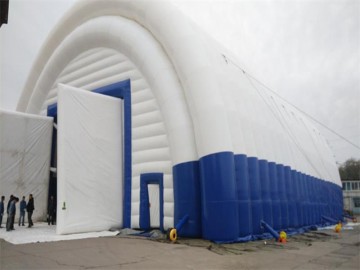
With the expansion of U-Tapao Airport and the development of the EEC as a major logistics hub, the demand for fast-to-build, large-span storage space is soaring. Custom air-rib membrane aircraft hangars and industrial warehouses can be deployed in a fraction of the time required for traditional steel buildings. These structures offer column-free interiors, allowing maximum storage efficiency and ease of movement for heavy machinery and aircraft.
Rayong's heavy industrial zones face strict environmental regulations regarding dust control and emissions. Our air domes are utilized as massive environmental enclosures for coal, chemical, and mineral storage. By completely sealing the storage yards, we prevent dust particles from escaping into the surrounding atmosphere, helping factories comply with Thai environmental protection laws while maintaining efficient operations.
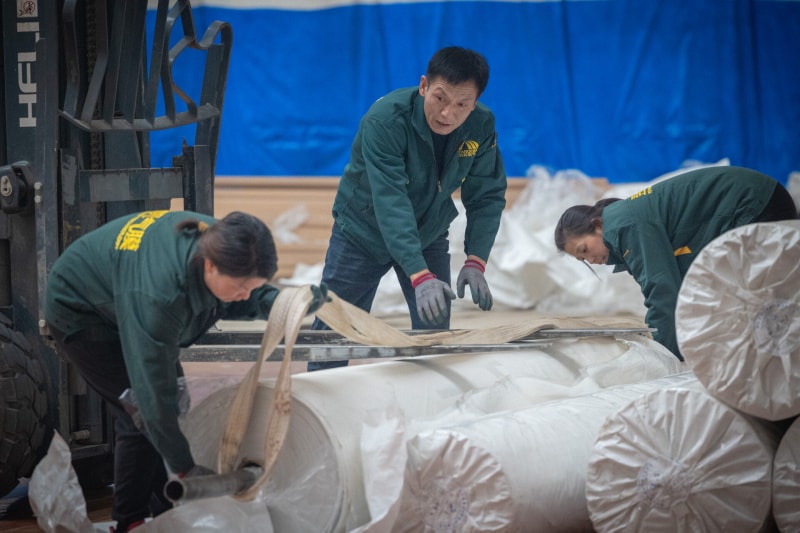
1. Select the customized membrane material
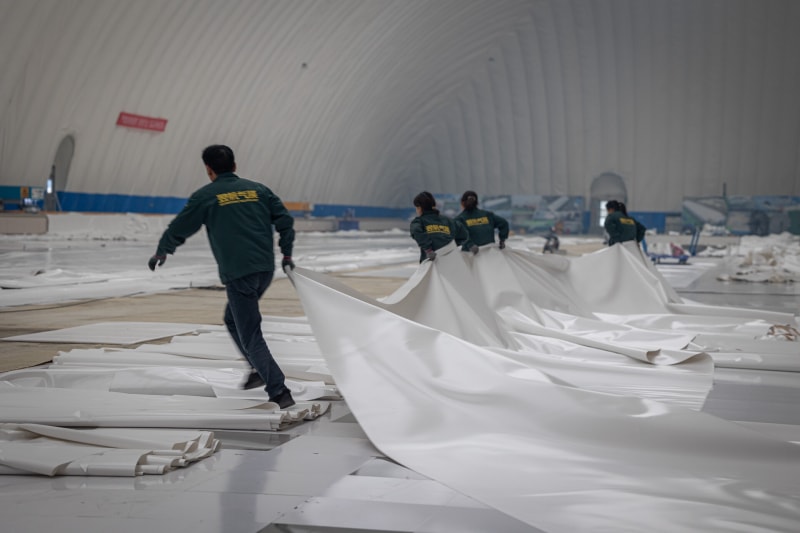
2. Deploy the membrane material
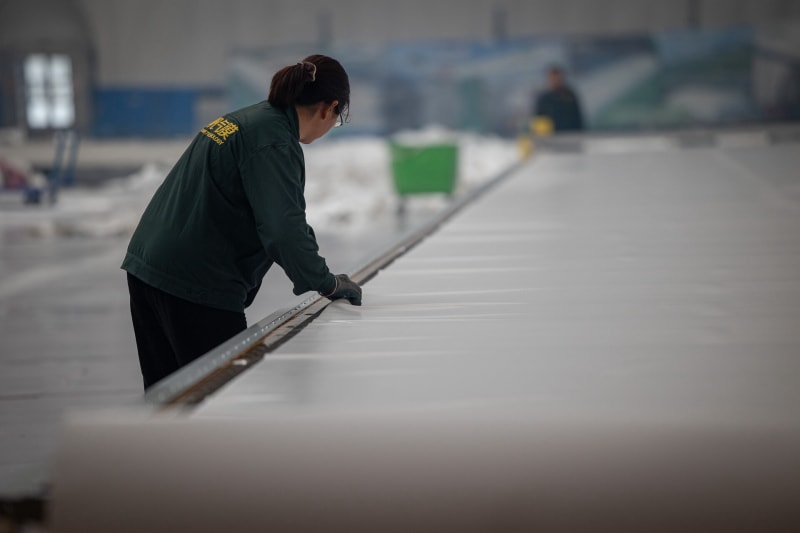
3. Lay the membrane material on the automated cutting machine and import design drawings
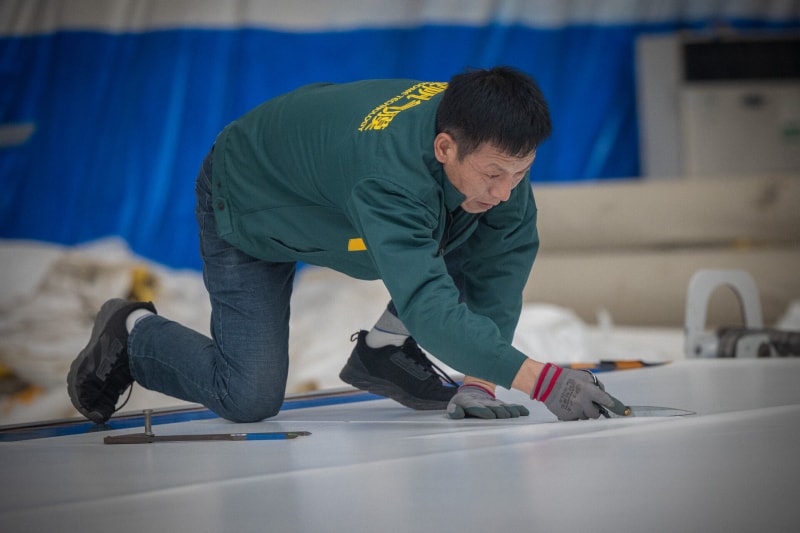
4. Manually trim the edges of the membrane material to ensure a secure weld
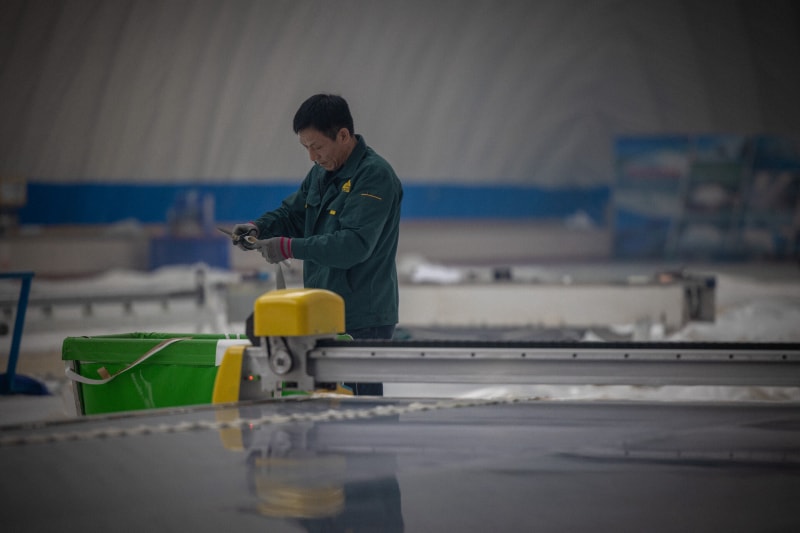
5. Cutting, Splicing, and Reinforcement Strips
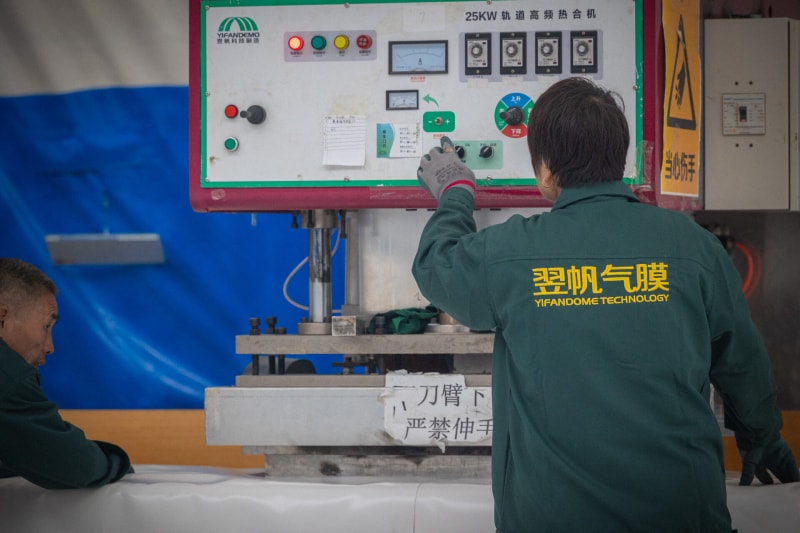
6. Weld using a track-type high-frequency heat-sealing machine
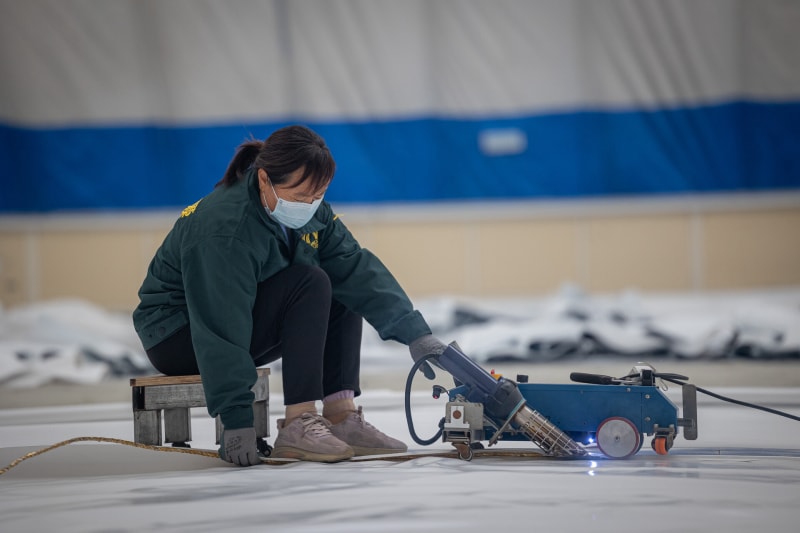
7. Small Hot Sealer Welding Rope Channel
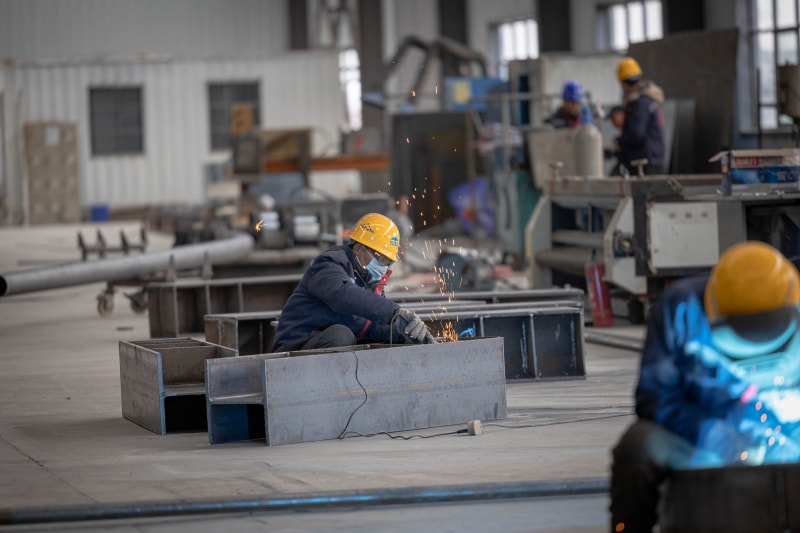
8. Manufacturing aluminum alloy clamps, door and window fittings, and inflatable pipes
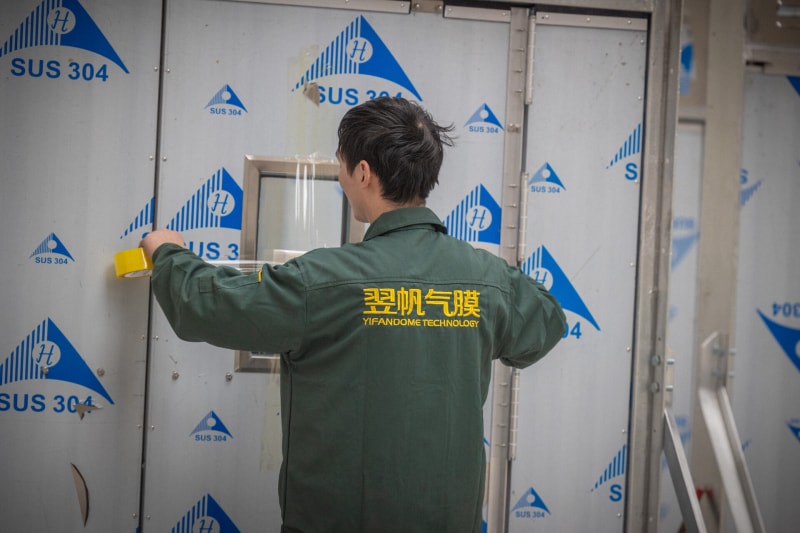
9. Check the product, pack it, and prepare for transportation
Our manufacturing facility is equipped with the latest industrial machinery to ensure micro-millimeter precision. We utilize automated cutting tables that directly import CAD and 3D modeling files, minimizing material waste and ensuring perfect edge alignment. Our high-frequency welding machines create seams that are stronger than the membrane material itself, ensuring airtight and watertight integrity for decades.
To support the growing demand in the Thai market, we have optimized our supply chain and logistics, ensuring that prefabricated components can be shipped and installed on-site rapidly, minimizing local construction disruption.
Our R&D department utilizes advanced structural simulation software integrated with AI to predict how membrane structures behave under extreme weather conditions. For projects in Thailand, we simulate maximum monsoon wind loads, tropical heat accumulation, and heavy rainfall drainage patterns.
By optimizing the curvature and tension of the membrane, our designs prevent water pooling during heavy downpours and ensure maximum aerodynamic stability during tropical storms. We are continuously researching new coating materials that offer even higher thermal insulation and anti-fungal properties tailored for high-humidity climates.
Yifan actively participates in international architectural, environmental, and industrial exhibitions across Asia and globally. We showcase our latest air dome technologies and tensile roof structure designs to developers, government representatives, and industrial operators.
Our commitment to international quality standards (ISO 9001, ISO 14001) has made us a trusted partner for iconic projects in Southeast Asia, providing sustainable, modular space solutions that push the boundaries of modern architecture.
The future of architecture in Thailand is centered on decarbonization and smart technology. Tensile roof structures are at the forefront of this movement. Key trends shaping the industry include: